Material notes / Scintillax journal
A stone kitchen made for gathering.
Design a kitchen around expressive stone, warm cabinetry and everyday rituals. Explore quartzite islands, marble details and material ideas for Southwest Florida.
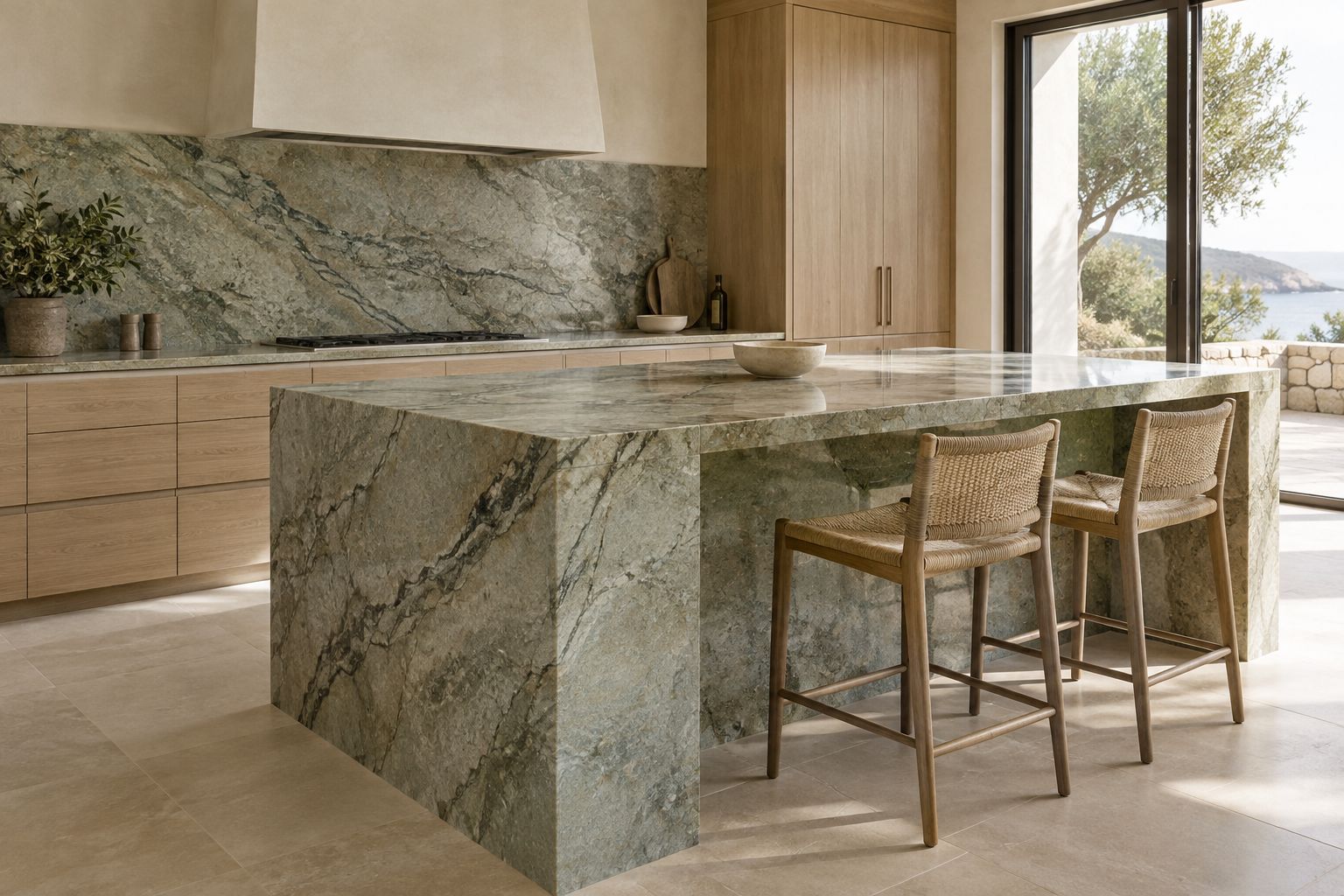
A kitchen often reveals its best qualities after the styling is put away. There is a cup beside the sink, a cutting board ready for dinner, and enough room for a friend to stay while you cook. The design question is how the surfaces can support that ordinary scene while giving the room a character of its own.
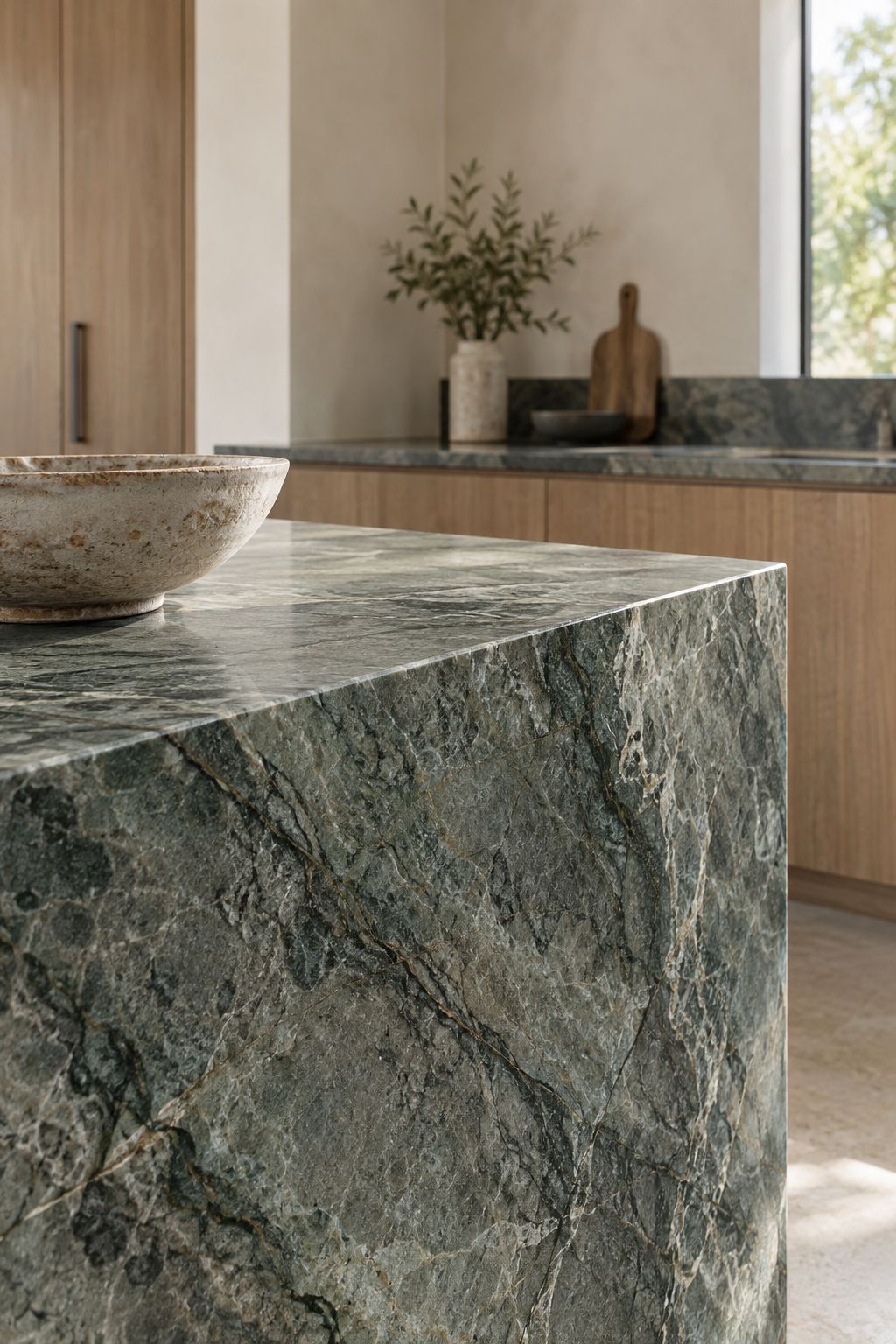
An expressive stone island offers a useful starting point. Its veining can suggest the cabinet tone, the warmth of the metalwork, and even how much visual detail the rest of the kitchen needs. For a stone kitchen in Southwest Florida, the most convincing palette is one you enjoy in bright daytime light and in the softer atmosphere of an evening at home.
Which material should lead the room?
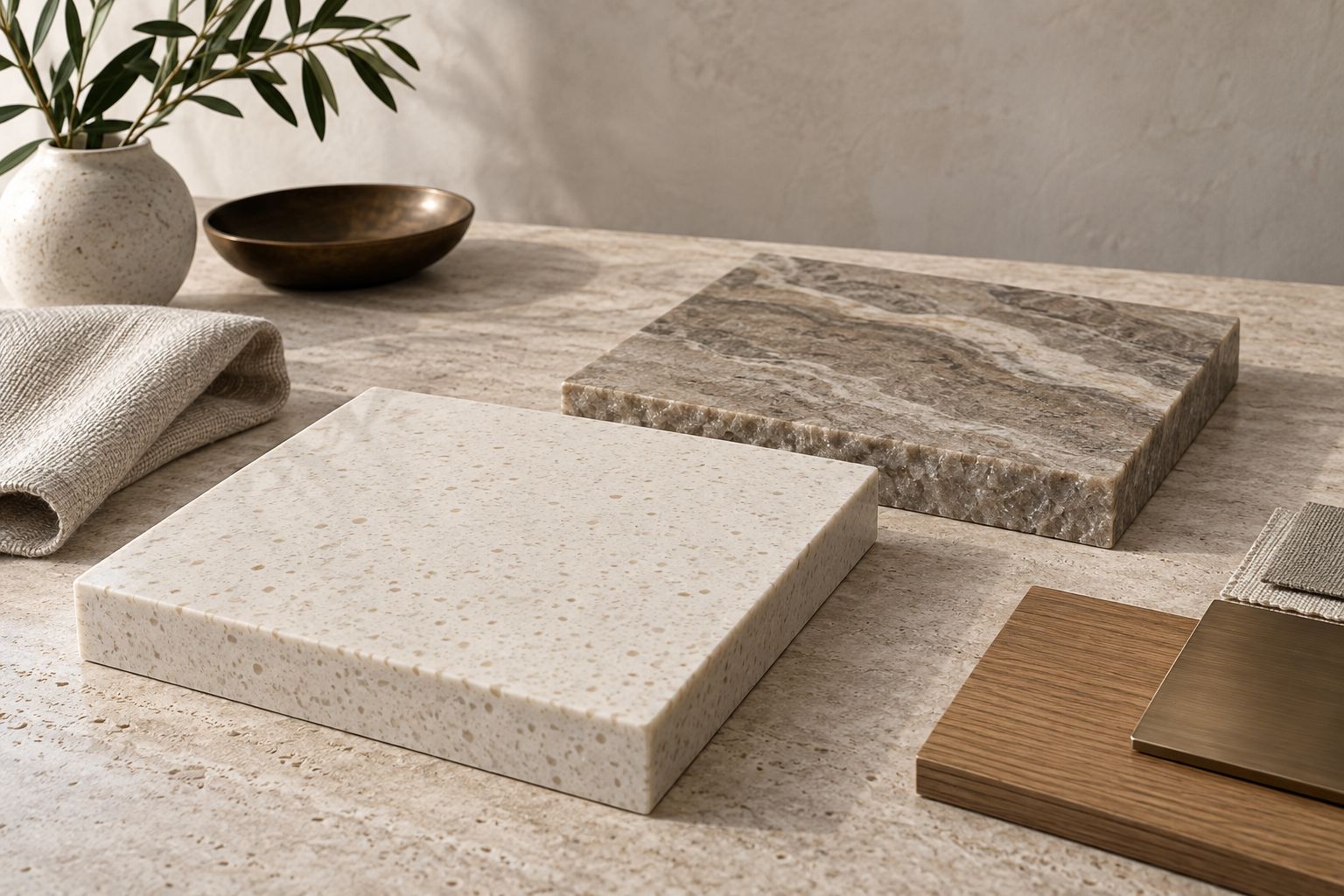
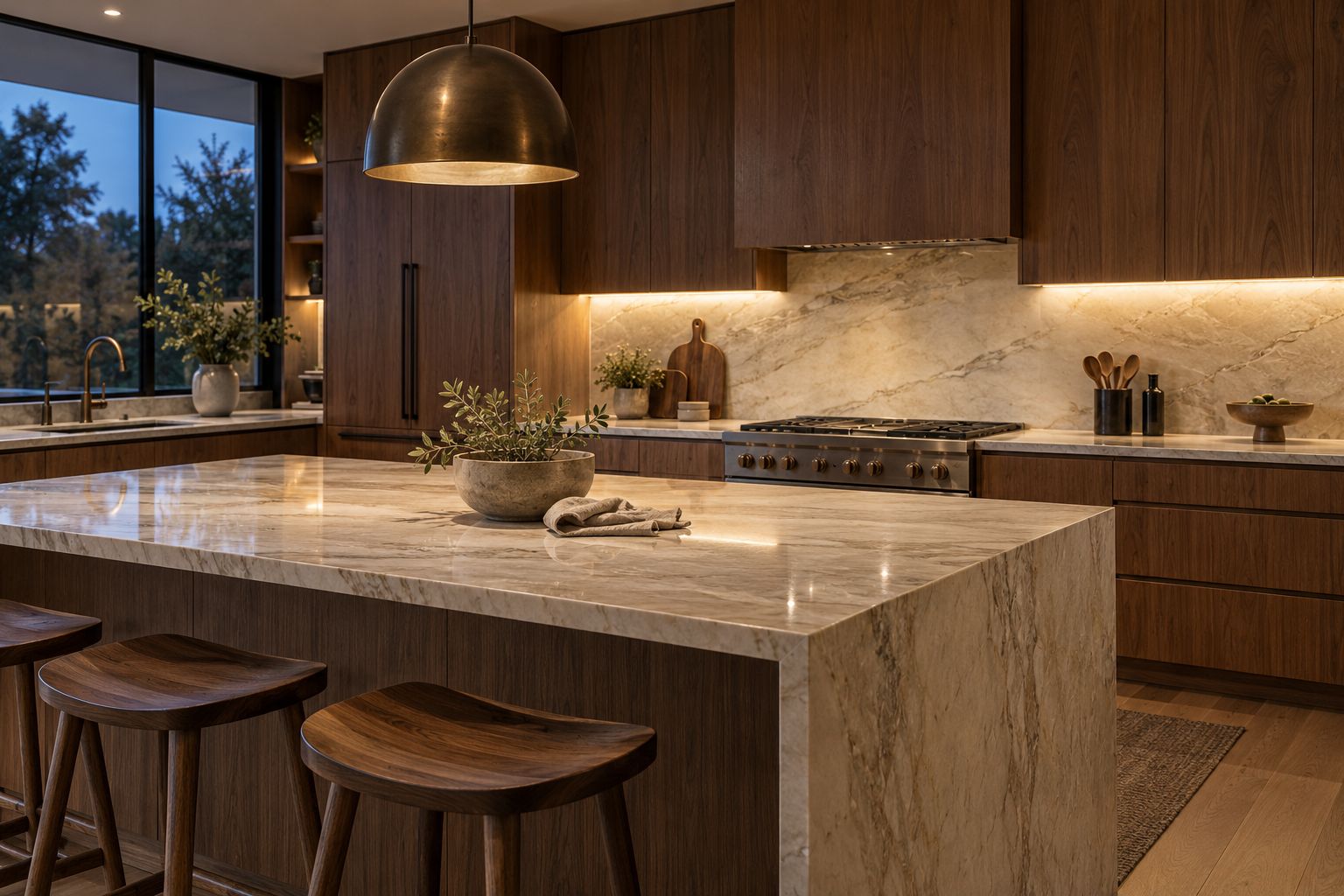
Start with the surface you will see and touch most often. If the island is the center of the room, choose its material before collecting competing finishes for every other surface. A green-gray quartzite might invite pale oak and warm plaster. A creamy slab might feel at home beside walnut, linen, and brushed bronze.
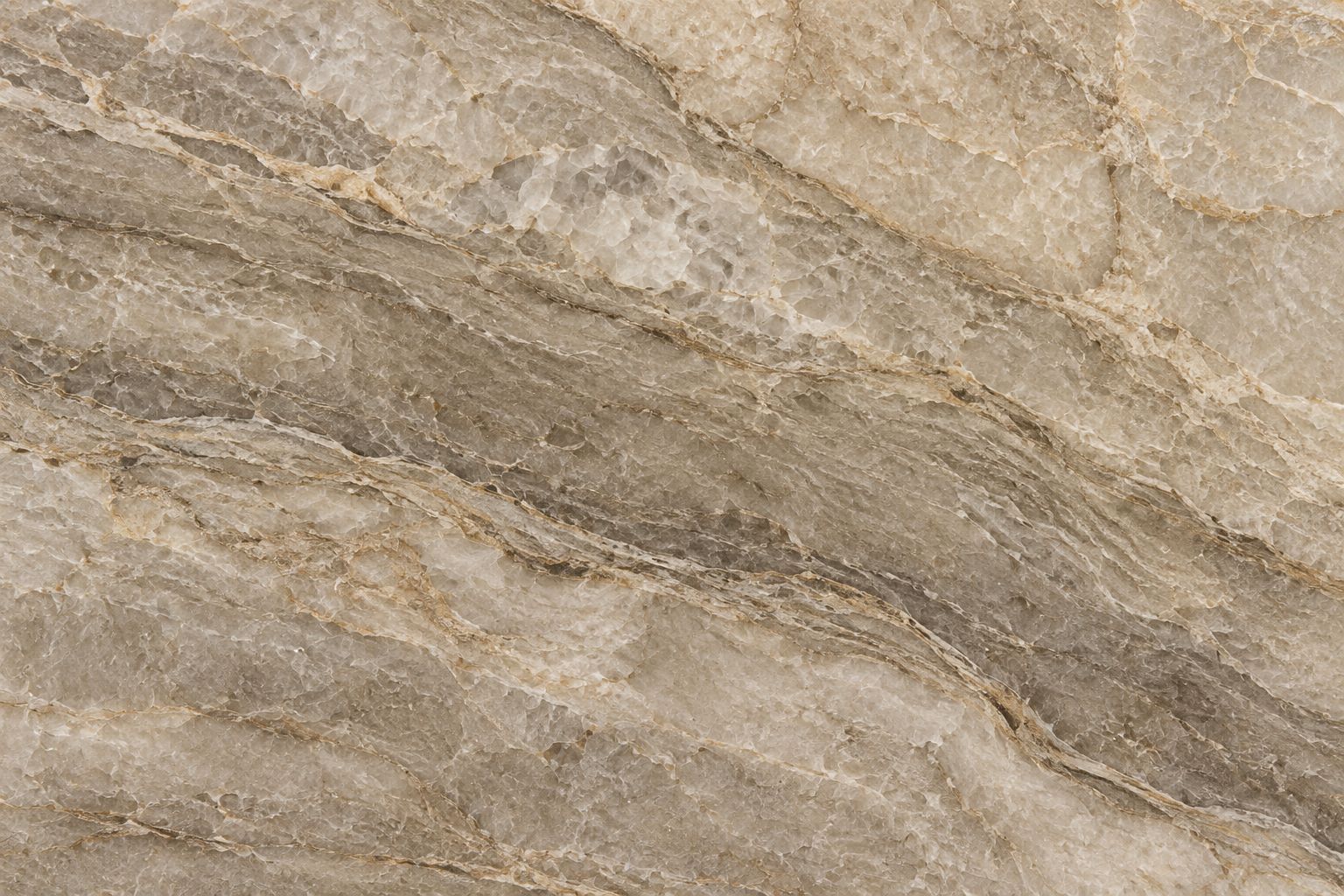
The quartzite library includes Taj Mahal, Cristallo, and Sea Pearl as named references for exploring different mineral palettes. Compare them as individual examples, then review the actual slab. A name or a photograph cannot tell the whole story of a natural material.
If you prefer a more controlled composition, explore engineered quartz. If expressive veining is the priority, marble can offer another direction. Our quartz versus quartzite guide helps frame the practical comparison.
Give the island a role beyond display
An island can be a preparation surface, a place for breakfast, and the point where guests naturally gather. Sketch those uses before deciding how large it should look. Think about the route from refrigerator to sink, where serving dishes land, and whether someone sitting at the island interrupts the person cooking.
A waterfall return draws attention to the stone’s continuity. It also makes the end of the island an important part of the composition. Review the veining across the top and return together, and discuss how the fabricator will lay out the pieces. A striking slab deserves careful decisions about edges, seams, and support.
See The movement of stone for a kitchen palette built around green-gray quartzite and light oak. Use it to identify the details you enjoy, then adapt the arrangement to your own room.
Let the quieter materials do their work
When stone carries a strong pattern, neighboring materials can give it room. Cabinetry with a simple grain, a restrained wall color, and hardware repeated consistently can connect the composition without filling every surface with a new idea.
Look at samples beside the finishes you intend to keep. Existing flooring, window frames, and appliances belong in the palette too. Place the samples flat and vertically; the way light meets a backsplash can differ from the way it meets an island.
Design for the evening, too
The kitchen should feel comfortable after the task of cooking is finished. Under-cabinet LED lighting can reveal the backsplash while keeping light near the work surface. A pendant gives the island a visual center, and a separate accent layer can create a gentler setting for conversation.
Review those sources with the selected stone. Reflections, fixture position, and dimming affect the experience as much as the fixture’s appearance. Our layered lighting story explores that transition from preparation to gathering.
What should you bring to a stonework consultation?
Bring a photograph from the kitchen entrance, approximate dimensions, cabinet and flooring references, and a few saved slab examples. Describe what a typical evening looks like, including how many people cook and where visitors tend to stand.
Care belongs in that conversation. The Natural Stone Institute’s care guidance recommends understanding the specific stone, protecting surfaces with trivets, and selecting appropriate cleaners. Ask for the care requirements of your chosen finish rather than assuming all stone behaves alike.
Explore custom stonework and save your favorite material examples. A useful brief connects a beautiful surface with the way you want the kitchen to work every day.
Bring the materials, lighting, and details you love into a conversation about your own space.
Plan your projectMaterial studies
The details that make the room.