Light & atmosphere / Scintillax journal
A home that changes with the evening.
Explore layered LED lighting for kitchens, shelves and architectural details. Design a warm evening atmosphere with thoughtful placement, dimming and material pairing.
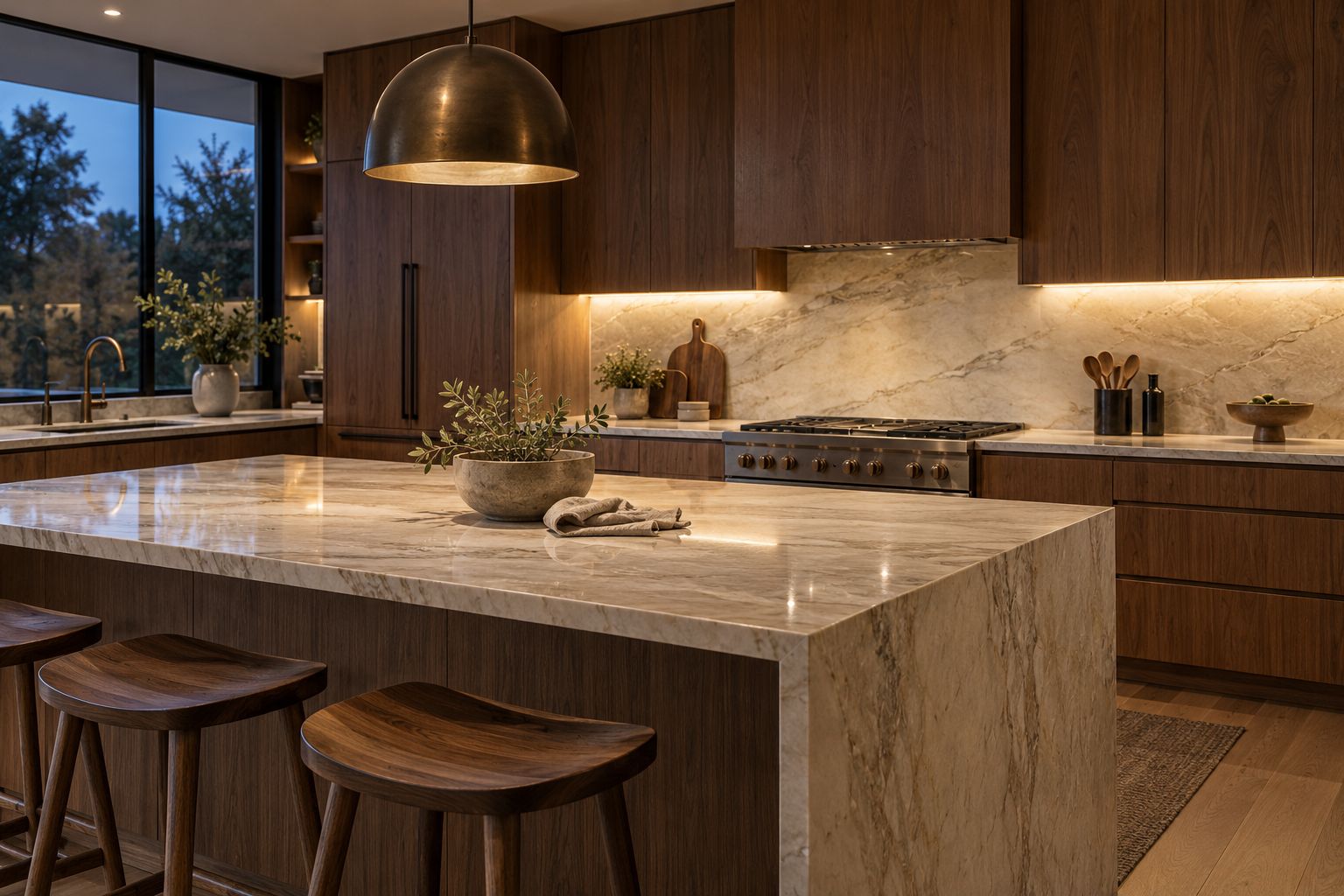
At the end of the day, the same room can ask for a different kind of light. A kitchen that needs clear illumination for chopping vegetables may feel more inviting with the work finished, the overhead lights dimmed, and a soft line of light across the backsplash. The furniture has stayed where it was. The atmosphere has changed.
Layered LED lighting design begins with that transition. Think about the things you do in a space, the materials you want to notice, and the places where light should stay quiet. A thoughtful scheme gives each source a purpose and allows the room to move between daily routines.
Begin with three everyday moments
Describe a morning, a busy evening, and a quiet night. In the kitchen, those might be coffee at the island, food preparation, and a conversation after dinner. In a living room, they might be reading, welcoming friends, and watching a film.
Write down what you need to see in each moment. That small exercise is more useful than choosing fixtures in isolation. It also helps identify which lighting groups should be controlled separately. A room that can adjust to your routine often feels more personal than one with a single setting for every occasion.
Put useful light close to the task
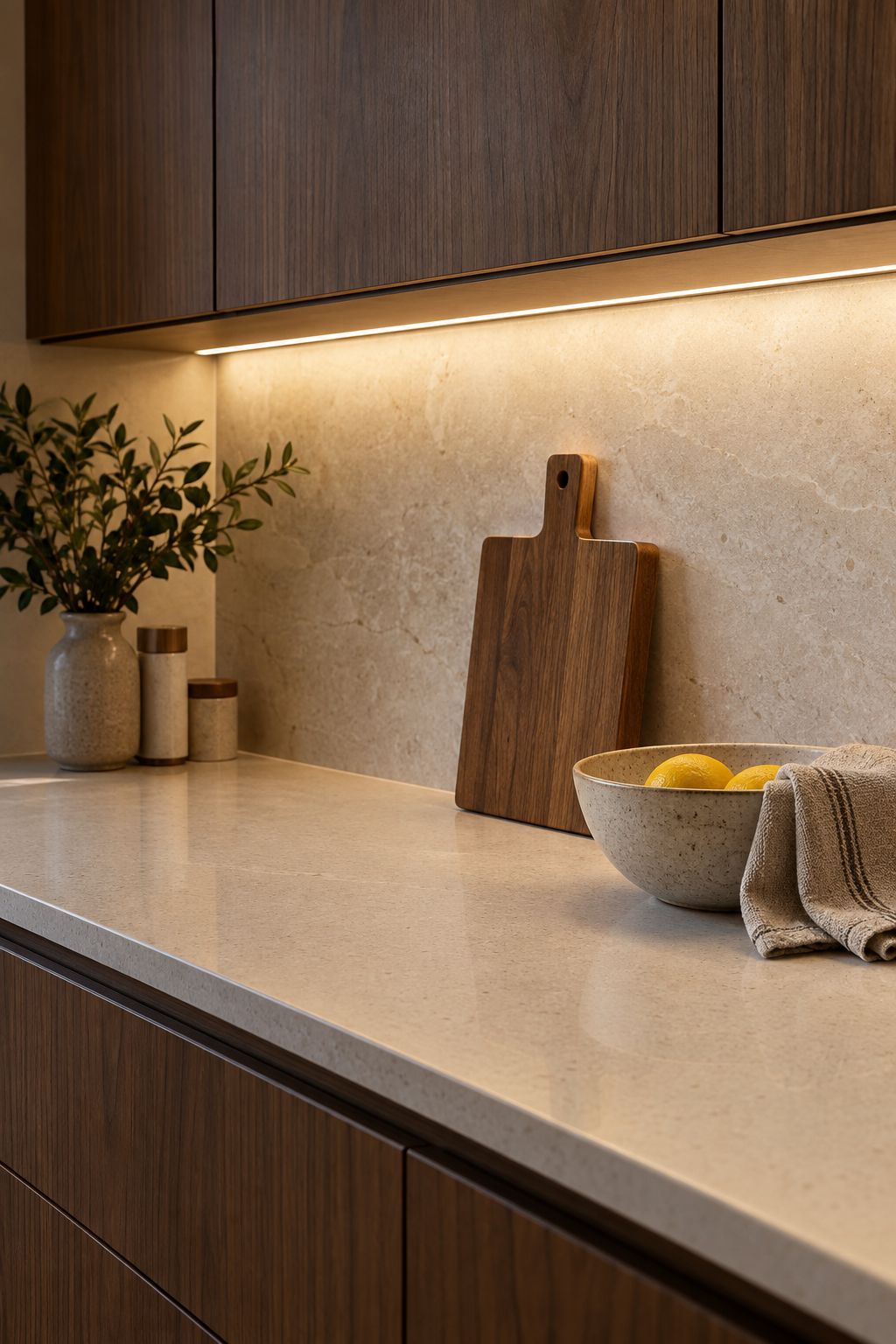
Cabinet and shelf lighting can bring light nearer a countertop or reveal objects in a display niche. Placement matters: a line of light should be reviewed from where you stand, sit, and enter the room. A source concealed from one angle may be visible from another.
Take photographs from those viewpoints before a consultation. Note polished stone, glass, and glossy cabinet finishes, because reflected light can become part of the composition. Ask to review the proposed profile and diffusion with the actual cabinetry rather than treating the LED strip as the whole installation.
Use accent light to reveal a material
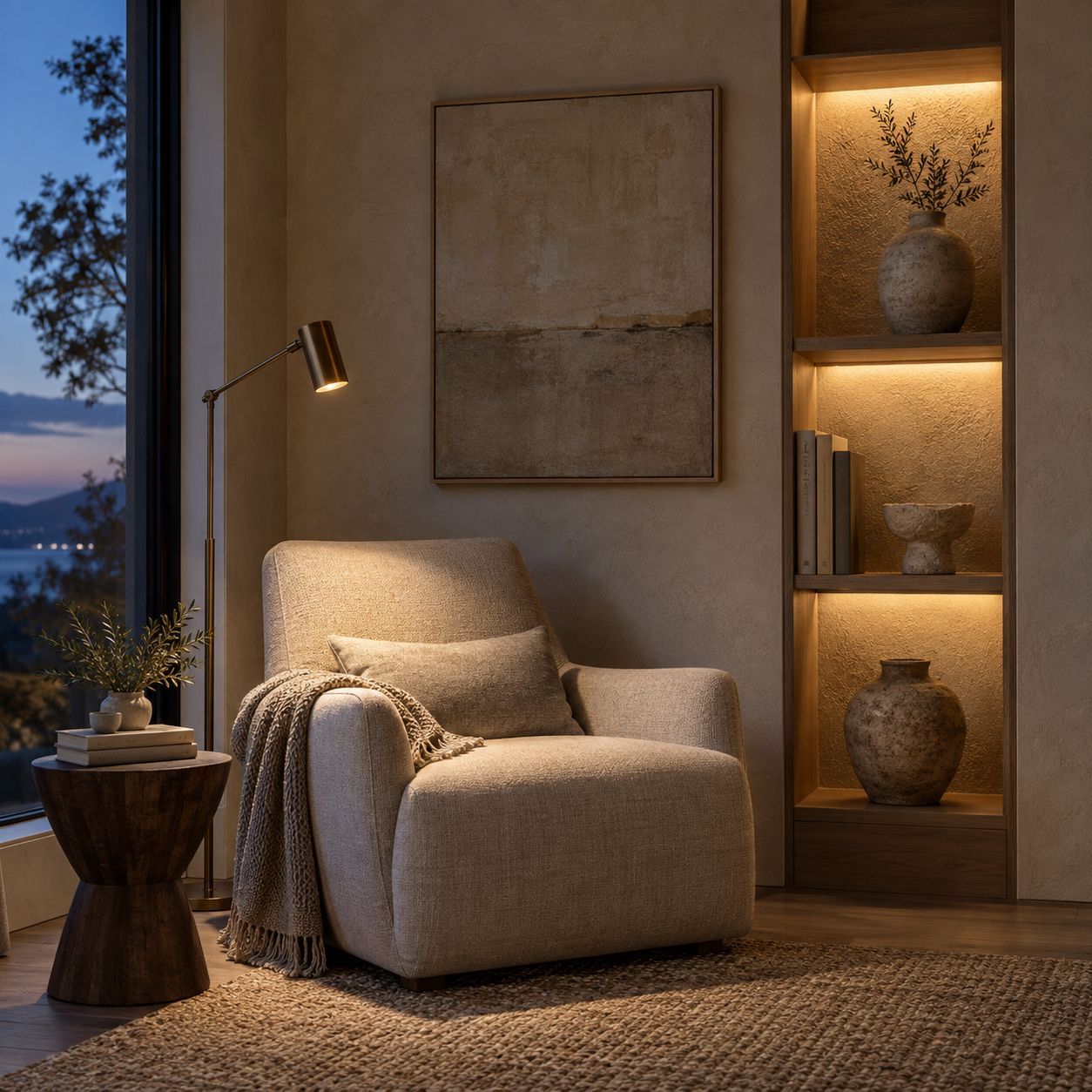
A textured wall can become a focal point when light meets it from a carefully chosen direction. A shelf can acquire depth with a restrained glow behind it. These are opportunities for architectural accent lighting, where the relationship between the source and the surface matters as much as brightness.
Compare a smooth engineered quartz surface with limestone or a more tactile concrete finish. Each offers a different visual starting point. Review the light on a sample and consider whether you want to emphasize texture, soften it, or simply make the room easier to use.
Keep the palette of light coherent
Warm wood, creamy stone, and bronze details can suggest an intimate evening mood. The right lighting choice still depends on the particular room. Compare proposed color temperatures side by side with the finishes, and judge them in both daytime and evening conditions.
Dimming deserves the same attention. Discuss compatible controls, drivers, the useful dimming range, and whether several groups should move together or independently. The quality of a lighting scheme is often felt in the transitions between settings.
Explore modern interior lighting for a broader approach, and Stone, in a different light for the relationship between walnut, stone, and concealed illumination.
Give one feature space to be noticed
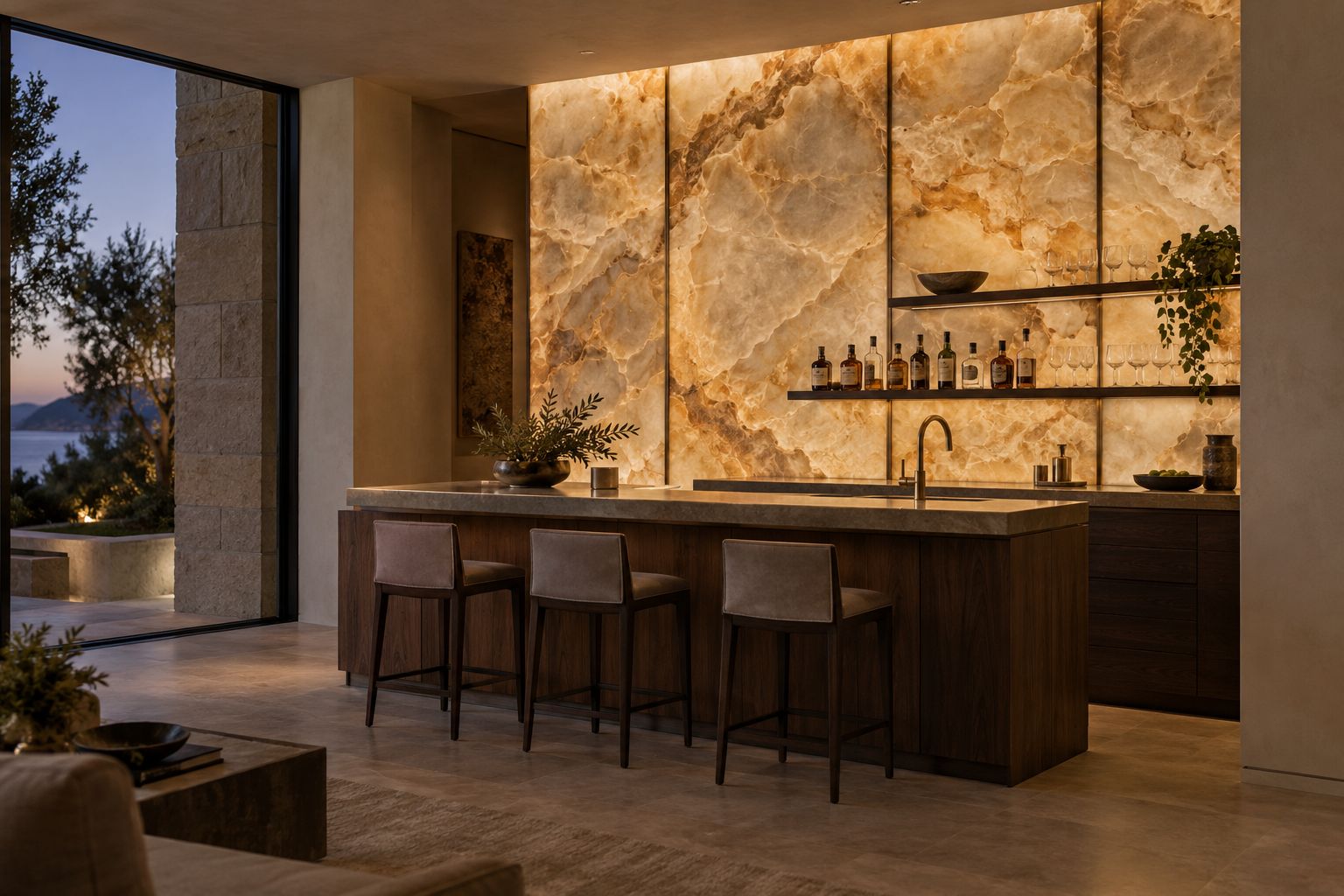
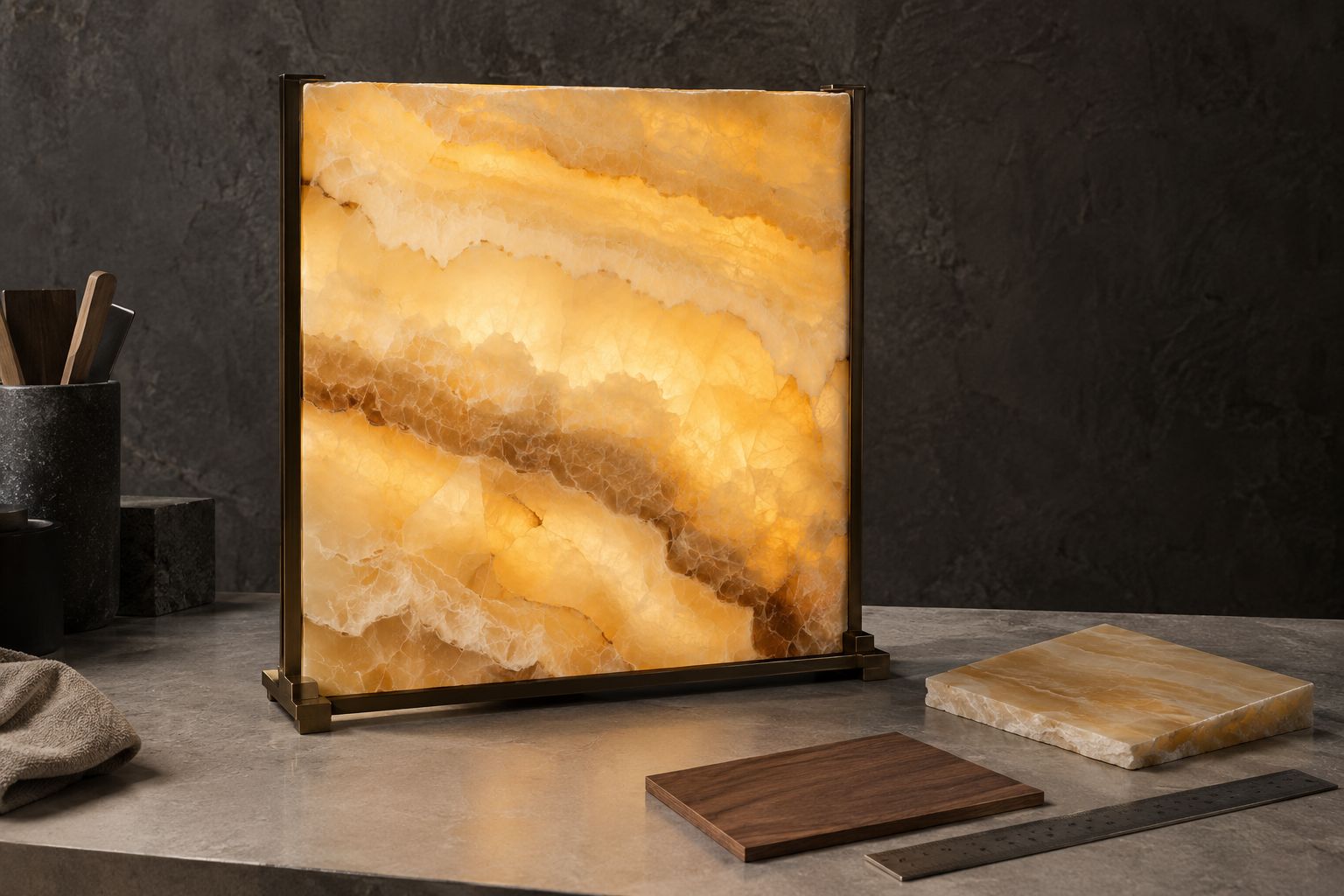
An illuminated bar or stone wall can carry the evening scene. Surrounding sources can then stay restrained, allowing the material to become the point of attention. Backlit stone should be planned with the selected slab, its support system, and maintenance access in mind.
Our backlit onyx design story considers that material-led approach. The planning guide for glowing stone introduces the questions to resolve before a final specification.
What makes a useful lighting brief?
Bring a room photograph, a simple plan, examples of the finishes, and the three everyday moments you want the lighting to support. Identify existing controls and the fixtures you hope to keep. Describe where glare bothers you or where the space currently feels too flat.
For homes in Fort Myers, Cape Coral, Naples, and the surrounding communities, Scintillax’s LED lighting services start with the space and its intended use. The goal is a scheme that feels considered when you are doing something practical and equally comfortable when you have time to enjoy the room.
Bring the materials, lighting, and details you love into a conversation about your own space.
Plan your projectMaterial studies
The details that make the room.