Material notes / Scintillax journal
Cristallo: the stone that learned to hold light.
Follow Cristallo quartzite from its Brazilian origins to a finished stone kitchen, through slab selection, fabrication, waterfall installation, and light.
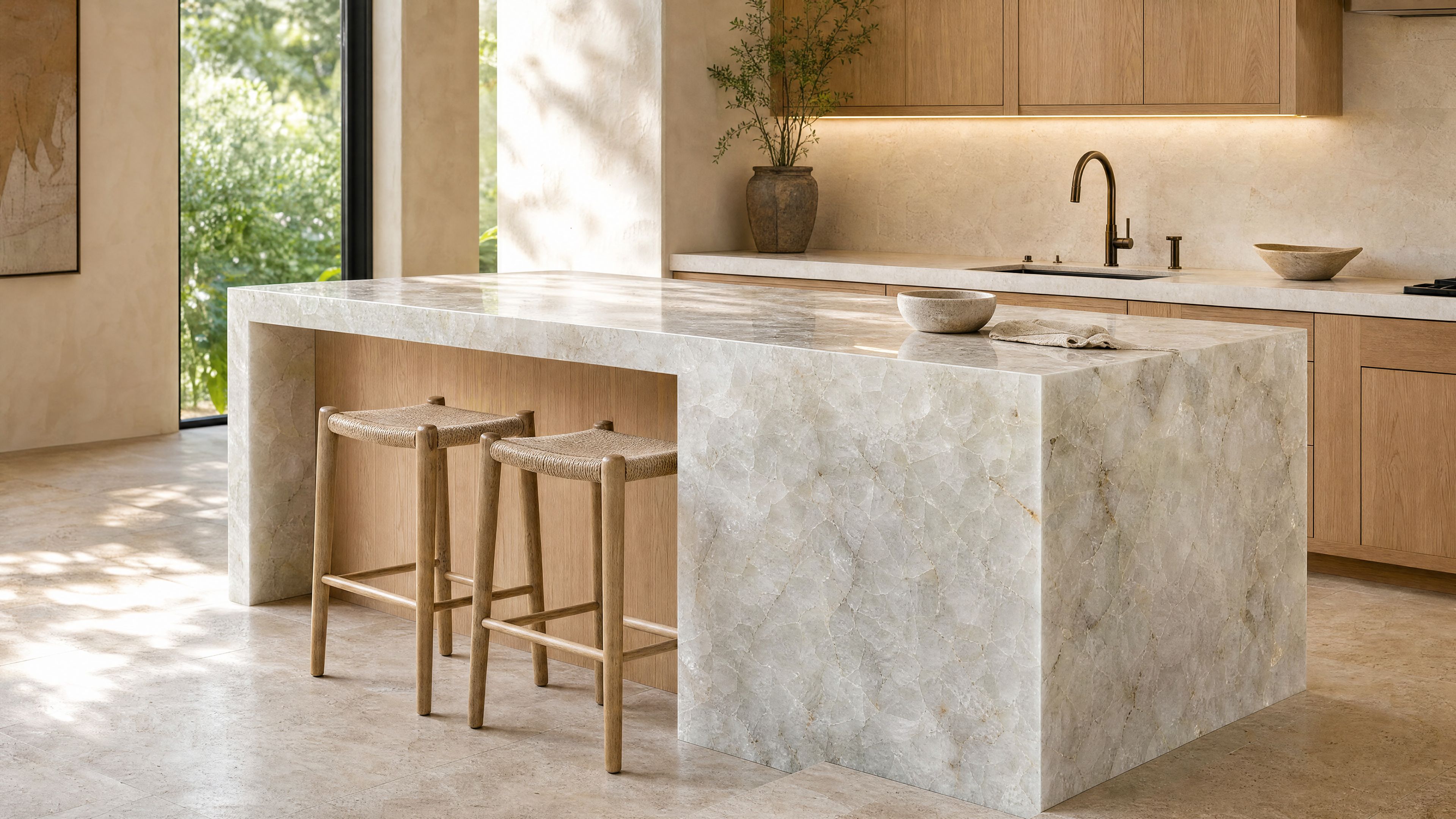
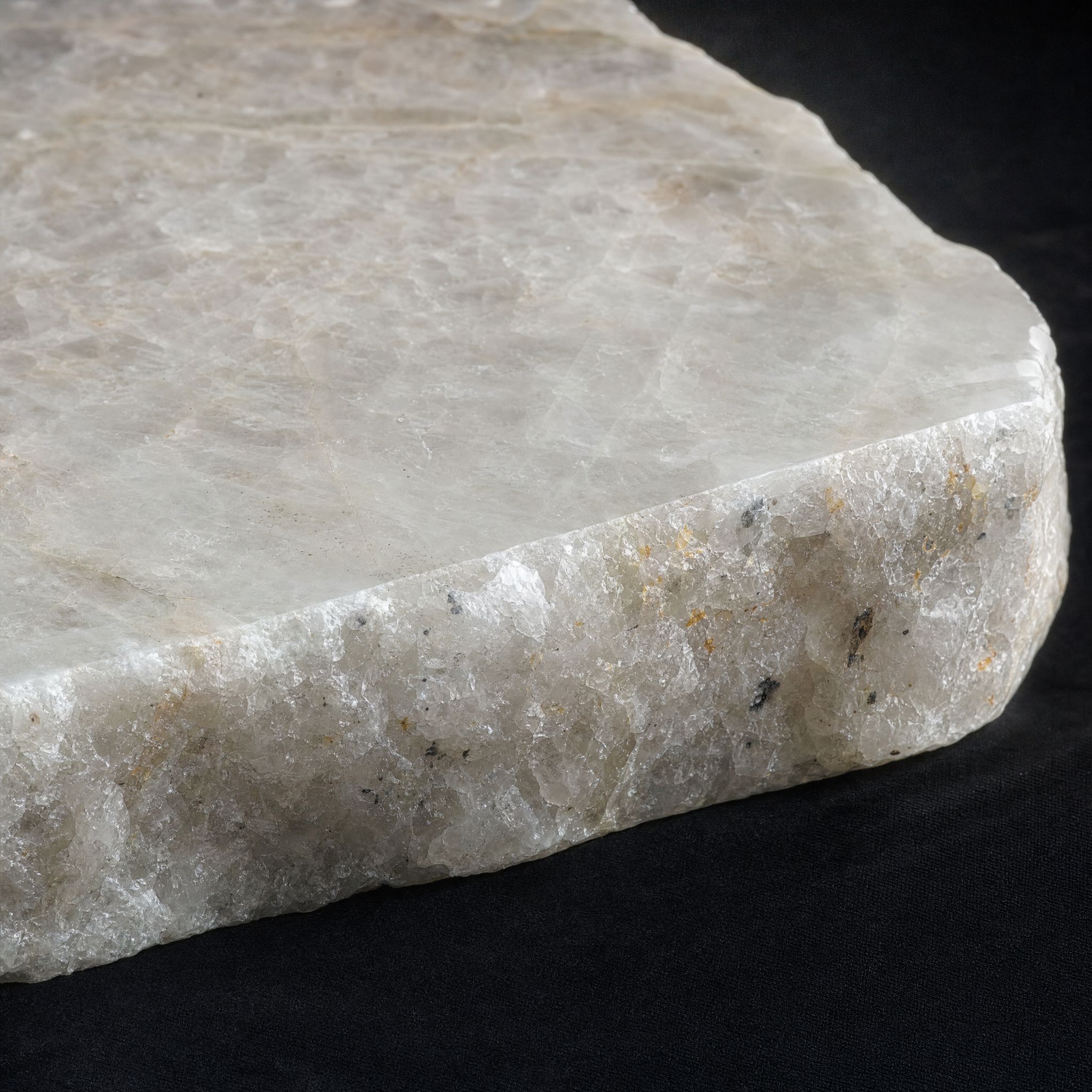
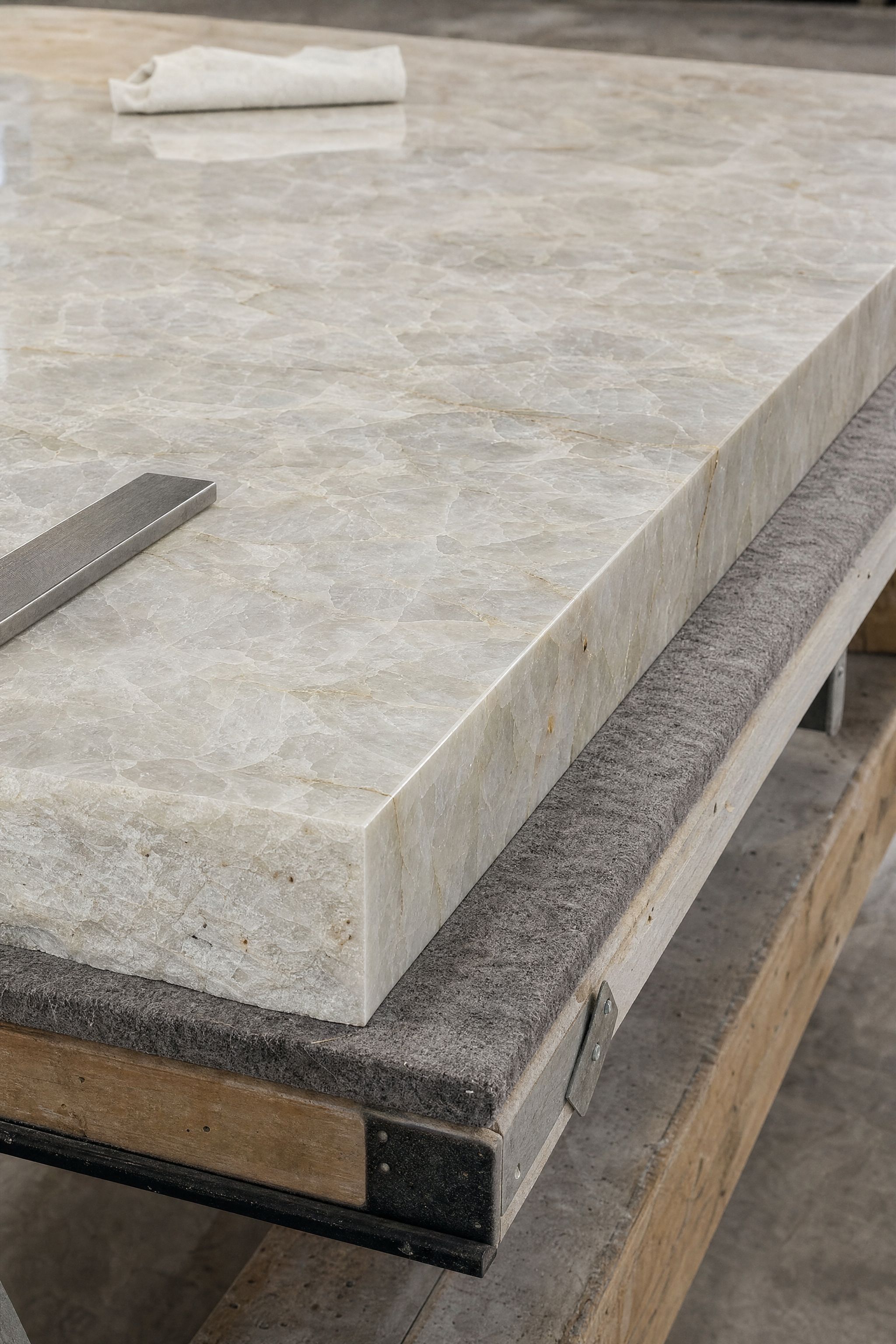
At first, there is only a pale surface in the morning light. A cup rests on it. Someone opens a drawer, and the room begins its day. Beneath the cup, fine gray threads pass through a field of white crystals. An amber fleck catches the sun, then disappears as a cloud moves across the window.
This is Cristallo quartzite, now living at the center of a kitchen. To understand how it arrived here, we must leave the room and follow its story backward: past the polished edge, the workshop, the ocean crossing, and the first cut into the earth.
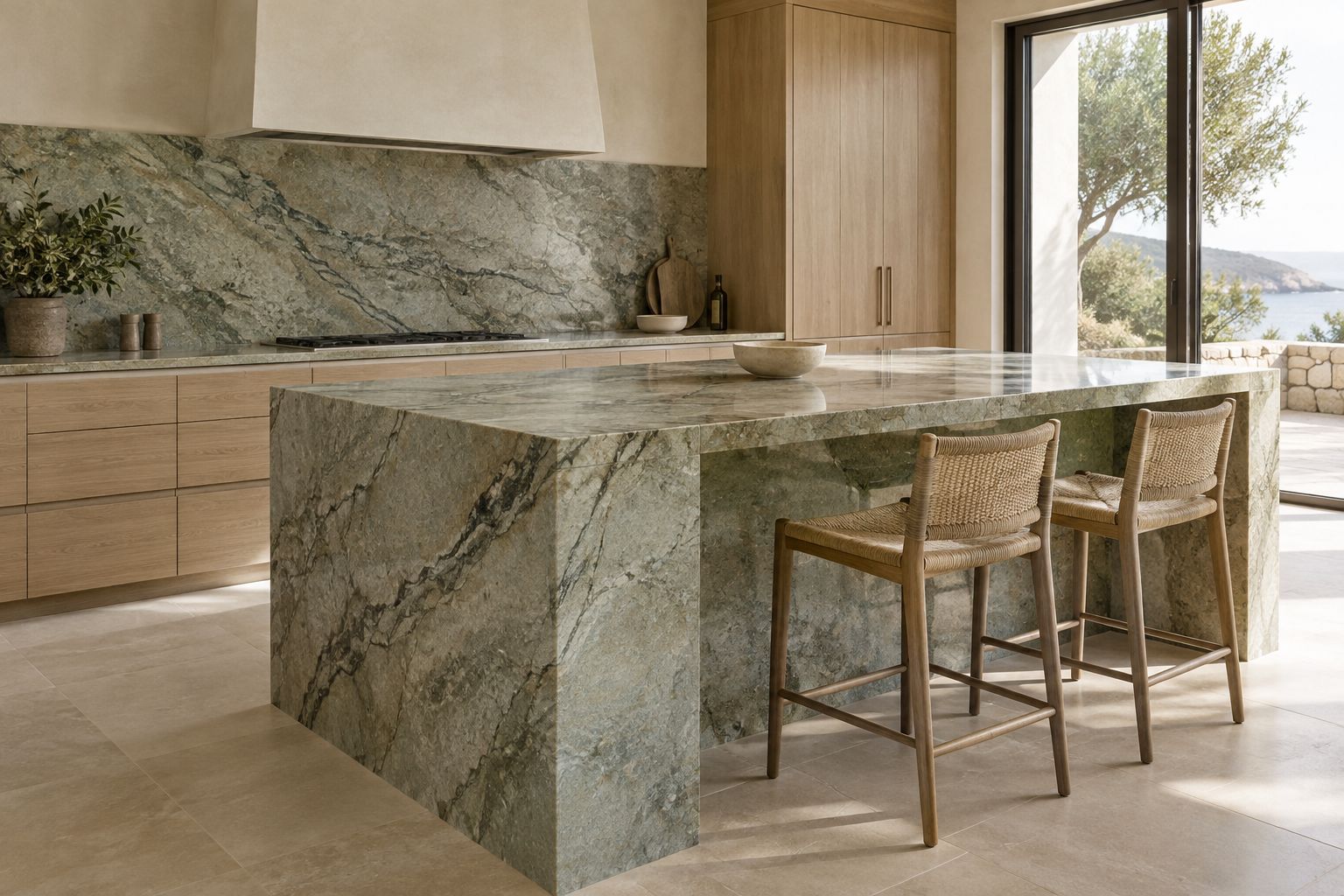
The illustrated kitchen is a design study. This story follows a typical material journey; the origin and treatment of a selected slab should be confirmed with its supplier.
Before it had a name
Long before a slab is chosen, the earth has already done the slow work of making stone. Quartzite’s geological family begins with quartz-rich sand. Burial, heat, and pressure transform sandstone, bringing its grains into a tightly joined crystalline structure. The Natural Stone Institute’s geology overview describes that gradual transformation. It gives us a way to understand the material, rather than an exact birth date for the slab in front of us.
Imagine the story at the scale of a single grain. Once separate, it becomes part of a larger body. Time leaves traces that a kitchen drawing could never invent: a cloudy region, a darker inclusion, a seam of color taking an unexpected turn.
Much later, people give the material a trade name. Cristallo. A name that suggests what the eye notices first: the quiet depth of its crystals.
Its first encounter with daylight
Cristallo sold for architectural use comes from Brazil. MSI’s Cristallo specification identifies a Brazilian quartzite with a cool white background, gray veining, and orange flecks. Another producer, Polita, locates its Crystallo quarry in Bahia. These references establish a place in the world; the paperwork for the actual slab tells its more specific story.
At the quarry, the stone is still a mass within a landscape. Extraction separates a block that can travel onward. Its exposed faces offer the first glimpse of what has been hidden: pale mineral fields interrupted by movement, each section a little different from the next.
There is no identical sibling waiting inside the mountain. This matters later, when a small sample seems to promise a particular kitchen. The full slab may tell a more complicated, and more interesting, story.
The journey becomes a sequence of slabs
The block must change its shape before it can belong to a room. In Alliance Cristallo’s account of its production process, diamond-wire cutting turns selected Brazilian blocks into slabs, followed by finishing and polishing. Secure packing and container transport carry those slabs toward their next destination.
With each new face, the pattern becomes easier to read. Polishing allows reflected light to describe the surface; translucent areas suggest something happening beneath it. A mineral thread that appeared as a small mark on one face may become a long passage across another.
The stone travels as valuable, carefully handled material. Its eventual destination is still an outline: a fabricator’s workshop, a drawing, a room whose cabinets may not yet be ready. It has left the earth, but it has not yet found its place.
Learning the shape of a kitchen
In the slab yard, someone stops in front of it. The selection begins with looking, then becomes a conversation about use. Where will the morning light fall? Which face will be visible from the entrance? Will the island hold a sink, a preparation area, or a place to sit while dinner is made?
A Cristallo kitchen works best when those questions meet the actual slab. Review its full dimensions, movement, finish, and any repairs or reinforcement with the supplier and fabricator. Confirm the material’s identity and care requirements, too. Use Natural Stone’s quartzite guidance explains why trade labels alone can be misleading.
For a waterfall island, the top and vertical return are planned together. A line may appear to continue over the edge, but that continuity depends on the layout and cuts. Approve the proposed arrangement before fabrication, including where the pattern changes and where joints will remain visible.
Around the pale stone, oak can bring warmth. A quiet wall finish can let the crystalline texture stay in focus. The design grows from observation: how this particular material looks beside the finishes you intend to live with.
A new edge, a new outline
Now the kitchen becomes precise. Final measurements are taken with the cabinetry in its intended position. The sink, faucet, and appliances have identities and dimensions. Edges, cutouts, joints, overhangs, and support are resolved before a valuable slab is committed to a cut.
For the stone, this is another transformation. A broad rectangular face becomes a countertop, a backsplash, or a waterfall panel. Qualified fabricators use tools and methods suited to the selected material. MSI’s handling guidance calls for wet cutting rather than dry cutting; that work belongs in a properly controlled fabrication setting.
The polished edge is a small detail with an unusually large role. It meets the hand every day. A softly eased profile can feel comfortable while keeping the room’s lines simple. A mitered assembly can create the appearance of a deeper edge, with its construction planned honestly rather than assumed from a photograph.
By the time the pieces leave the workshop, the slab has learned the dimensions of its future home.
The day it finds its place
Installation begins before the stone arrives at the door. The crew reviews access and handling, while the receiving cabinetry and planned supports are checked. The pieces are carefully brought into position and their fit reviewed before final fixing and joint finishing. The sink, backsplash, waterfall returns, and neighboring appliances each have to meet the same room accurately.
The beauty of a long island depends on what carries it. Overhangs, cutouts, and joints need support appropriate to the stone and layout. These are among the subjects covered by the Natural Stone Institute’s installation standards; the installer resolves the details for the actual project.
Then the pace slows. Edges are checked. Joints are finished. The room is cleaned, and care instructions are handed over. The island settles into a relationship with the cabinetry, the floor, and the path people will take around it.
The earth’s material has become part of the home’s daily geography.
When evening moves inside the stone
Later, the daylight withdraws. With a suitable translucent slab and a carefully planned lighting system, another part of Cristallo’s character may emerge. Light behind the stone can reveal cloudy crystalline regions while denser mineral passages remain darker.
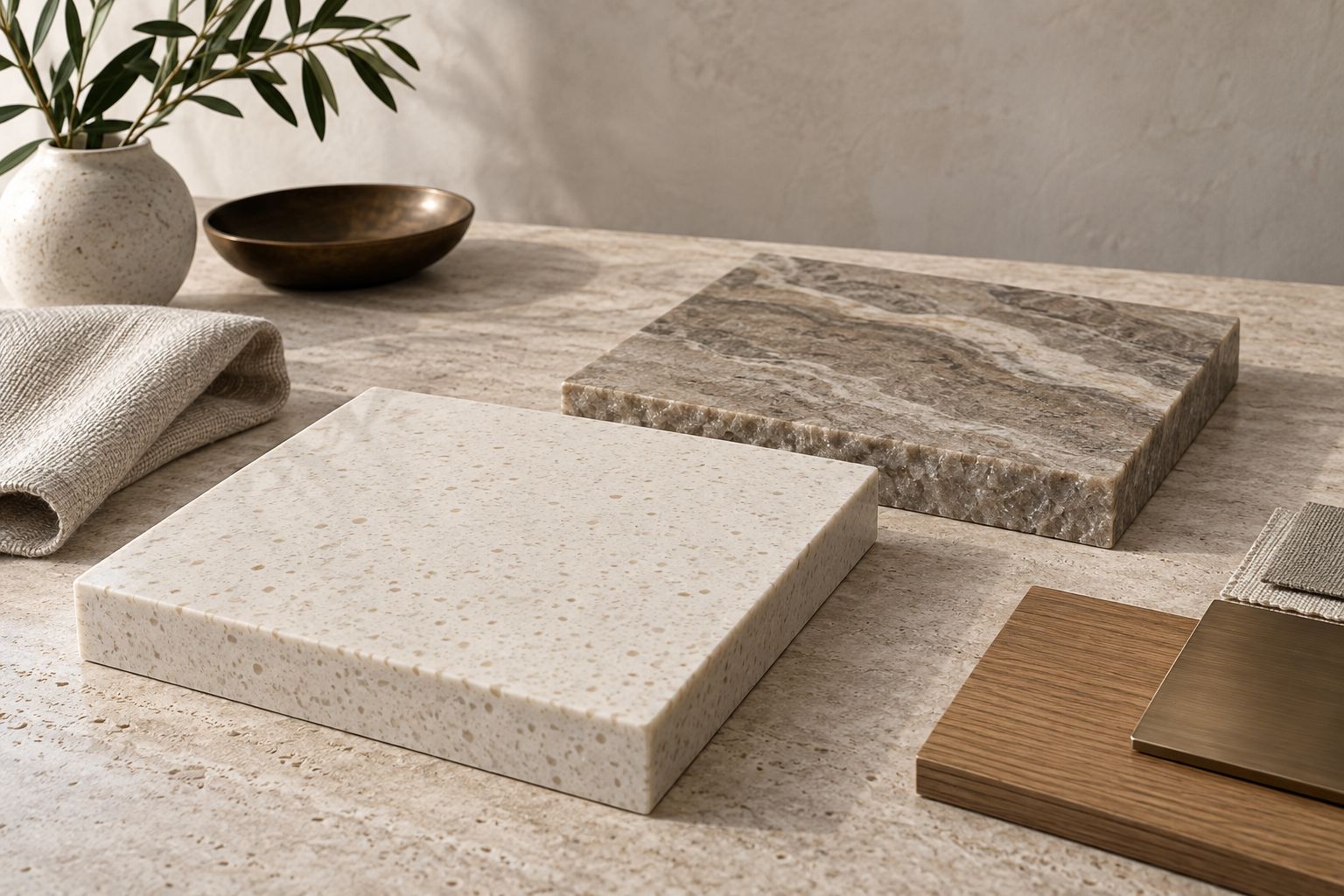
For that effect, begin with a test of the actual selected material. Thickness, finish, backing, and mineral variation influence what you see. Review a representative sample with the proposed lighting, including the brightest areas, shadows, and dimmed evening setting. The photograph offers a direction; the mockup tells you whether the combination works.
Backlit stone lighting belongs in the design conversation before fabrication. Space for diffusion, support, wiring, heat management, accessible drivers, and future maintenance all need a place in the assembly. Our backlit stone planning guide explores those decisions.
The goal is a gentle reveal. The stone keeps its texture, and the kitchen keeps its sense of calm.
A life measured in mornings
From here, its story becomes familiar. Breakfast. A bowl of fruit. A visitor staying a little longer than planned. The same mineral fleck appearing whenever the afternoon sun reaches the island.
Care is part of this life. Use a cutting board and a trivet, blot spills promptly, and clean with a suitable neutral cleaner and soft cloth. The Natural Stone Institute’s care guidance recommends understanding the specific stone and following supplier guidance on sealing. An impregnating sealer can improve stain resistance; it does not make a surface stain-proof. The selected slab, its treatment, and its finish determine the care plan.
Cristallo remains stone, with a history older than the room. Yet its newest chapter is intimate: the cool edge beneath a hand, the light moving across its surface, the kitchen becoming a place people return to.
Explore Cristallo in the quartzite material library, then bring your slab references and room photographs into a stonework conversation. The next chapter begins with the way you want to live.
Bring the materials, lighting, and details you love into a conversation about your own space.
Plan your projectMaterial studies
The details that make the room.
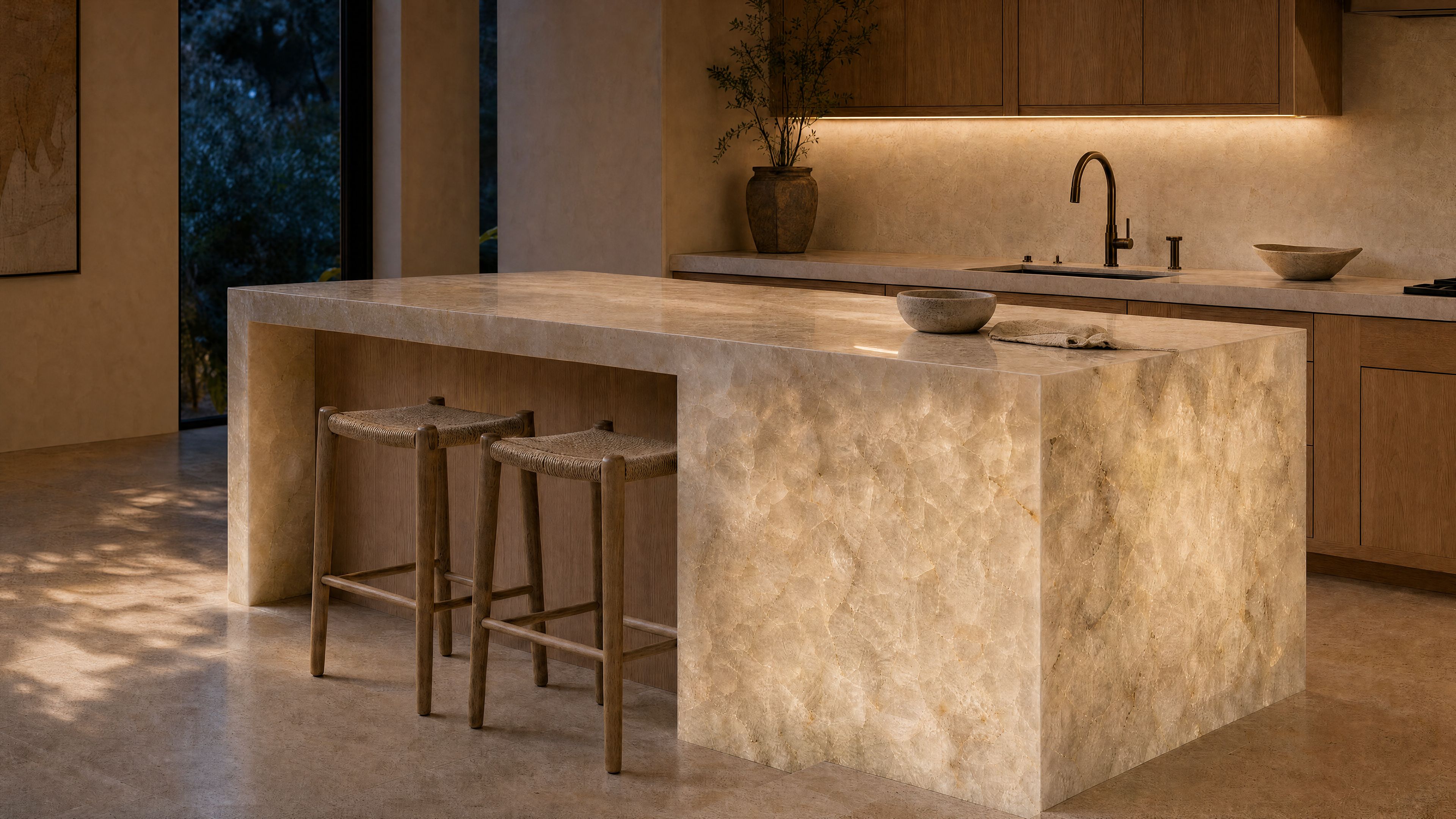
AI-generated design inspiration. Materials and spaces are illustrative; review the actual selections for your project.