Light & atmosphere / Scintillax journal
Planning backlit stone countertops.
Plan a backlit countertop, island, bar or feature wall with slab testing, LED diffusion, support, controls and maintenance access in Southwest and Southeast Florida.
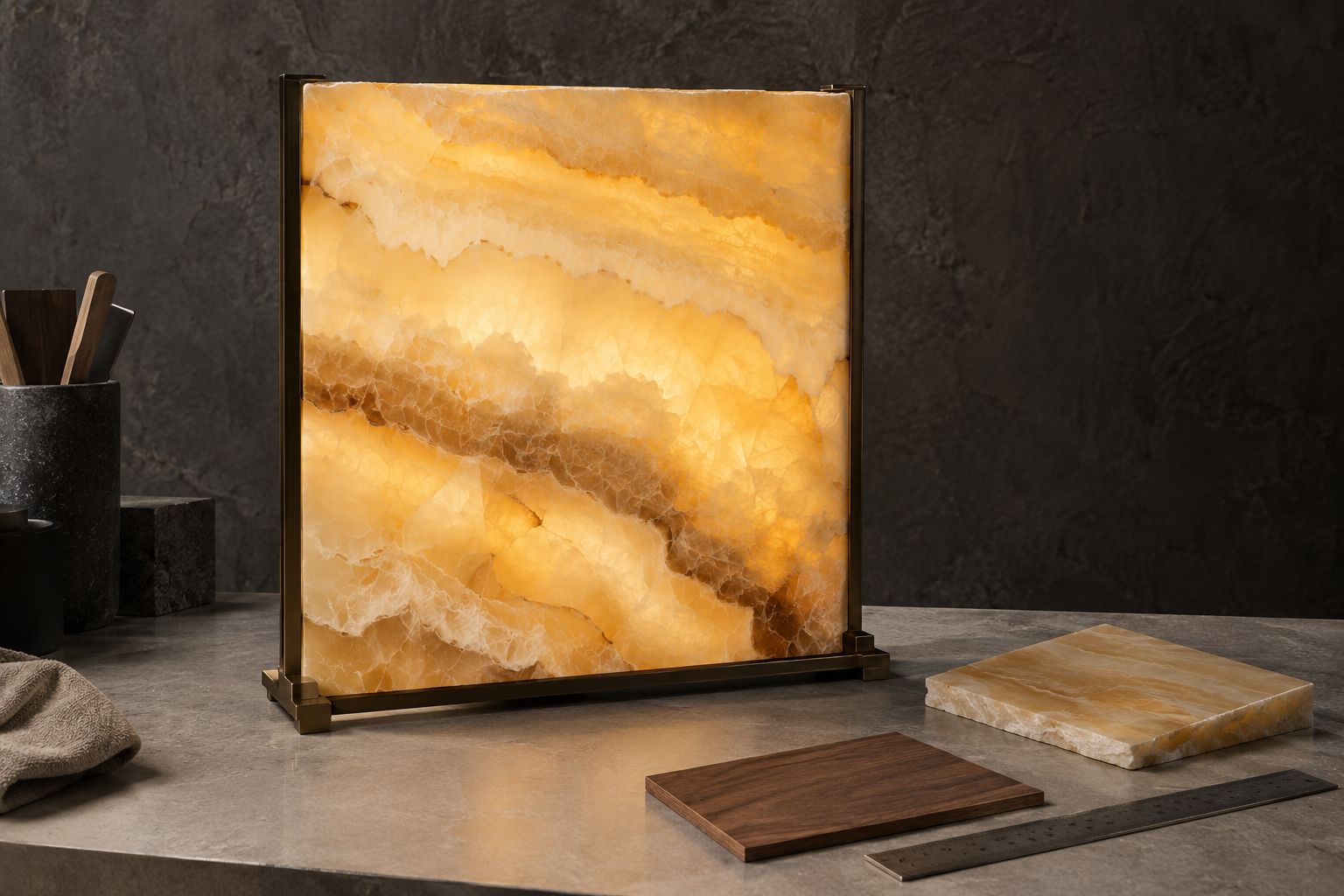
A backlit stone countertop brings the material and its lighting into one design. For an island, bar or feature wall, the first decision is how the actual stone looks with the light both on and off. Scintillax designs and installs backlit stone countertops, bars and feature walls across Southwest and Southeast Florida, planned alongside the custom stone itself.
Choose the slab before the lighting effect
The name of a stone is a starting point. Translucency varies within and between slabs, and a photograph cannot establish how your selection will transmit light. Review the actual slab or a representative sample with the proposed lighting before committing to the layout.
Onyx, selected quartzite and selected marble can be considered for an illuminated feature, subject to testing and suitability for the application. A pale color alone is not evidence of translucency. Veins, natural inclusions, thickness, reinforcement and backing can change what you see.
For a kitchen worktop, appearance is only part of the selection. Discuss the care requirements, intended use, edge, support and cutouts with the stone team. An illuminated wall panel and a frequently used countertop need different practical reviews.
Distinguish backlighting from light beneath a counter
Backlighting passes through a suitable surface. A concealed strip beneath an opaque countertop instead lights the cabinetry or floor around it. Both can be useful, but they create different results.
If you want the stone itself to glow, specify the illuminated faces on the drawings: the horizontal worktop, a waterfall end, the bar front or a backsplash. A lighting layout for one face should not be assumed to illuminate every adjoining face evenly.
Review the stone and LED assembly together
Ask to review the proposed LED arrangement, diffusion space and supporting assembly with the selected material. The goal is a considered effect without distracting bright spots, visible components or unexpected shadows.
Seams, edges, sink and appliance cutouts, reinforcement and fixing points belong in the same discussion. The material and lighting teams should agree on the layout before fabrication. Structural supports must remain appropriate for the stone; electrical connections and protection require qualified trade coordination.
Make the controls and maintenance accessible
Plan where drivers, wiring connections and controls will sit, and how they can be reached after installation. Review dimming, color temperature and the lighting components as a compatible system. Avoid an arrangement that requires dismantling a finished stone feature for routine access.
View the proposed effect alongside cabinet lighting, pendants and architectural accent lighting. In a bright room, the feature may read differently by day and after sunset. An on-screen preview helps discuss an idea; the material review determines the final selection.
Questions to settle before requesting a quote
Can all quartzite be backlit?
No. The individual slab, its thickness and the proposed assembly must be assessed. A quartzite name or a similar-looking example does not guarantee light transmission. Bring the slab reference into the quartzite selection conversation.
What is the stone in a lighted marble countertop?
An image or marketing label may refer to marble, onyx, quartzite or another surface. Confirm the exact material and supplier specification. Engineered quartz and natural quartzite are different products; do not substitute one name for the other.
How is a backlit marble countertop planned?
Begin with the material test and intended application, then coordinate stone thickness, support, fabrication details, light distribution, controls and access. The approved assembly and electrical work should be defined before installation begins.
Can quartz countertops be lit from within?
Engineered quartz should not be assumed to transmit light. Review the exact product and supplier requirements before proposing backlighting. If the surface is opaque, concealed light can illuminate the cabinetry or floor around it, while a tested translucent stone offers a different effect. Quartz and quartzite are distinct materials.
Which stone is best for a glowing countertop?
There is no single best selection for every application. Test the actual onyx, quartzite, marble or other proposed surface with the intended light, then compare its appearance, care and suitability for the use. A photograph described as glowing or lighted marble does not establish its precise material.
What determines the cost of a backlit countertop?
Slab selection, the illuminated area, thickness, fabrication, support, lighting components, controls, service access and electrical coordination influence the scope. Confirm those details in a project-specific proposal. Backlighting should be priced as a complete stone and lighting assembly rather than an LED strip alone.
Prepare a useful project brief
Send a photograph of the room, approximate dimensions, the faces you want illuminated, your community and any slab references. For a condominium or island property, include delivery and building-access requirements. Scintillax can discuss the scope for homes in Fort Myers, Naples, Bonita Springs and the surrounding service area.
Slab selection, fabrication, support, lighting components, controls, electrical coordination and site access all affect the proposal. Start with the custom countertop service and request a consultation to define the work for your space.
Bring your location, room photographs and the details that matter most. We can review the materials, light and practical requirements together.
Plan your lighting