
A closer look at the craft
Wine display enclosures
Give the collection a considered setting.
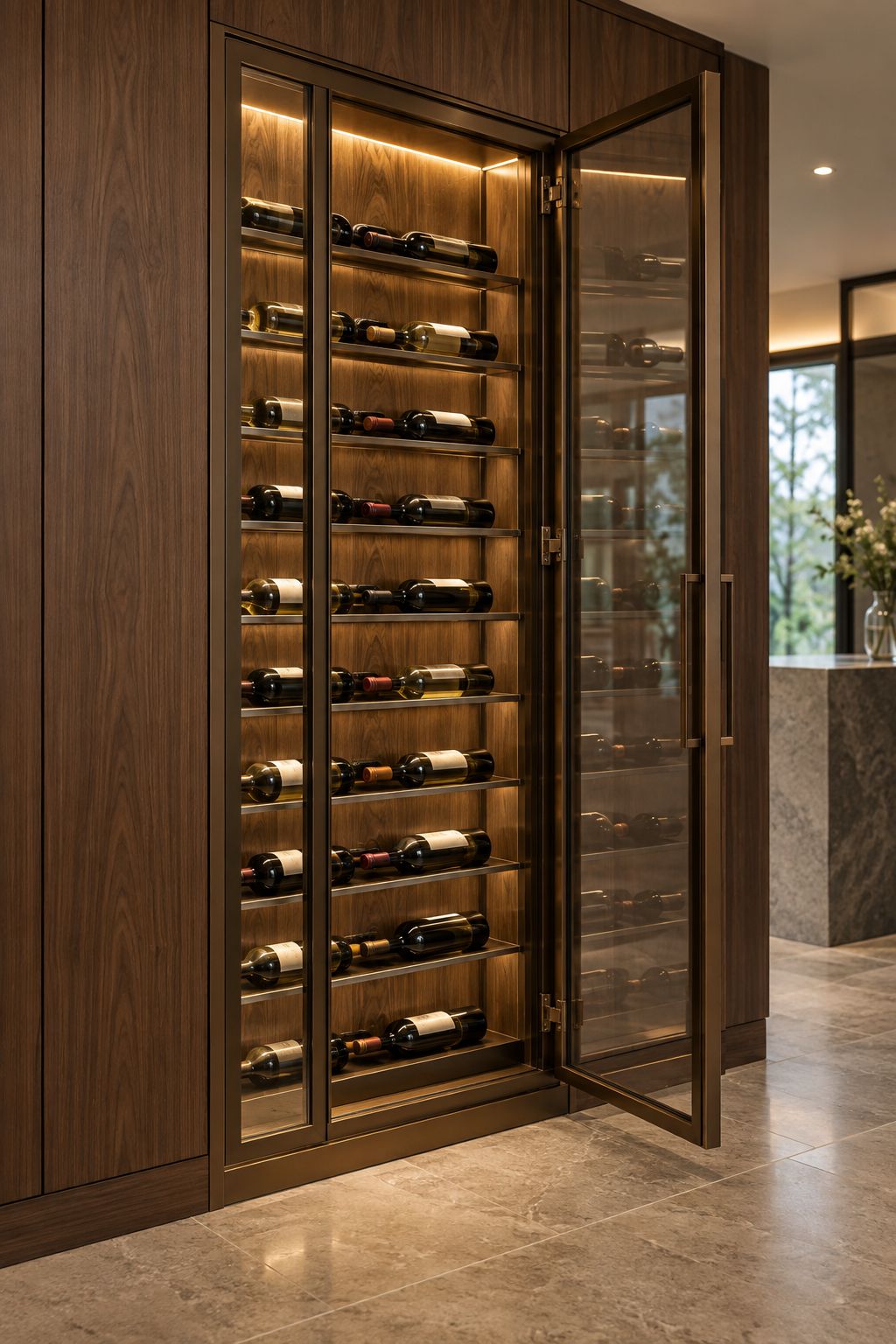
Consider every detail.
A glass wine display can sit beside a dining room, within a cabinet run or as a more architectural enclosure. Clear panels bring the racks and material palette into view, while hardware and framing establish the outline. We review the intended display, access and surrounding construction before discussing the glass. Any temperature-control requirements are a separate part of the project brief.
Choose the place from the room around it.
Consider the display from the dining table, entrance and nearby seating. A narrow vertical enclosure has a different presence from a broad glass-front cabinet. Decide whether the collection should be the main focal point or a quieter part of the interior. Share approximate dimensions and the neighboring furniture so the enclosure can be proportioned in its actual setting.
Coordinate racks and doors together.
Bottle storage, rack depth and door movement influence the usable enclosure. Discuss access for everyday use and cleaning, including handles and any projecting fittings. The rack system and cabinetry should be reviewed before glass dimensions are confirmed. A clear arrangement allows the display to look composed while leaving practical room to reach the collection and maintain the assembly.
Review glass clarity and reflections.
Standard clear and low-iron references can help compare the appearance of a panel beside timber, stone and metal. Judge the sample with the intended lighting because reflected sources can compete with the display. The final panel, safety treatment, support and door hardware are specified for the opening. A photograph can describe the atmosphere without establishing the required glass system.
Keep lighting restrained and accessible.
A gentle shelf layer can reveal the collection without filling every surface with bright reflections. Consider the view from the dining seat as well as from directly in front of the display. Concealed sources and drivers still need service access. Coordinate their locations with cabinetry and racks so lighting can be reviewed as part of the whole enclosure.
Define specialist requirements in the brief.
If temperature or humidity control is planned, involve the appropriate system requirements before the enclosure design is finalized. Door seals, interfaces and surrounding construction may be affected. A decorative glass display should not be assumed to provide conditioned storage. Bring rack references, desired capacity, room photographs and any specialist drawings so responsibilities and scope can be discussed clearly.
Bring the details together.
Your next step.
Share your location, photographs, and the ideas you are considering. We will review the project and discuss a consultation. Final scope, materials, and pricing follow a review of the actual space.
View all Southwest and Southeast Florida service areas.
Discuss your projectA gallery of possibilities
Wine display enclosures: design ideas.
Explore the shapes, materials and details. Select an image for a closer look.
Bring the ideas you enjoy to a conversation about your own space.
Before you begin
Your questions, considered.
Start with these planning details, then discuss the requirements of your own space.
Can glass be designed around a wine display?
Yes. Review the opening, shelving, doors, hardware and views together. The enclosure layout must allow suitable access and fixing details for the finished space.
Is a glass wine display automatically climate controlled?
No. Temperature and humidity control require a separate review of the complete enclosure and conditioning system. Share any climate requirements before the glass, seals and doors are specified.
When should the enclosure be measured?
Plan the design early, then confirm final dimensions against the completed supporting surfaces and agreed display layout before fabrication.
Bring photographs, your project location and the details you would like to discuss.
Discuss your projectBuild your material palette
Materials for this application.
Explore relevant examples from the material library. Compare current samples, finishes and care before making your selection.


Availability and suitability are confirmed for your project. Current physical samples and the required specification guide the final choice.