Materials, light & space
A warm reveal.
Amber onyx and walnut create a softly illuminated focal point for an intimate bar.
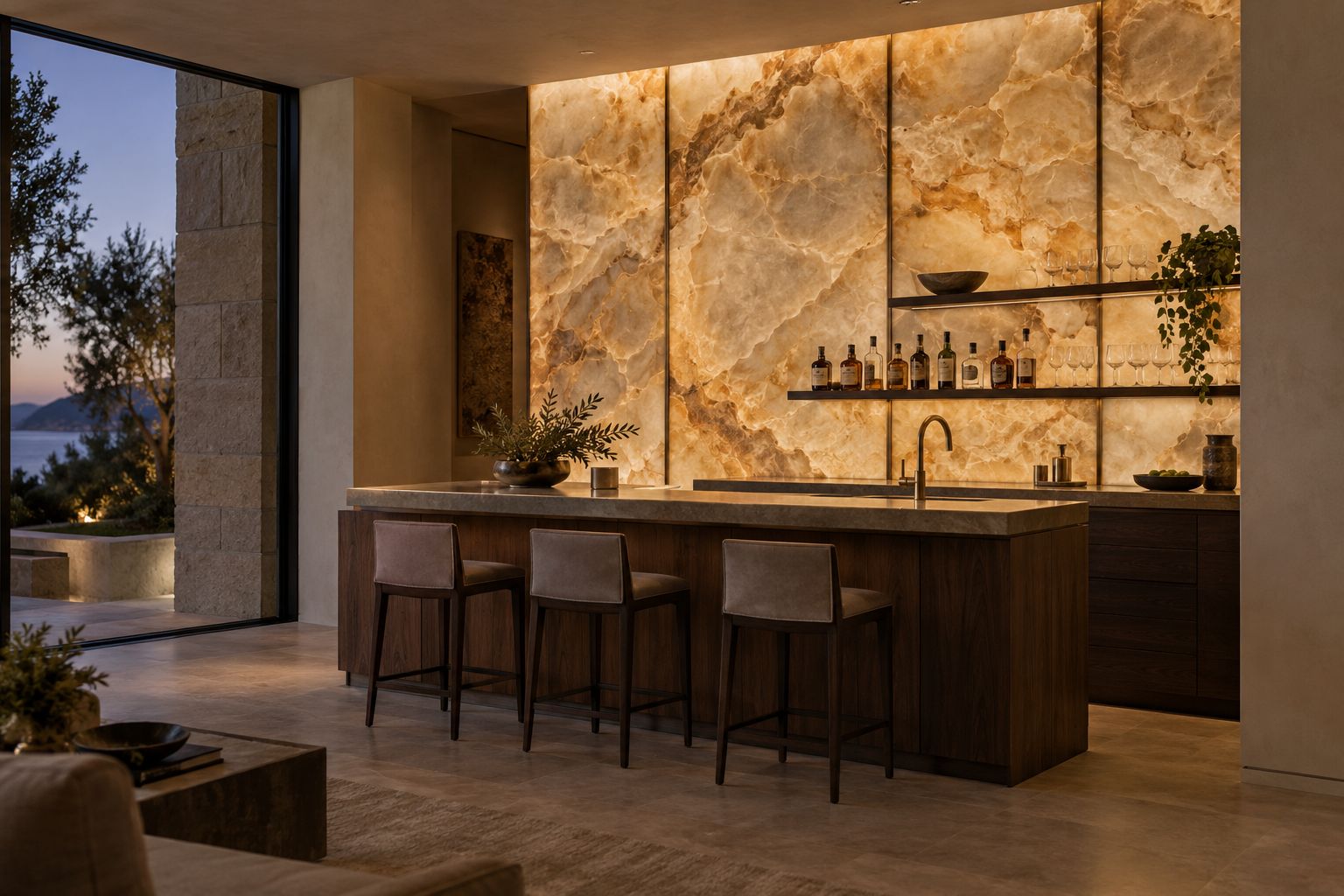
Light passing through translucent onyx reveals mineral clouds and subtle shifts in color. Dark walnut gives the illuminated stone a quiet frame.
Let the actual slab lead
Review a physical sample with the proposed light source. Discuss diffusion, panel joints, dimming, support and maintenance access before choosing a final layout.
Bring the idea with you
Save this idea to your inspiration board and tell us which materials or details you like when planning your consultation.
Material studies
A closer look.
The detail
Give the glow a quiet frame.
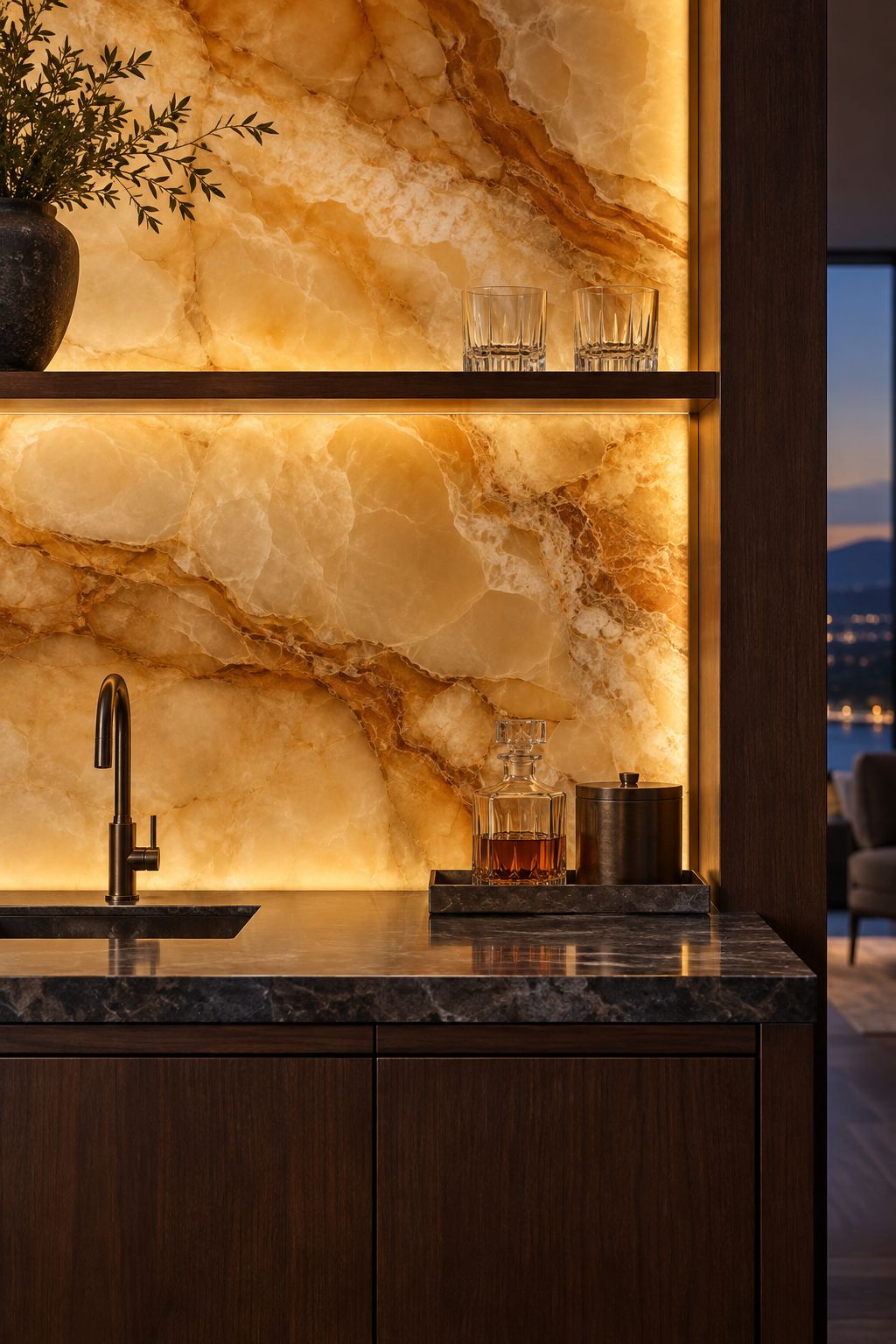
Dark walnut provides a calm boundary around the honey-colored onyx. The narrow bronze shelf and clear glasses offer scale while leaving the mineral clouds visible. At dusk, the illuminated stone becomes the bar's focal point; the adjoining surfaces can stay softer in the background. It is a composition built around a single expressive material, with the lighting there to reveal rather than obscure its character.
Consider the feature from the entry and the seat where it will be seen most often. Decide whether it should lead the whole room or create a more intimate corner. Review the surrounding pendants and reflections along with the backlight, and discuss separate controls where different evening settings are useful. A sample test should establish the effect with the proposed slab, backing, diffusion, and light source before the final face dimensions are chosen.
The material
Let the selected stone set the mood.
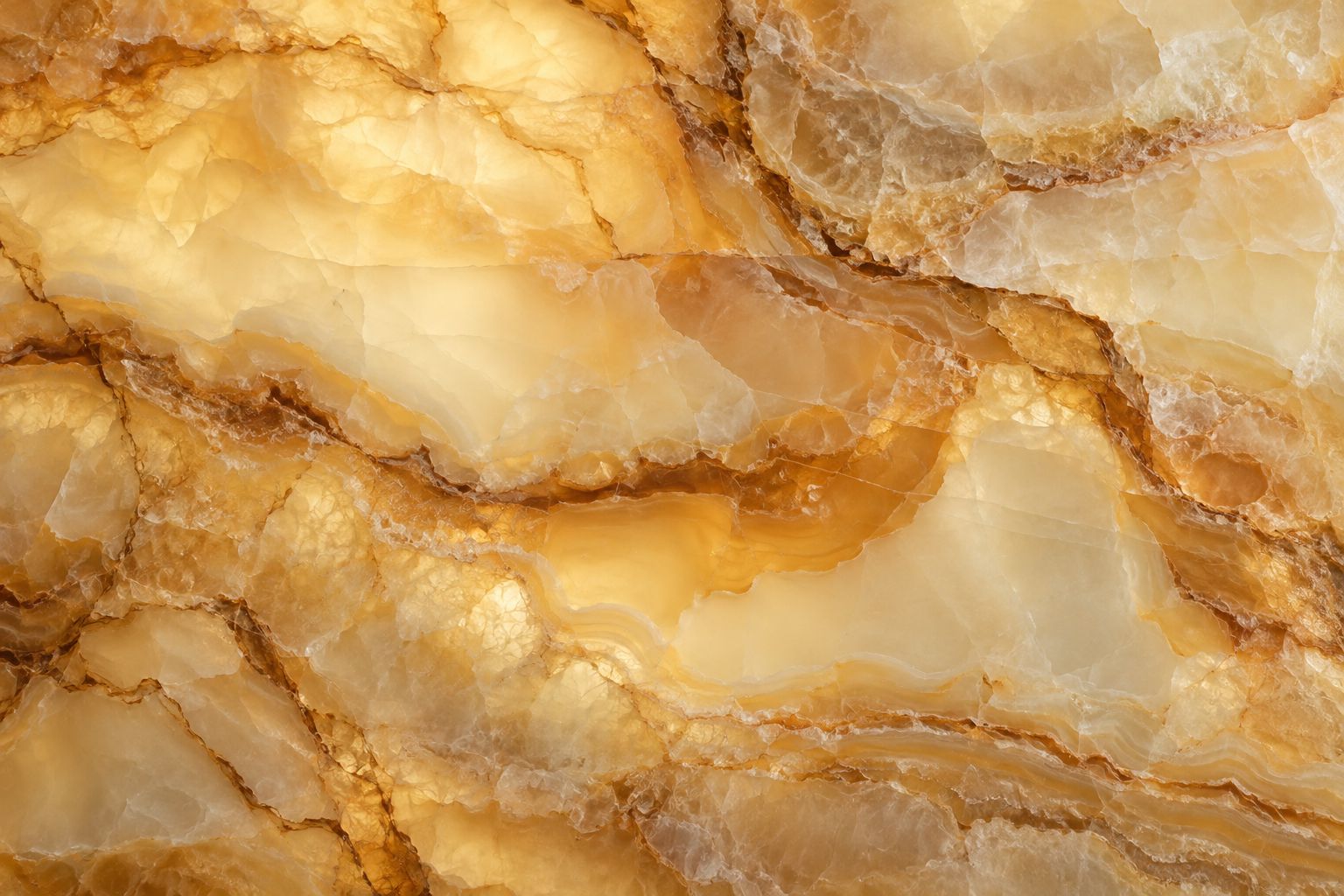
Onyx can suggest a pale, clouded atmosphere or a warmer, more saturated palette. The illustrative material study draws attention to the bands and cloudy areas that become part of the illuminated composition. Their distribution matters: a small sample may describe the color while a fuller slab view helps you understand the rhythm of the feature. Neither replaces a review of the particular piece selected for the project.
Bring the stone conversation together with the concealed installation. Support, wiring, panel joints, heat management, and maintenance access need room in the design. Review the feature with its lighting off as well as on, so the bar belongs to the home throughout the day. Cabinet samples, hardware references, a room photograph, and a description of your evening routine will help connect the luminous surface with a space you want to use.