Materials, light & space
Texture in the sun.
Pale limestone, a built-in bench and tropical planting shape a quiet courtyard.
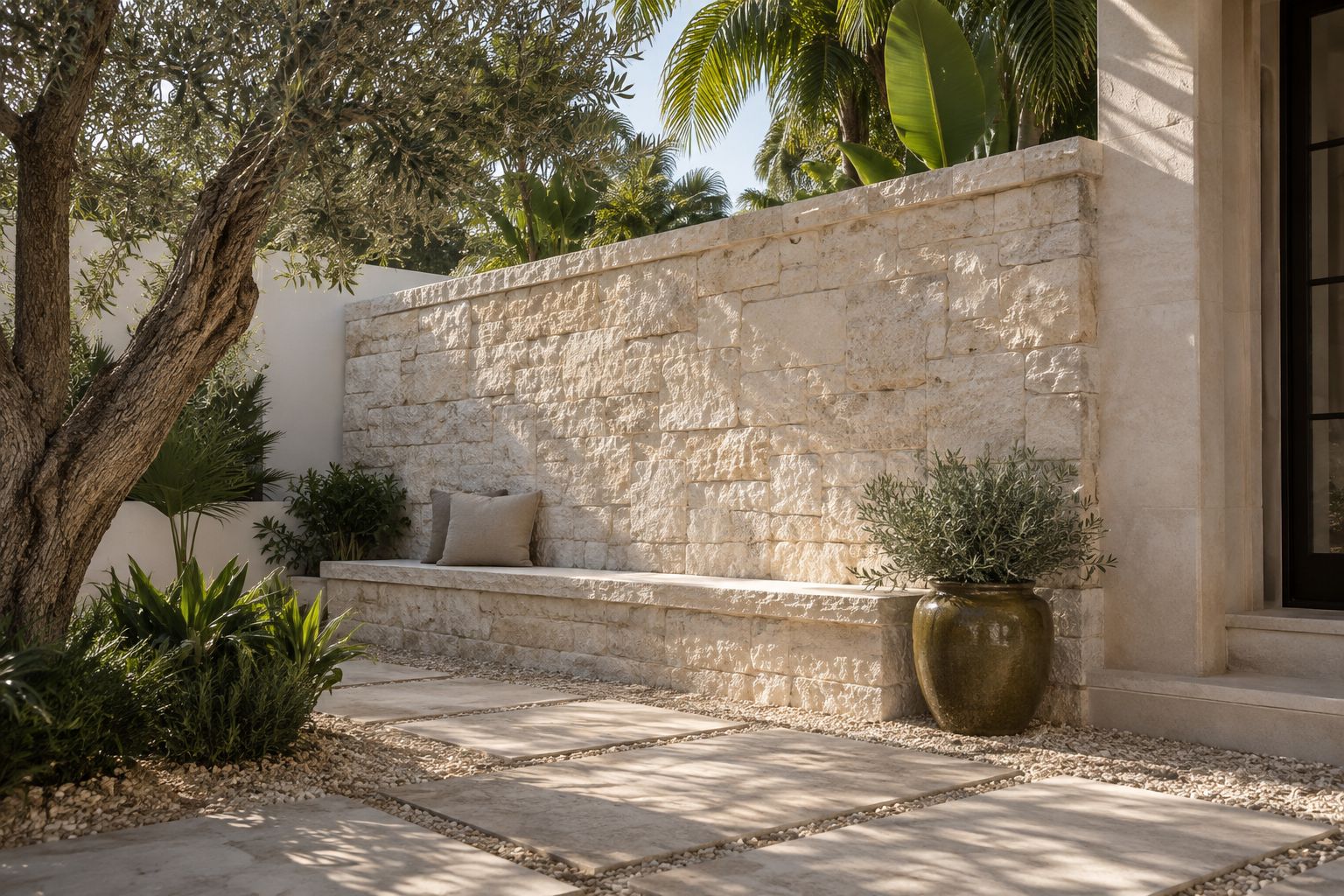
Raking daylight brings out the texture of a limestone wall. A continuous bench gives the masonry a useful role in the space.
Consider the joints
Stone size, mortar color, coping and transitions to paving change the character of a wall. Discuss support, drainage and exposure alongside the surface finish.
Bring the idea with you
Save this idea to your inspiration board and tell us which materials or details you like when planning your consultation.
Material studies
A closer look.
The detail
Make texture part of the daily view.
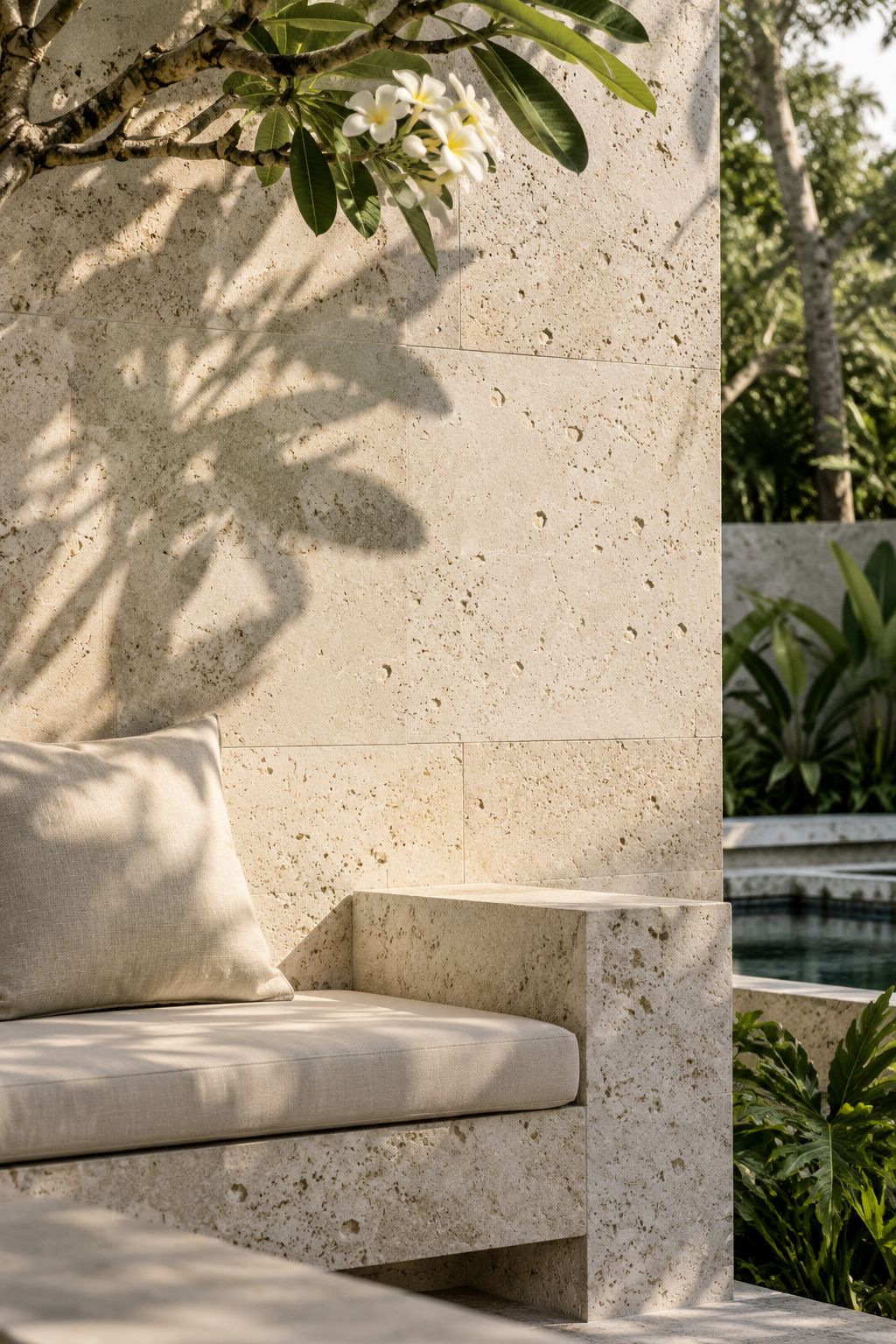
A limestone wall acquires depth as sunlight moves across it. The bench gives that texture a useful purpose, turning the boundary of the courtyard into a place to pause. A linen cushion and the shadows of nearby foliage add a softer layer without concealing the stone. The interest comes from small changes in surface and light rather than a crowded collection of finishes.
Begin with where you want to sit and what you will see from there. Look at the relationship between the bench, the planting, and the route through the courtyard. Review stone sizes, joint spacing, mortar color, coping, and the transition to paving as parts of one arrangement. Support and drainage belong in the same conversation as the finished texture, particularly where masonry meets the ground or becomes part of a seating detail.

The material
Choose a finish that belongs to the setting.
Fine pores, shell-like inclusions, and soft mineral tones give limestone a tactile visual character. A quiet stone palette can create a useful backdrop to tropical planting, while the scale of the units determines how formal or relaxed the wall feels. Compare the selected finish at a realistic distance; the small variations you see in a close-up become a different kind of rhythm across a larger surface.
For a Southwest Florida courtyard, review the particular stone and assembly for the proposed exposure. Bring photographs showing the surrounding ground, the wall location, and any existing transitions. Include the paving and lighting in your references so the space remains coherent after sunset. A useful masonry brief describes the atmosphere you want, the practical role of the wall or bench, and the site conditions that will shape its construction.