Lighting control / Scintillax journal
Centralized lighting control or smart switches?
Compare a centralized lighting control panel with smart switches and dimmers: wall keypads, wiring, dimming and heat, scale, internet outages and long-term service.
Almost any home can have dimmable lighting that answers to an app. In Lutron’s 2026 luxury residential trend report, 60 percent of affluent homeowners surveyed said they adjust their lighting by mood or time of day, yet only 9 percent use preset scenes. The real question is where the electronics should live. Smart switches put a small computer in each wall box. A centralized system moves the switching and dimming hardware into a smart lighting control panel and leaves keypads on the wall. Both can be the right answer. The better fit depends on the house, the stage of construction and how much you expect the lighting to do.
Two places for the intelligence
In a wallbox system, each smart switch or dimmer replaces a conventional device and controls the lights wired to it. It joins a hub or your home network, often wirelessly, so an app and scenes can coordinate many devices.
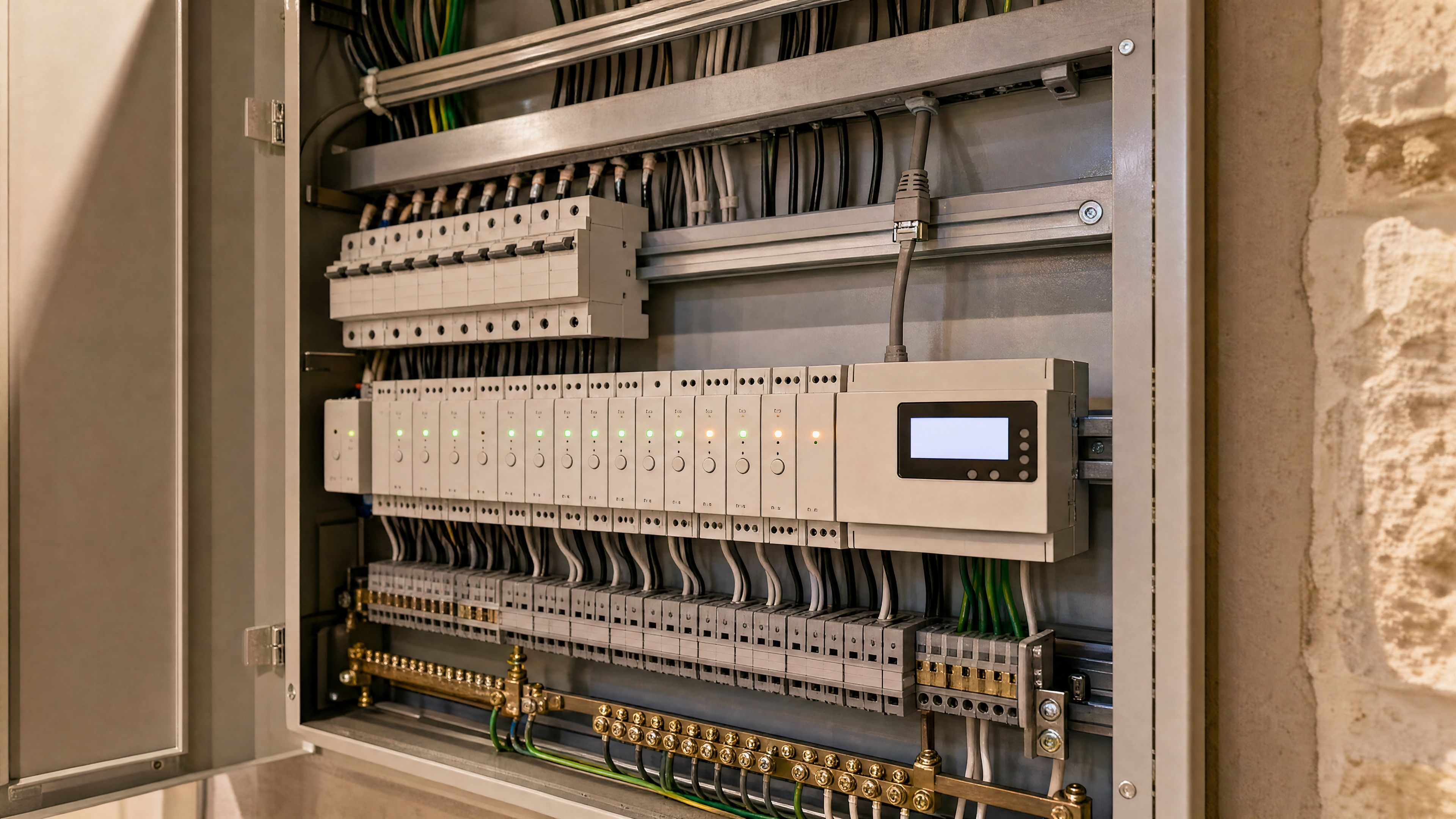
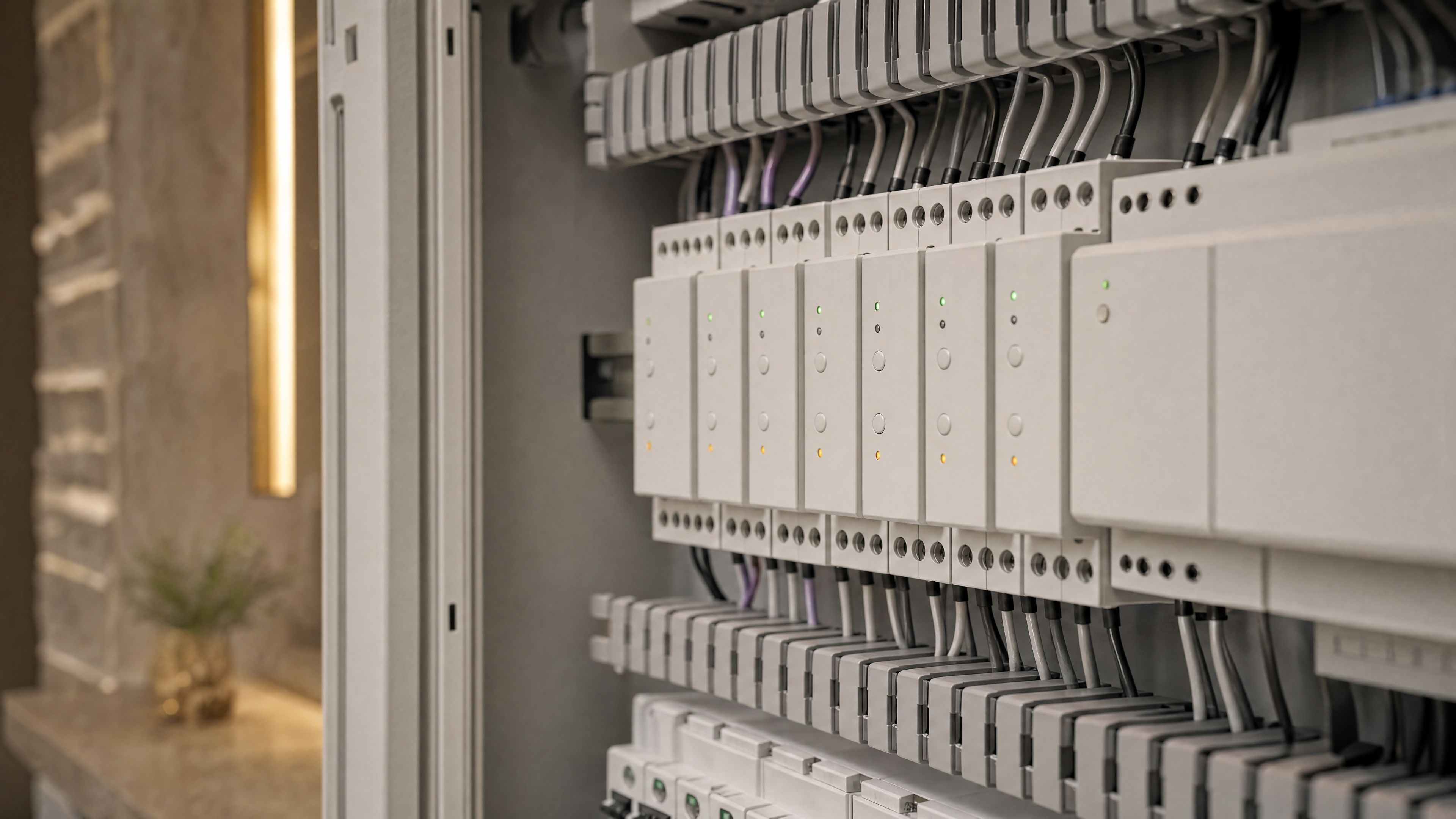
In a centralized system, also called panelized lighting control, each lighting zone is wired to a module in a central enclosure. The wall stations are keypads that send commands rather than carry the lighting load, so one keypad can control any zone in the house. Manufacturers that serve luxury homes offer this approach; Control4, for example, describes centralized lighting modules installed in a panel rather than in the wall. The Lighting Controls Association’s introduction to panel-based systems explains the same principle from the commercial world, where it has been used for decades.
Many platforms offer both kinds of device, which is why hybrid homes are common. Lutron’s overview of types of lighting controls describes localized, centralized, distributed and hybrid approaches side by side.
What changes on the wall
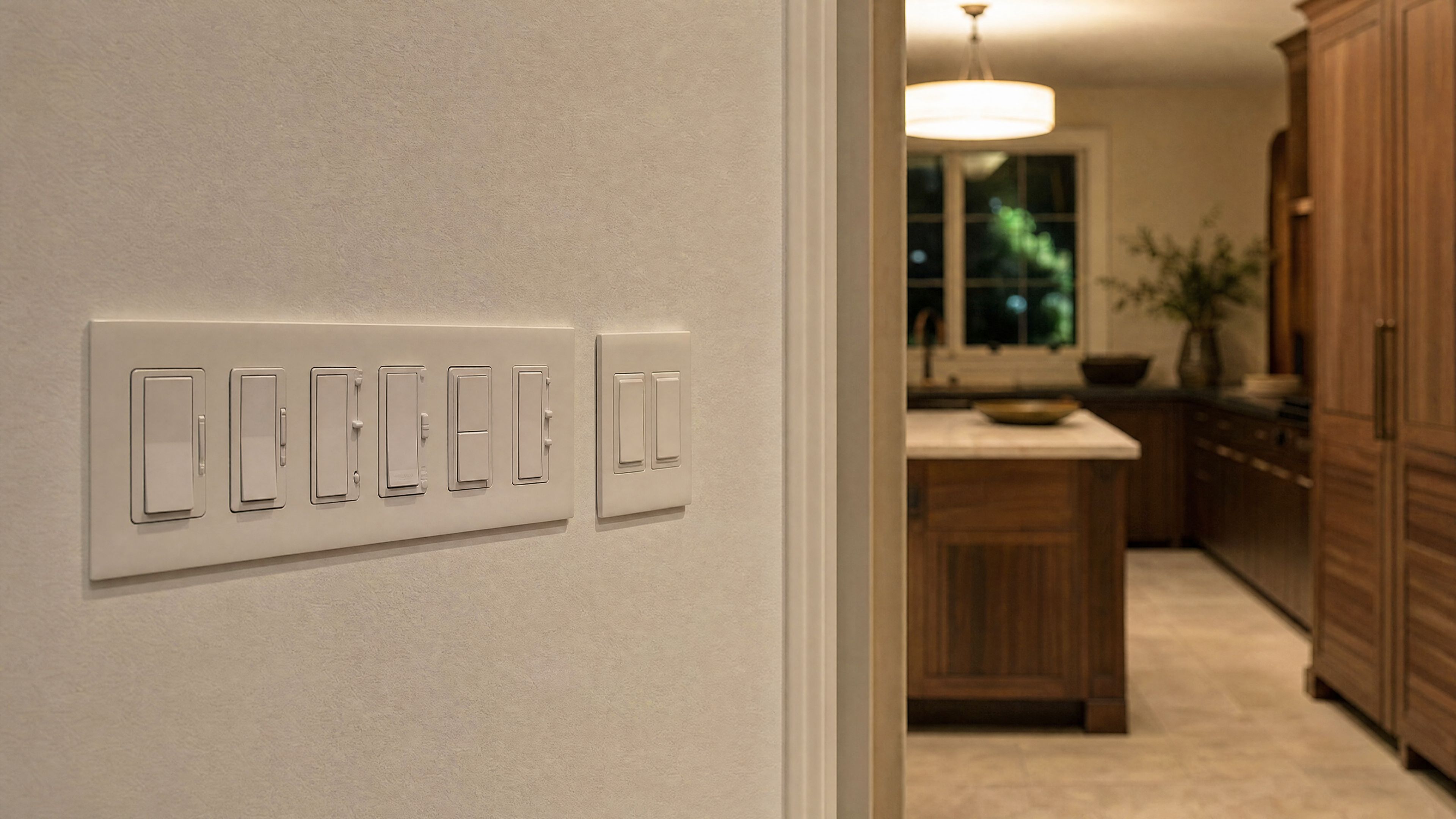
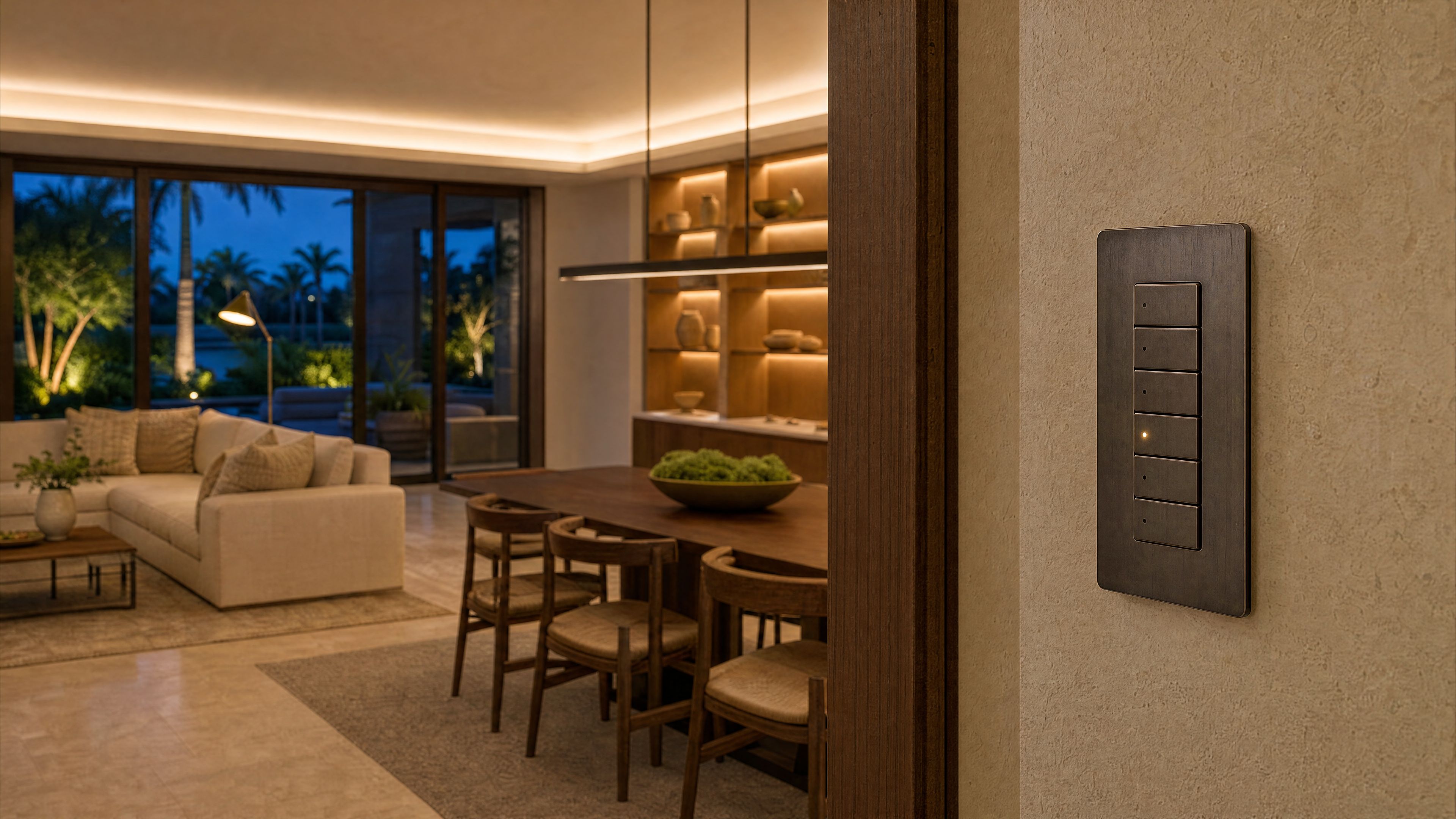
A kitchen with pendants, a cove, under-cabinet lights, toe-kicks and recessed downlights can need a five-gang bank of dimmers at the main entry, plus companion switches elsewhere. With a central panel, the same entry can have one keypad: engraved buttons for Cook, Dinner, Evening and Off, plus a raise and lower control.
Fewer wall plates matter most in rooms with stone cladding, timber paneling or minimal detailing, where every opening in the finish is visible. The keypad finish can be chosen with the other hardware in the room.
Wiring and timing
Smart switches and dimmers usually reuse the existing switch wiring. Some models need a neutral conductor in the wall box, which older homes may not have, while others are designed to work without one. That is why they are the usual choice for a finished home.
A central panel needs each zone to run back to the enclosure, often called a home run, plus a low-voltage cable or wireless link for each keypad. That is straightforward while the framing is open and difficult once finishes are complete. Control4’s own planning guidance for panelized lighting warns that involving the lighting control dealer only after rough-in can mean costly rewiring, and in many cases makes a central system impossible. In practice, the decision belongs in the design stage, before the electrical rough-in.
Dimming and heat
Every dimmer produces some heat. When several dimmers share one wall box, manufacturers often require them to be derated, meaning each can carry less load than it could alone. Central modules sit in an enclosure designed and ventilated for that heat.
Because modules are selected zone by zone in the panel, it is also easier to give each LED driver the control it expects: forward phase, reverse phase, 0–10V or DALI. Wallbox dimmers publish compatibility lists too. In either system, test the selected fixture at its lowest setting before the order is placed. The guide to lighting control modules explains these methods.
Scale, scenes and outages
Wireless smart switches handle a few rooms with ease. As the number of devices grows, the network design, hub limits and the organization of the app matter more. A central system is planned around many zones from the start, and keypads on a wired connection do not depend on Wi-Fi.
Ask every manufacturer how its system behaves without internet. Many systems run scenes and schedules on a local processor, so keypads keep working while cloud features, remote access and voice assistants wait for the connection. Lutron’s guidance on network outage situations is a useful example of what to ask for in writing.
Service over the long term
A central panel puts the switching hardware in one place, which simplifies diagnosis. Many modules offer manual override, so a zone can be operated at the panel while a fault is investigated. The programming, however, lives in the controller. Professional platforms are often configured with dealer software, so ask who can change scenes later and what happens if your installer is unavailable.
Smart switches are replaced device by device, and homeowners can often change scenes in the app. The tradeoff is that the electronics are spread throughout the house.
Whichever you choose, request a handover package: the panel schedule, a list of zones and scenes, keypad engraving, network and login details, and a backup of the programming.
The hybrid house
A hybrid often makes the most sense in Florida renovations. The rooms being opened, perhaps the kitchen, living areas and primary suite, are wired to a panel. Bedrooms that stay finished receive wireless dimmers on the same platform. Landscape, façade and pool lighting join the panel with an astronomic timeclock, so they follow sunset through the year. The app shows one house, even though the hardware sits in two places.
A simple way to decide
Lean toward a central panel when:
- the home is new or the renovation opens most walls and ceilings;
- the lighting design has many zones, including linear, cabinet, landscape, pool or backlit stone;
- you want one keypad per entry rather than banks of dimmers;
- scenes should span several rooms, or the house sits empty for part of the year.
Lean toward smart switches and dimmers when:
- the home is finished and the walls will stay closed;
- you are upgrading a few rooms at a time;
- the zone count is modest and the existing wiring is suitable.
Bring your plans or photographs of the existing switch banks and electrical panel. We can review which rooms suit a panel, where wireless devices fit and how the two can work as one system.
Bring your location, room photographs and the details that matter most. We can review the materials, light and practical requirements together.
Plan your lighting controlMaterial studies
The details that make the room.