Profiles & placement / Scintillax journal
Before the light goes into the cabinet
A recessed cabinet light needs a matched profile, a comfortable viewing angle and reachable components. Resolve these details before the insertion channel is cut.
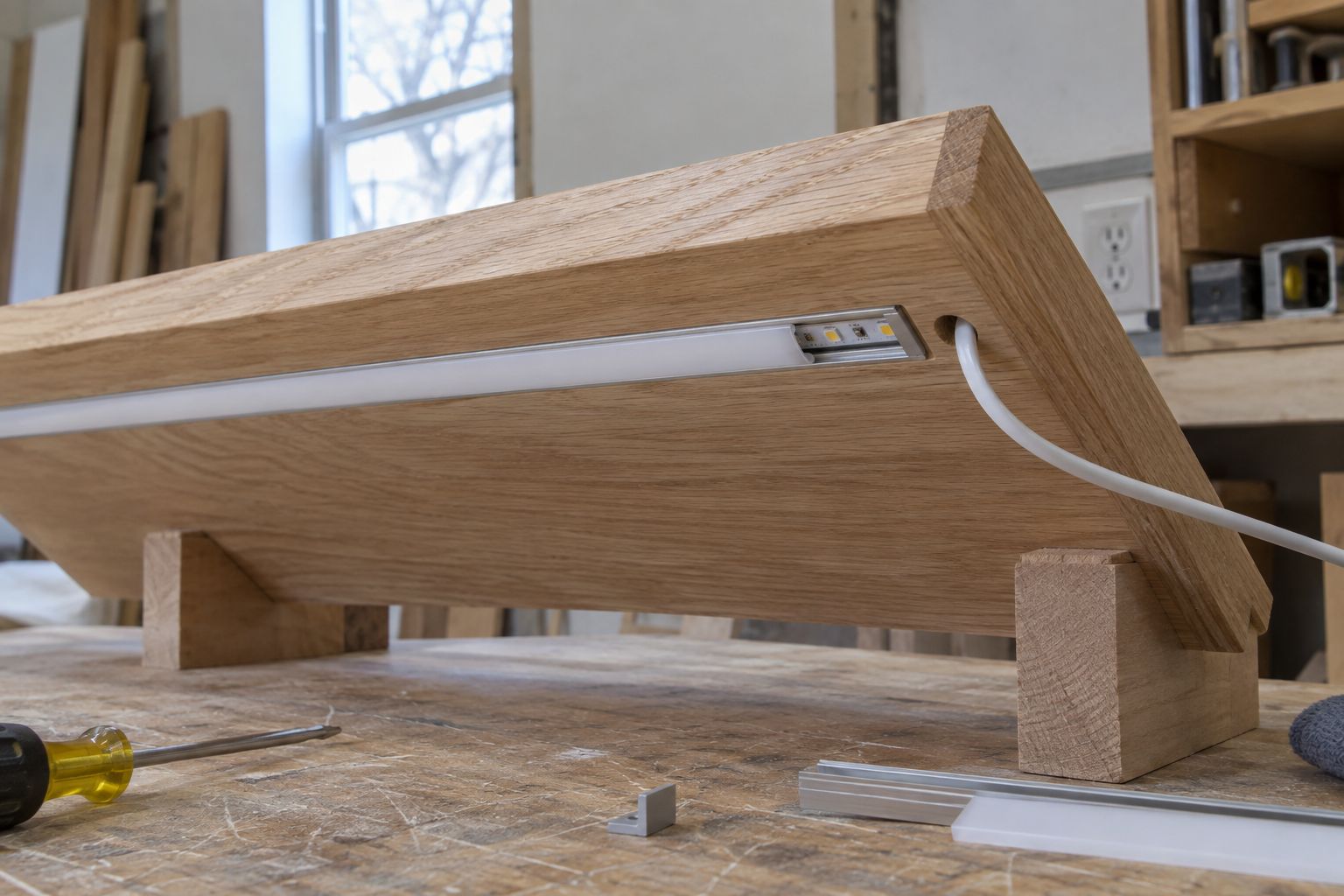
A neat cabinet light is an assembly: a profile, light source, diffuser, cable route and power arrangement. Its recess is only one part of the detail. Choosing the assembly before cutting the panel makes those parts easier to coordinate.
Our custom cabinets can be fabricated with precut LED insertion channels. Use the following decisions to give the light a useful position in the design.
Choose the job before the brightness
Decide whether the light serves food preparation, folding, a wardrobe bay or a display shelf. Each purpose changes where the fixture should sit and which surface it needs to illuminate. More light does not solve a poorly chosen position.
Photograph the cabinet from where it will be used. A seated view can reveal a source that looked concealed while standing. A hanging garment or shelf edge can also block light from reaching its intended area.
Match the recess to the complete profile
Select the actual profile and diffuser, then check their dimensions and fitting requirements with the proposed cabinet material. The recess should be drawn for that assembly. Cable entry and the ends of the run need a deliberate position too.
The construction study above shows an unlit mock-up so the housing and routed channel remain readable. It illustrates a planning relationship; the chosen manufacturer’s assembly establishes the installation detail.
Look for glare in the real finish
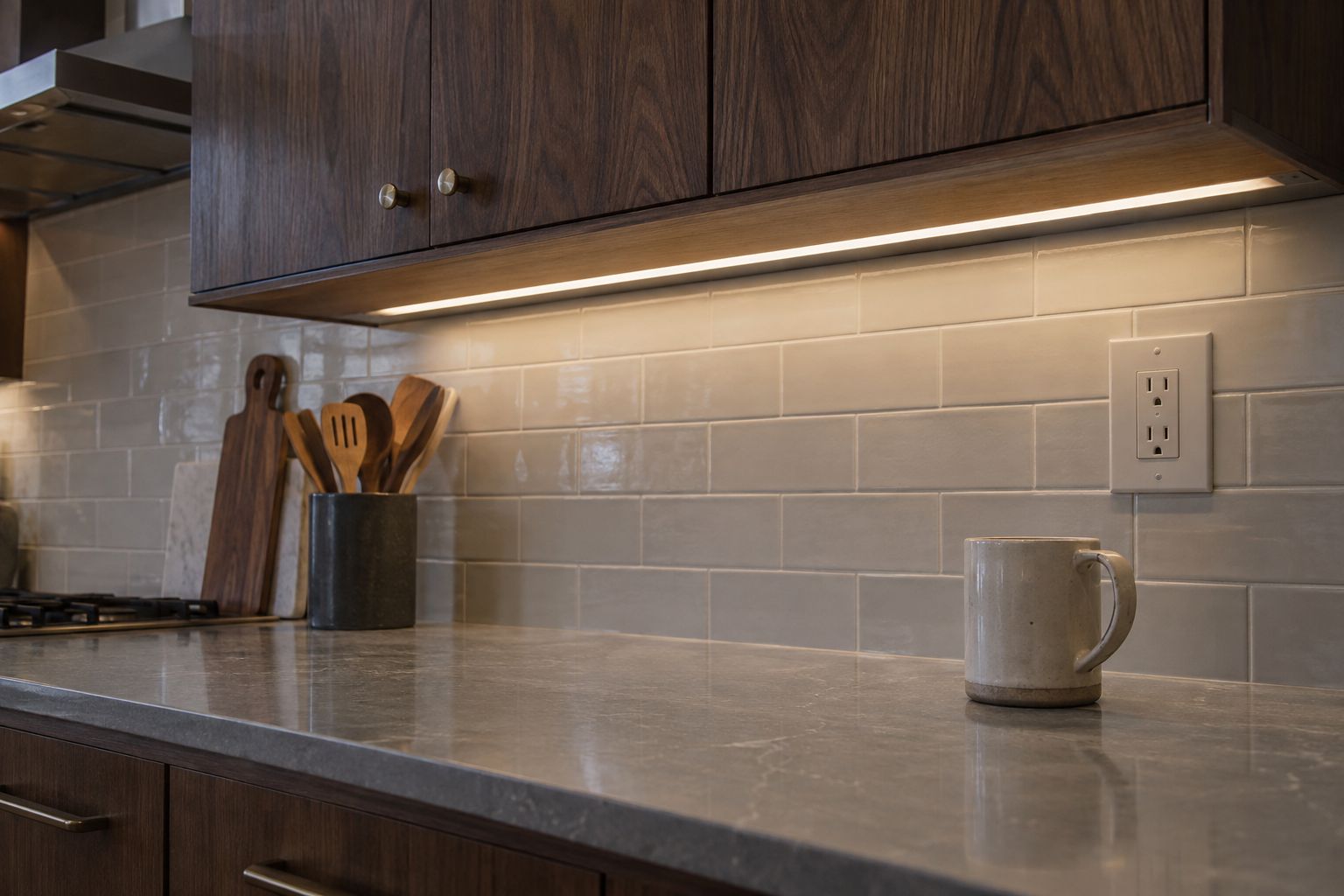
Glazed tile and polished stone can reflect the profile. Darker cabinet interiors can make a bright source feel more pronounced. Compare diffusion, position and output with the material sample, then check the same view after the light is switched on.
The lower-angle study below explores a restrained task wash. A useful counter light should let you see the work comfortably while its housing stays visually quiet.
Leave a route back to the components
Identify where the driver and connections can be reached after fitting. A concealed cable path should not make maintenance dependent on dismantling adjacent finishes. Switching and dimming preferences also belong in this discussion, with compatibility and electrical responsibilities confirmed for the system.
Add the detail to the approved drawing
Channel position, cable entry and component access are coordinated before CNC fabrication. This lets the lighting sit within the cabinet design rather than competing with shelf supports, door fittings or other hardware later.
For the wider lighting service, explore cabinet and shelf LEDs. If you are starting new cabinetry, include your lighting goals in the cabinet brief.
Bring the surface sample and describe where you will use the light so the profile can be planned with the cabinetry.
Discuss recessed cabinet lightingMaterial studies
Check the everyday viewing angle