
A closer look at the craft
Masonry feature walls.
A backdrop with depth and purpose.
Explore the details for your home or commercial space in Fort Myers, Cape Coral, Naples, and the surrounding communities.
Consider every detail.
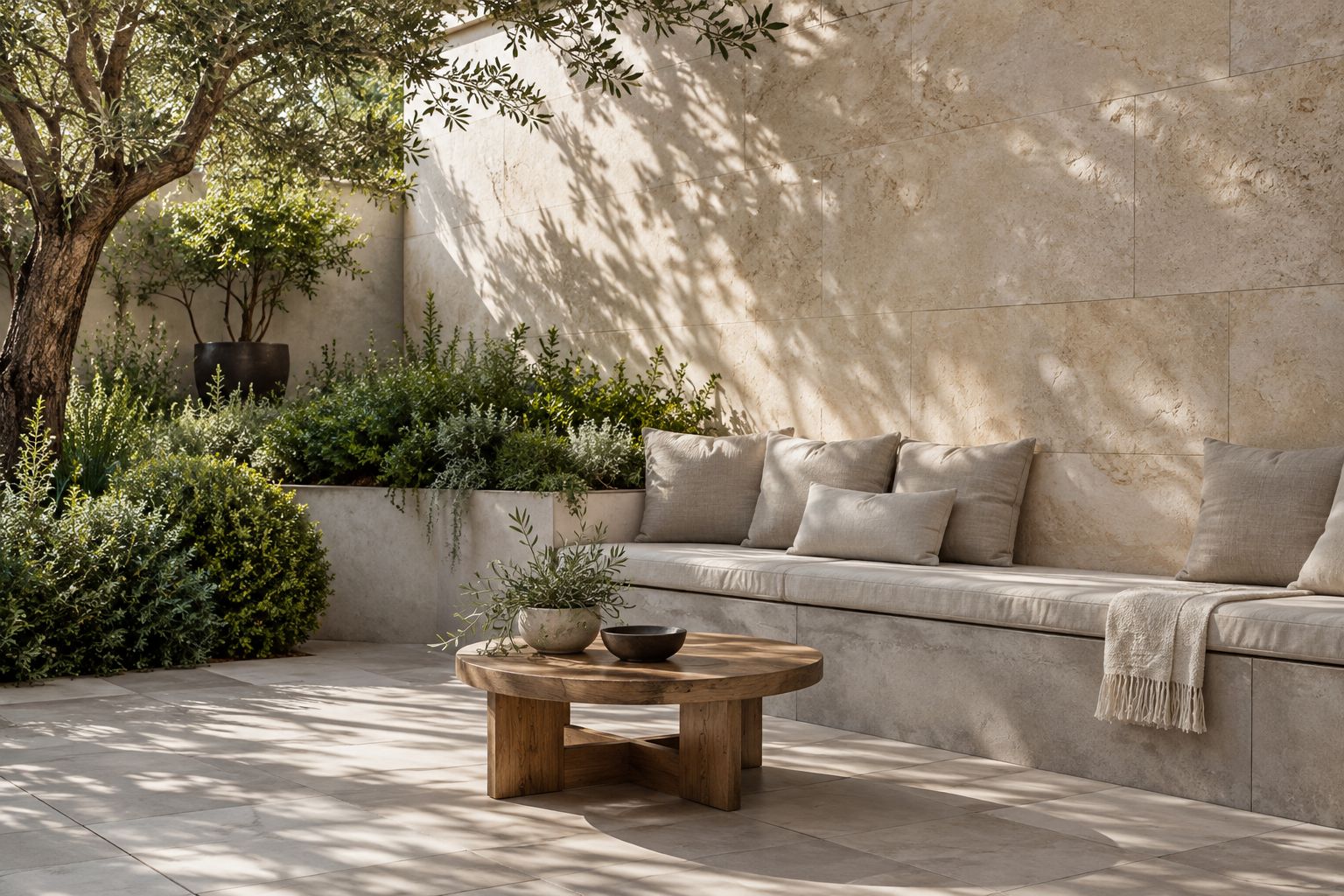
A feature wall can define an outdoor room, frame an entrance or give seating a more substantial backdrop. Its material should relate to the surrounding floor, furniture and planting. We discuss the intended role, dimensions, supporting construction and exposure before choosing the final texture. Decorative finishes and any structural work remain distinct parts of the project scope.
Give the wall a role in the room.
Decide whether the feature should guide the entrance, create a quieter seating area or bring attention to a particular view. Photograph the space from the places you normally sit and move through. A wall with a clear role can carry texture without making the whole garden feel busy. Its proportions are discussed in relation to those everyday views.
Build a palette with the neighboring surfaces.
Compare the proposed stone with the paving, house finish and furniture. Pale limestone can suggest a soft mineral direction, while a darker surrounding surface can create contrast. A small board is useful, but the texture also needs to be judged at wall scale. Review natural variation and a representative finish before confirming the intended appearance.
Treat edges and caps as part of the design.
The top, returns and base of a feature wall remain visible from different angles. Discuss coping, joints and transitions beside planting or seating. These details contribute to the composition and belong in the proposed assembly. Share photographs of any adjoining walls or surfaces so the design can address the connections rather than focusing only on the central face.
Define construction responsibilities clearly.
A decorative backdrop, freestanding wall and retaining condition can involve different requirements. Describe the existing setting and intended purpose without assuming that a finish reference establishes the construction. The site review identifies the relevant supporting, design and permit considerations before a proposal is confirmed. The visible material follows that scope instead of being used to conceal unresolved conditions.
Imagine the wall after sunset.
A restrained accent can reveal relief or provide a calm perimeter to an outdoor room. Review the source from seated eye level and from inside the house. Discuss routing, fixture exposure and access with any planned paving or planting. The wall, lighting and furniture should be considered together so the evening setting feels connected to the daytime composition.
Bring the details together.
Your next step.
Share your location, photographs, and the ideas you are considering. We will review the project and discuss a consultation. Final scope, materials, and pricing follow a review of the actual space.
View all 11 Southwest Florida service areas.
Discuss your projectBefore you begin
Your questions, considered.
Start with these planning details, then discuss the requirements of your own space.
Can a feature wall include shelving or illuminated niches?
Yes. Plan their dimensions, supports, fixture positions and access with the wall layout. Concealed routes should be coordinated before the finish is installed.
How will accent lighting change a textured wall?
Grazing and wall-washing positions create different shadows and emphasis. Review the fixture placement and stone texture together to choose the appearance you want.
What should I bring to a feature-wall consultation?
Share photographs, approximate dimensions, material references and any planned television, cabinetry or lighting. Include the wall construction if known so supports and installation details can be reviewed.
Bring photographs, your project location and the details you would like to discuss.
Discuss your projectA gallery of possibilities
Masonry feature walls: design ideas.
Explore the shapes, materials and details. Select a photograph for a closer look.
Bring the ideas you enjoy to a conversation about your own space.
Build your material palette
Materials for this application.
Explore relevant examples from the material library. Compare current samples, finishes and care before making your selection.


Availability and suitability are confirmed for your project. Appearance illustrations help build a shortlist; current physical samples and the required specification guide the final choice.