Lighting control / Scintillax journal
Lutron, Control4, Crestron or KNX: choosing a lighting control platform.
Compare lighting control platforms for a Florida home: Lutron Caséta, RadioRA 3 and HomeWorks, Control4, Crestron, Savant, KNX and Leviton, and what to ask any installer.
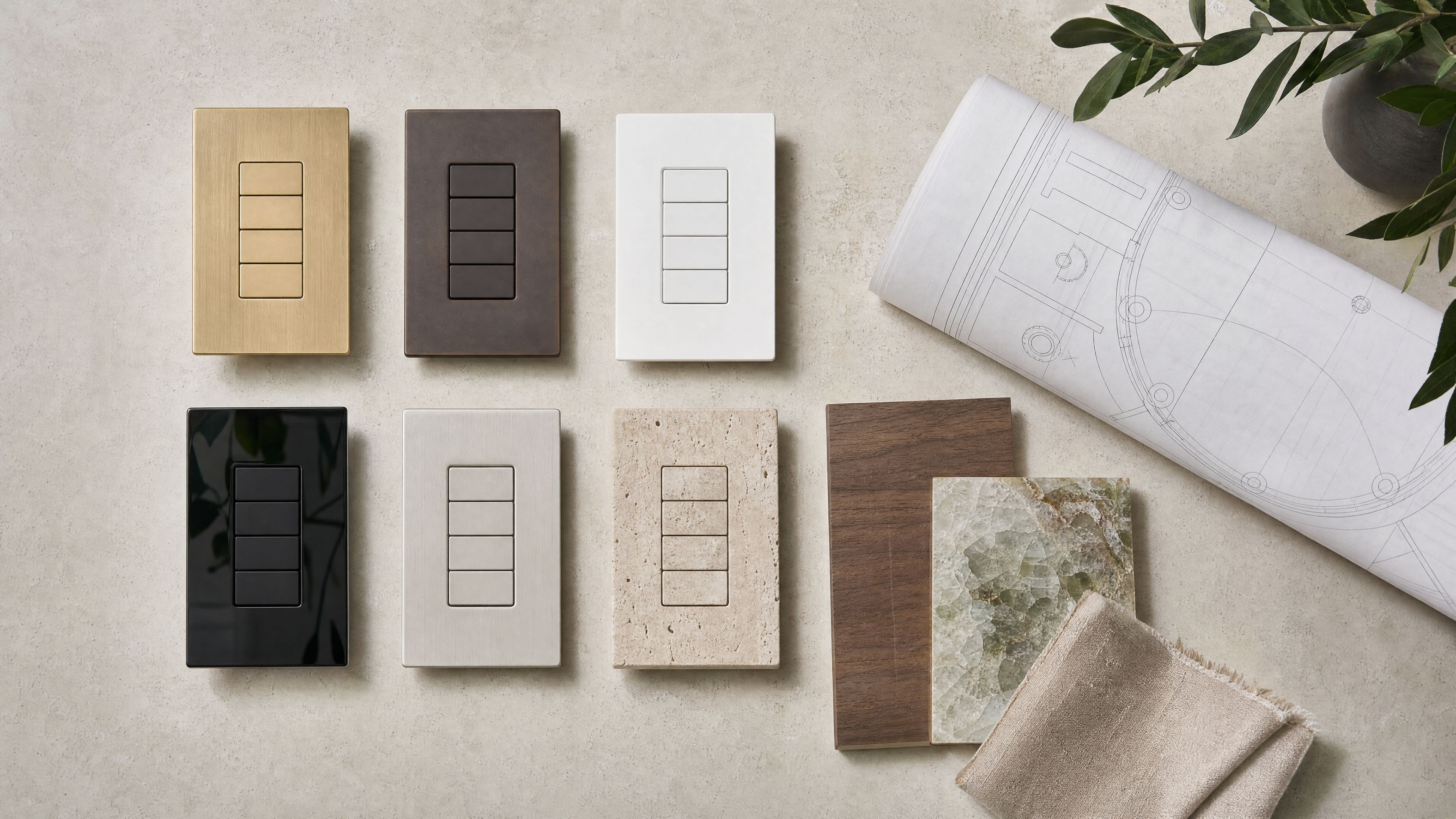
Once you decide that the home should have a smart lighting control panel, the next question is usually which brand. The names are familiar from showrooms and neighbors’ houses: Lutron, Control4, Crestron, Savant and, increasingly, KNX. Each can run a beautiful house. They differ in how they are sold and supported, how far they reach beyond lighting and how open they are to other products.
This guide compares them from the homeowner’s side of the table. Scintillax is not presenting itself as a dealer for any brand named here; some platforms are sold only through authorized dealers, and we confirm the platform and installer arrangements for each project.
Start with the house, not the logo
Five questions narrow the field quickly:
- Scale. How many lighting zones and keypads will the home have, including landscape, pool and backlit stone?
- Scope. Is the system for lighting and shades only, or should it also run audio, video, security and climate?
- Keypad design. Which keypad styles and finishes suit the interiors?
- Openness. Do you want one manufacturer’s ecosystem, or the freedom to combine products from many?
- Support. Who can change the programming in five or ten years, and what happens if the original installer is unavailable?
Lutron: three tiers from one manufacturer
Lutron organizes its residential systems in three tiers. Caséta is the easiest way to start, designed for homeowners and electricians, with up to 75 devices. RadioRA 3 is a professionally installed wireless whole-home system with up to 400 devices. HomeWorks is the top tier, with practically unlimited devices and keypads in more than 50 finishes.
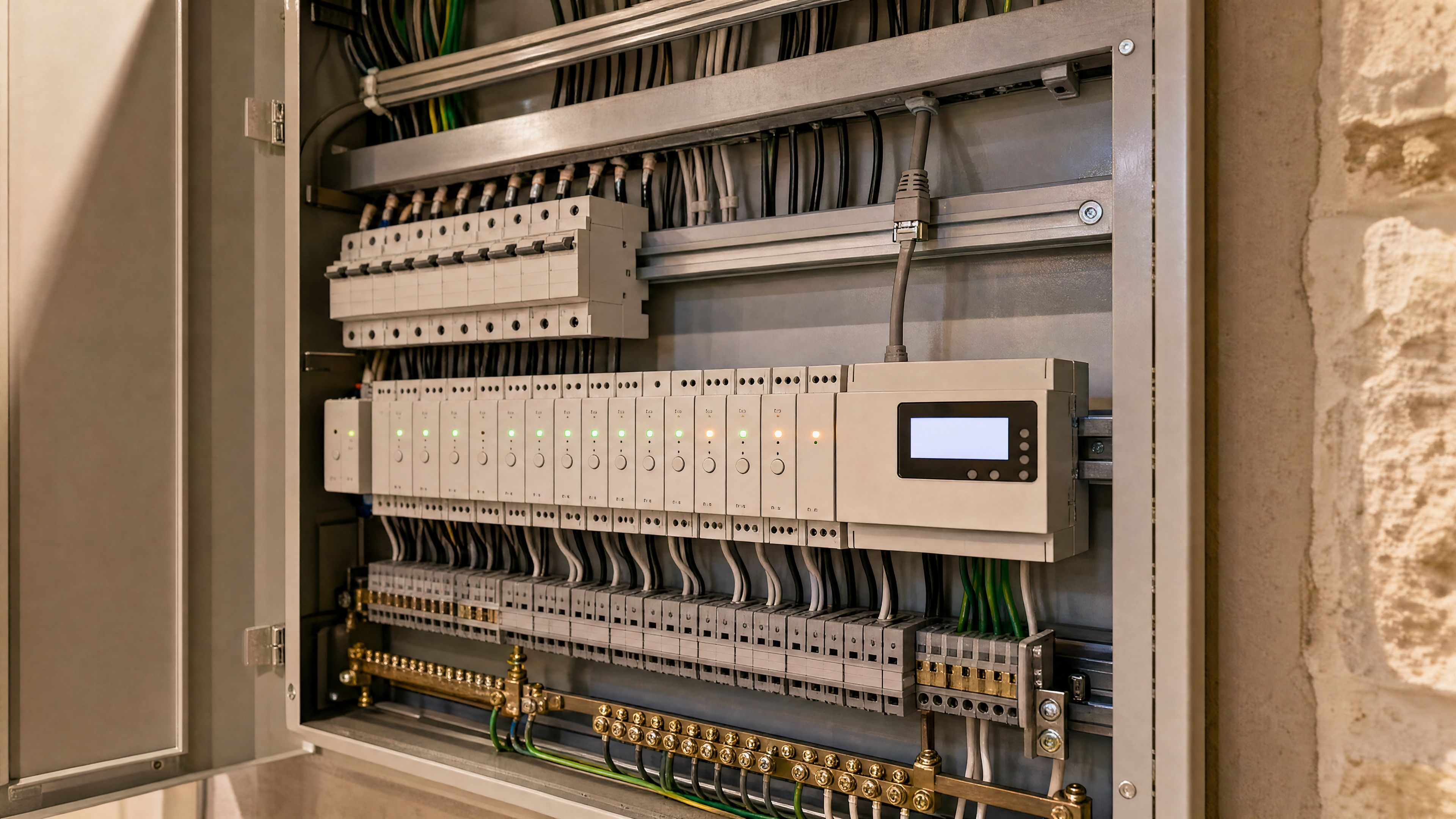
HomeWorks is the Lutron line built around central panels. Its system architecture combines wired keypads, wireless devices and DIN-rail power modules for phase dimming, switching, 0–10V, DALI and DMX, with Ketra fixtures where wanted. Lutron documents its behavior during internet and network outages clearly. HomeWorks and RadioRA 3 are sold and programmed through Lutron’s dealer network.
Often chosen when lighting and shades are the priority, keypad design matters and the owner wants a system focused on light.
Control4: lighting inside a wider automation system
Control4 describes centralized lighting as moving load control from wall boxes to a central control panel. Its modules include 8-channel dimmers, 0–10V dimmers and relays in Control4 enclosures, with wired keypads on a shared bus. Control4 processes centralized lighting orders only for authorized dealers who have completed its training and work with an electrician, according to its dealer requirements. The brand is now part of ADI Global Distribution, which became an independent public company in 2026.
Often chosen when the same system should run audio, video, cameras, door locks and climate alongside the lighting.
Crestron: deep integration for large estates
Crestron’s centralized lighting uses dimming modules installed in dedicated enclosures, such as the CLX universal dimmer, along with DIN-rail modules for 0–10V. Crestron Home processors handle large systems; the company lists up to 300 lighting loads and 120 keypads for its PC4-R processor. Programming is carried out by Crestron dealers.
Often chosen when a large estate needs extensive integration, custom interfaces and many rooms of equipment.
Savant: modules in the breaker panel
Savant’s lighting modules mount in the electrical panel in a way that resembles breakers, with low-voltage keypads powered from a central module, as described in its lighting product overview. Savant also offers energy-management modules for circuits, which are a separate product from its lighting control.
Often chosen when the owner prefers the Savant app experience and wants lighting and energy information from one company.
KNX: an open standard
KNX is an international standard (ISO/IEC 14543-3) supported by more than 500 manufacturers. A KNX panel holds DIN-rail switching and dimming actuators connected by a dedicated bus cable to keypads, sensors and interfaces from many brands. Systems are configured with common KNX software, so any qualified KNX integrator can maintain the installation if they receive the project file.
Often chosen when the owner values openness, wants to mix keypad brands and expects to work with more than one integrator over the life of the house.
Leviton and the smart load center
Leviton appears in many searches for lighting control panels, but its panel products serve different purposes. Its relay panels are commercial lighting equipment. Its residential smart load center, with smart breakers, monitors energy and switches circuits rather than dimming lights or recalling scenes. For room-by-room upgrades, Leviton’s Decora Smart dimmers install in the wall like other smart switches.
The same distinction applies to other smart electrical panels: they manage energy, solar and backup power, and can sit in the same home as a lighting control panel.
Questions to ask any installer
Whichever platform you prefer, ask:
- Are you authorized to sell, program and support this platform?
- Does the system run scenes and schedules locally if the internet is down?
- Will I receive the panel schedule, zone and scene lists, network details and a backup of the programming file?
- Can another qualified installer work on the system later?
- Are any features tied to a subscription?
- Which LED drivers have you tested with the proposed modules, and how low do they dim?
- Where will the panel go, and how does that location meet the manufacturer’s temperature limits?
How Scintillax approaches the choice
We begin with the lighting rather than the brand: the zones, scenes, keypad locations and the LED drivers each fixture needs. That zone schedule remains valid whichever platform is chosen, and it lets platforms be compared on equal terms. From there we discuss the options that suit the home’s scale, design and support needs, and confirm the platform and installer arrangements in the proposal.
For the related decisions, read centralized lighting control or smart switches and lighting control modules for LED.
Bring your location, room photographs and the details that matter most. We can review the materials, light and practical requirements together.
Plan your lighting control