Choosing granite
Scintillax designs and installs granite countertops for kitchens, islands and selected outdoor kitchen settings across Southwest and Southeast Florida. Granite’s mineral texture can support a restrained palette or become the main feature. Review the actual slab, finish and installation conditions together.
Read the mineral pattern across the room.
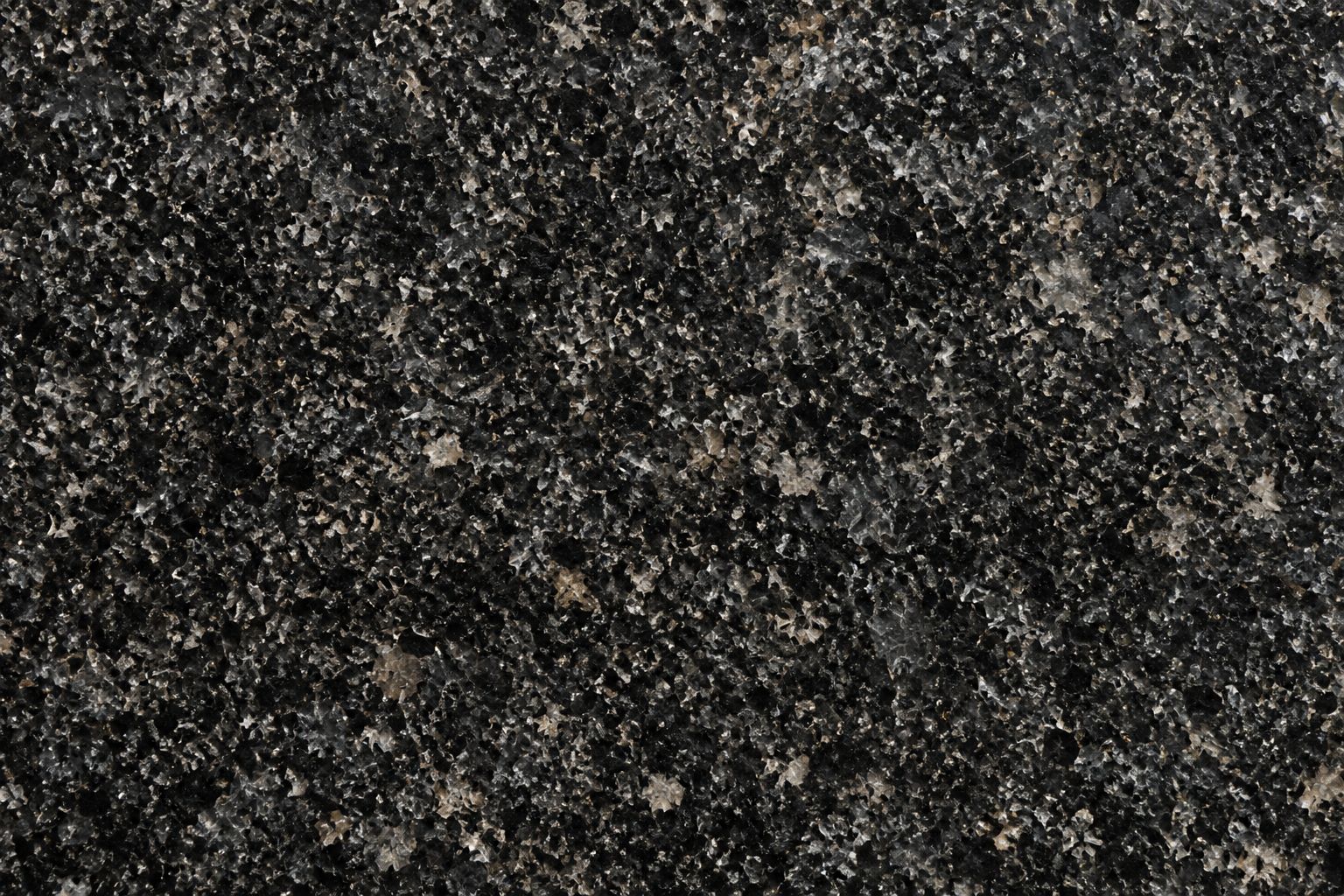
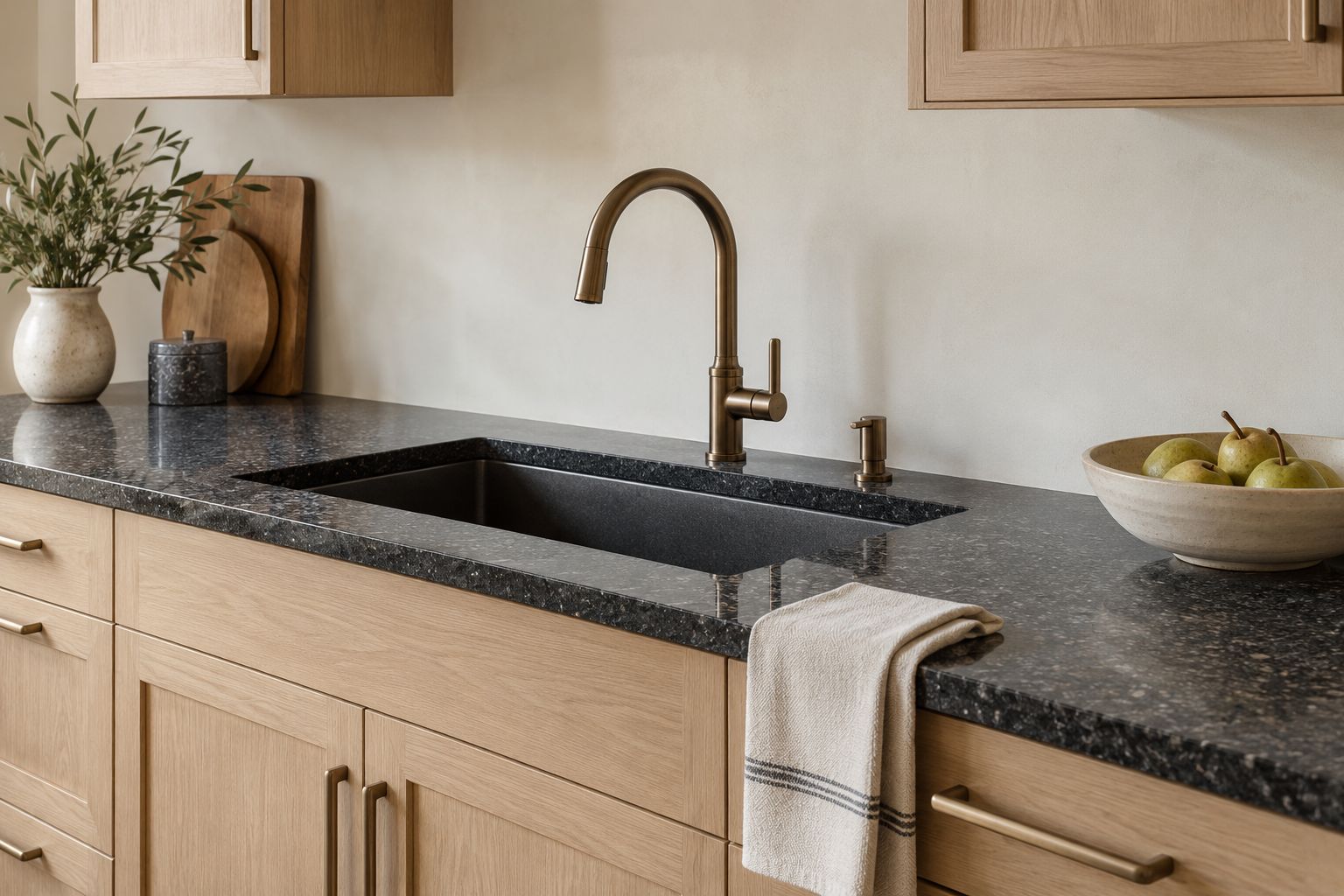
Compare the full slab with cabinet fronts, flooring and hardware. A small sample can introduce the color but cannot establish every mineral cluster or how the pattern crosses a long run. Identify which faces will be visible from the entry, seating and adjoining rooms. Use the example references below to form a shortlist, then review current slabs before confirming a selection.
Give edges, seams and cutouts a clear layout.
Review the countertop runs, island, sink and appliances on one drawing. The slab dimensions, changes in depth and edge preference influence how the pieces can be arranged. Ask how the chosen finish will look at an edge and how the visible seams meet the pattern. A waterfall island introduces another face and should be reviewed with the top and supporting cabinetry.
Assess the actual outdoor kitchen.
For an outdoor kitchen countertop, identify covered surfaces and areas reached by direct sun, rain or irrigation. Include the appliance layout, cabinet construction, supports and nearby drainage in the brief. The particular stone, finish and complete assembly are reviewed for that exposure. Coordinate the counter with surrounding patio surfaces and landscape lighting before the installation sequence is settled.
Discuss care for the selected stone.
The Natural Stone Institute recommends stone-appropriate cleaning, prompt spill care and heat protection. Review sealing with the supplier for the particular granite and finish. Keep its care instructions with your product and installation records.
Granite is commonly considered for working counters because its mineral composition generally resists everyday food acids better than calcium-based stones such as marble. That does not make every stone sold under a granite trade name identical. The Institute’s guide to evaluating natural stone recommends checking the actual material’s hardness, acid response and absorption. Ask for a supplier sample when performance is central to the decision; do not test the finished installation with acids.
Compare finish and lighting together.
A polished dark counter reflects windows and individual light sources clearly. Compare a sample under the intended cabinet lighting and from a seated position to review glare. A honed or textured finish changes the visual effect and may have its own cleaning requirements. Granite is normally lit across the face or from above; do not select it on the assumption that it will transmit light. Share the grain, edge and finish preferences when planning custom kitchen cabinets so the cabinet proportions and stone details work together.
Prepare the space for measurement and installation.
Share the cabinet plan, sink and appliance references, photographs and approximate dimensions. Final measurements follow a review of the supporting surfaces and adjoining work. The agreed scope identifies fabrication, edge and seam details, cutouts, supports, delivery access and installation responsibilities. Removal of an existing countertop, plumbing and electrical work are included only when defined in that proposal.
Explore the illustrated outdoor kitchen and granite inspiration to describe a material direction. For your own site, plan granite countertops with Scintillax and include your community, the intended use and access requirements.