
A closer look at the craft
Stone veneer & cladding
Give the architecture a mineral character.
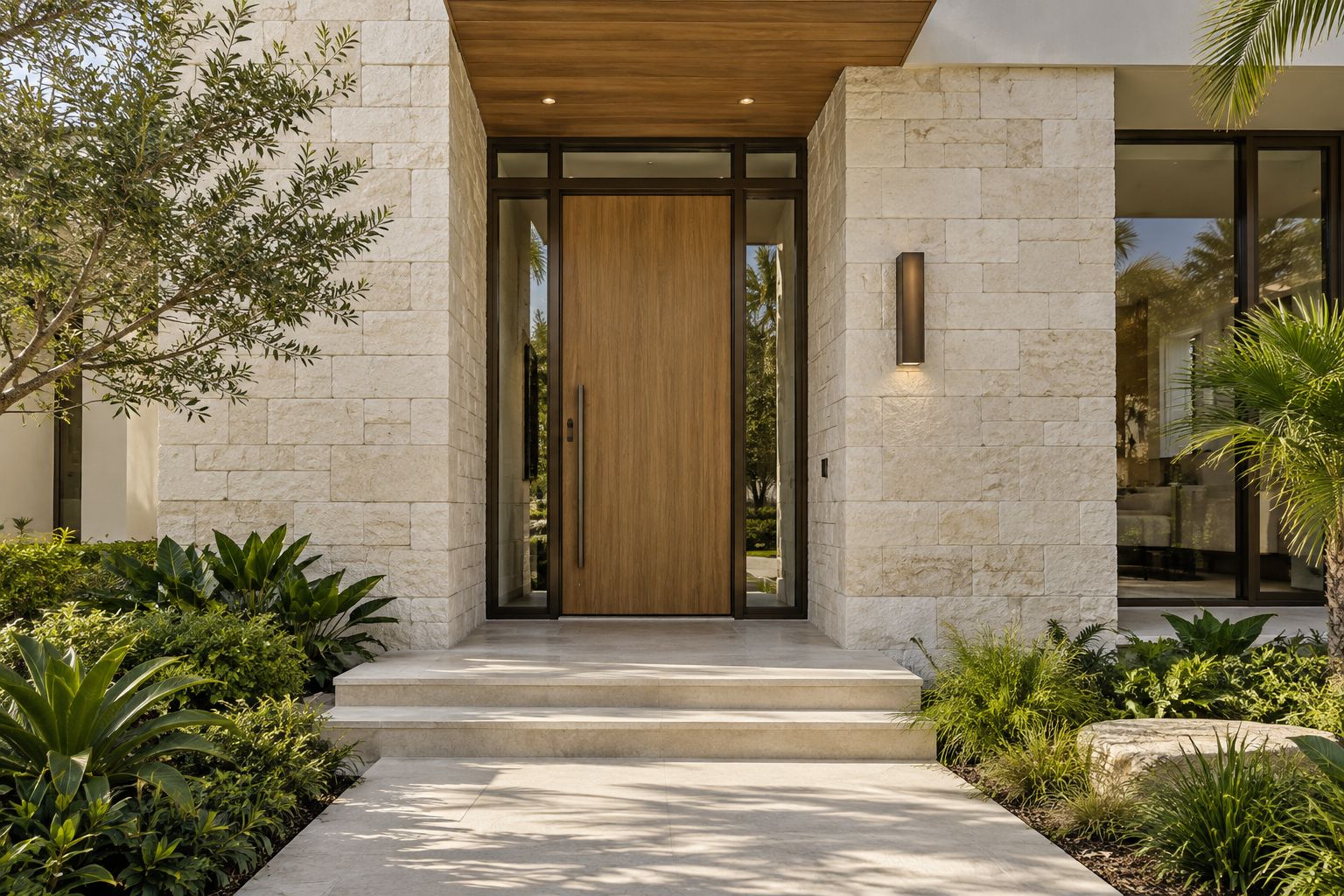
Consider every detail.
Stone veneer can bring depth to an entry, exterior wall or interior feature without requiring every nearby surface to compete. The character comes from the unit scale, relief, color and joint detail together. We review the backing construction, exposure and transitions before discussing the finish so the visible design is connected to an appropriate decorative assembly.
Choose the scale from the building.
A broad wall can carry a calmer rhythm of larger units, while a smaller entry may call for finer texture. Look at the veneer from the normal approach as well as close up. Compare the stone with window frames, doors and roof lines. The finish should belong to those proportions rather than being selected only from a small isolated sample.
Let joints contribute to the character.
Mortar color, joint depth and the arrangement of units change the appearance of the same stone. Discuss a representative sample panel where possible. A restrained joint can keep the mineral texture in focus; a more expressed joint can establish a stronger rhythm. Review that choice with the desired finish and the requirements of the proposed system.
Draw the corners and openings early.
Outside corners, door returns, wall caps and changes to adjacent finishes are important parts of the composition. They can also influence the assembly and construction sequence. Bring elevations or photographs that show those locations. A considered corner makes a decorative surface feel deliberate without relying on an inspiration image to establish how the wall will be constructed.
Review backing and moisture details together.
Decorative veneer is part of a wall assembly. The supporting surface, interfaces, exposure and moisture-management requirements need review before finish work is confirmed. Share the existing construction and any signs of deterioration. The consultation establishes the proposed scope and the design or trade responsibilities needed for the actual location, rather than treating stone as a surface that can be attached anywhere.
Connect the stone with light and planting.
Daylight can reveal relief, while an evening accent can emphasize the same wall from a different direction. Review glare, fixture location and maintenance access beside the proposed stone. Low planting may soften the base without obscuring important interfaces. Bring the landscape and lighting plan into the discussion before final materials and installation sequencing are decided.
Bring the details together.
Your next step.
Share your location, photographs, and the ideas you are considering. We will review the project and discuss a consultation. Final scope, materials, and pricing follow a review of the actual space.
View all Southwest and Southeast Florida service areas.
Discuss your projectA gallery of possibilities
Stone veneer & cladding: design ideas.
Explore the shapes, materials and details. Select an image for a closer look.
Bring the ideas you enjoy to a conversation about your own space.
Before you begin
Your questions, considered.
Start with these planning details, then discuss the requirements of your own space.
Can stone veneer be used on an interior or exterior wall?
Suitability depends on the product, substrate, exposure and fixing system. Review the actual location and manufacturer requirements before selecting the material.
How do I choose the stone and joint appearance?
Compare sample color, texture, size and joint profile alongside the room or outdoor finishes. Lighting changes how the relief reads, so include the intended light in the material discussion.
What affects veneer preparation?
Existing coatings, substrate condition, moisture and supports influence the installation. Photographs and a site review help define the required preparation and final scope.
Bring photographs, your project location and the details you would like to discuss.
Discuss your projectBuild your material palette
Materials for this application.
Explore relevant examples from the material library. Compare current samples, finishes and care before making your selection.


Availability and suitability are confirmed for your project. Current physical samples and the required specification guide the final choice.