Lighting decisions / Scintillax journal
Light that follows the day.
Circadian lighting design explained: tunable-white fixtures, daily schedules, controls and the rooms that benefit, planned for Fort Myers and Naples homes.
Try it yourself
Move through a day of circadian lighting.
Drag the time, press play or jump to a moment. The photographs show the same home on one example schedule: the light changes color, dims, and switches on and off as the day moves.
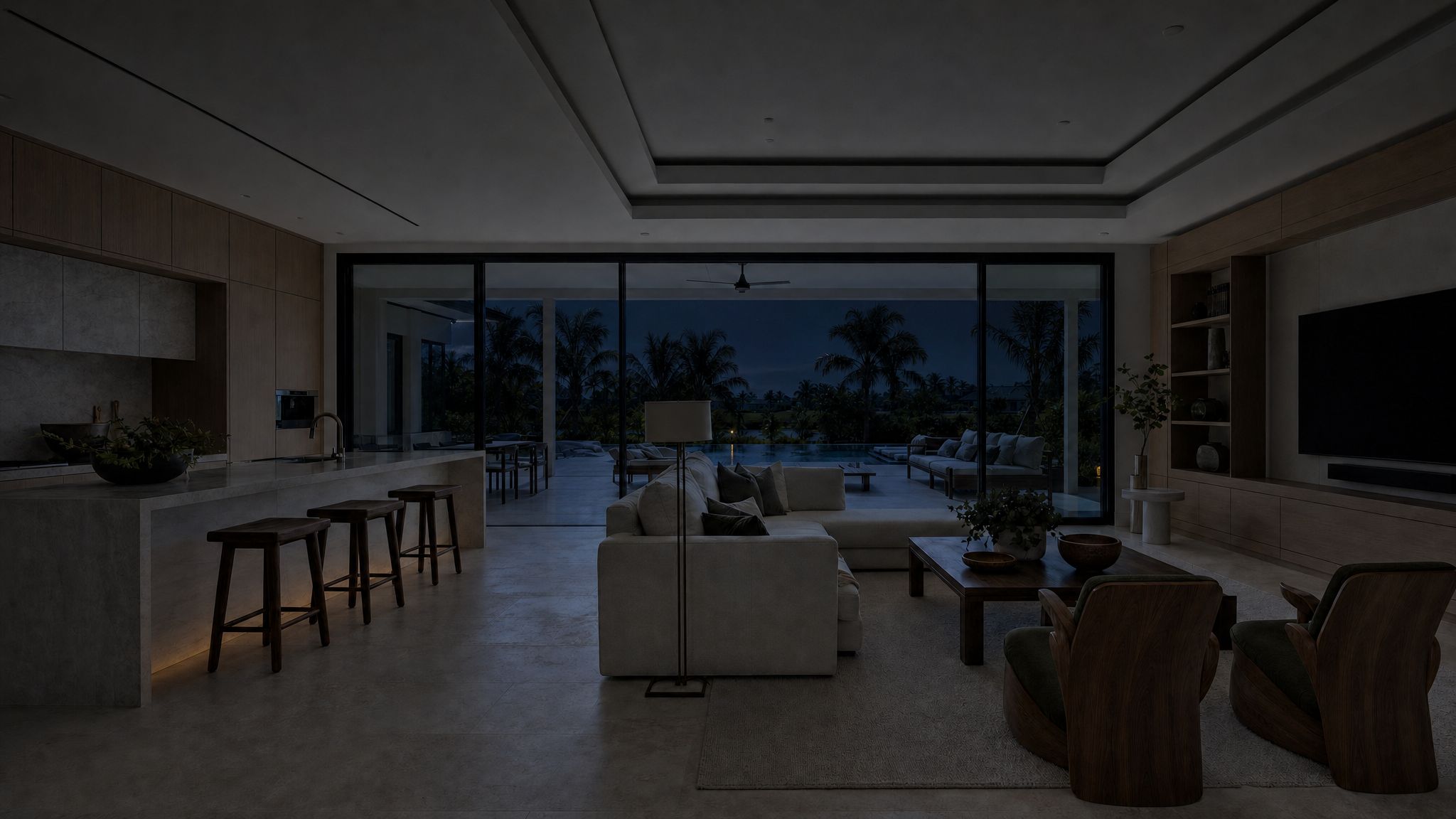
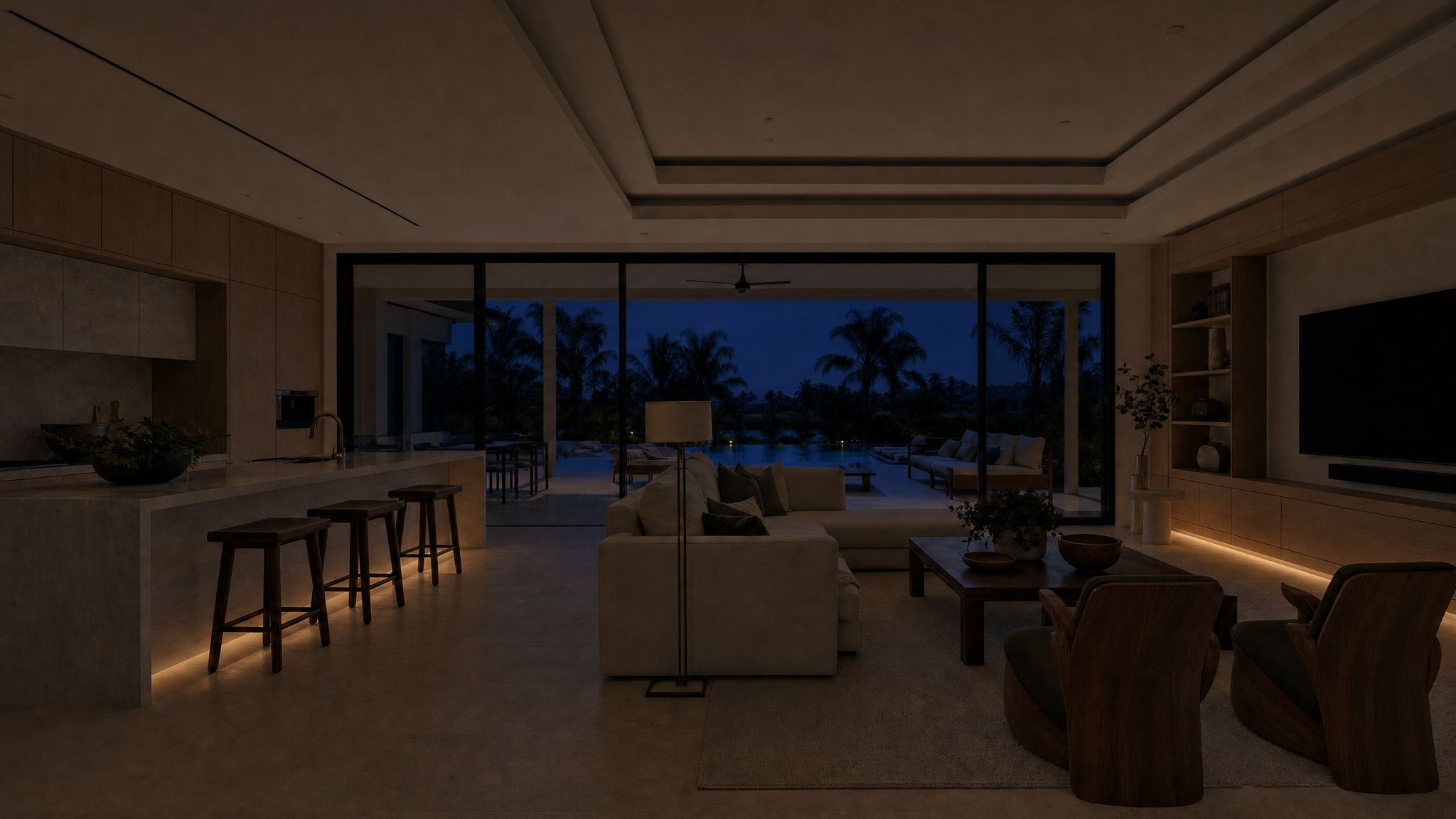
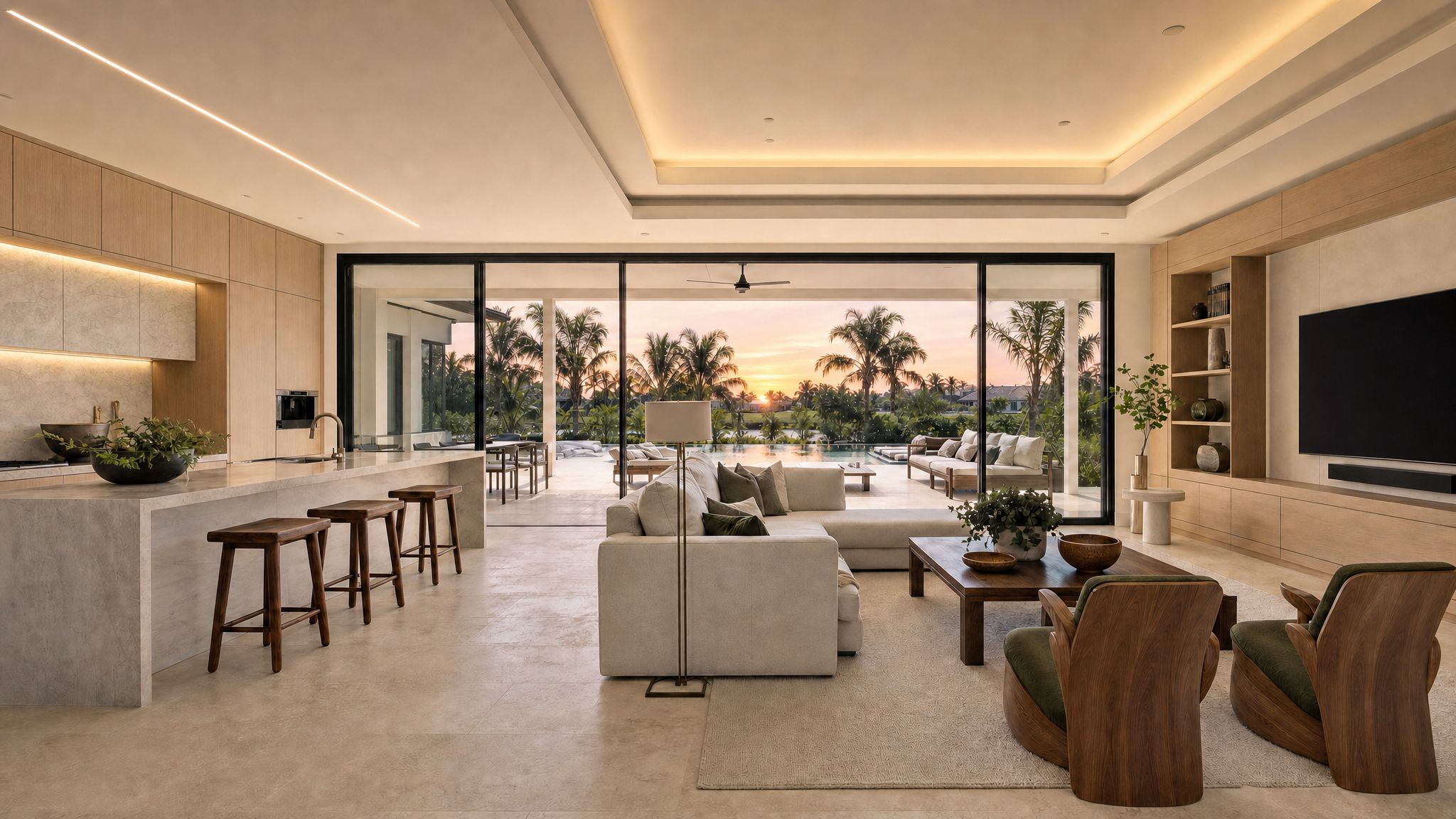
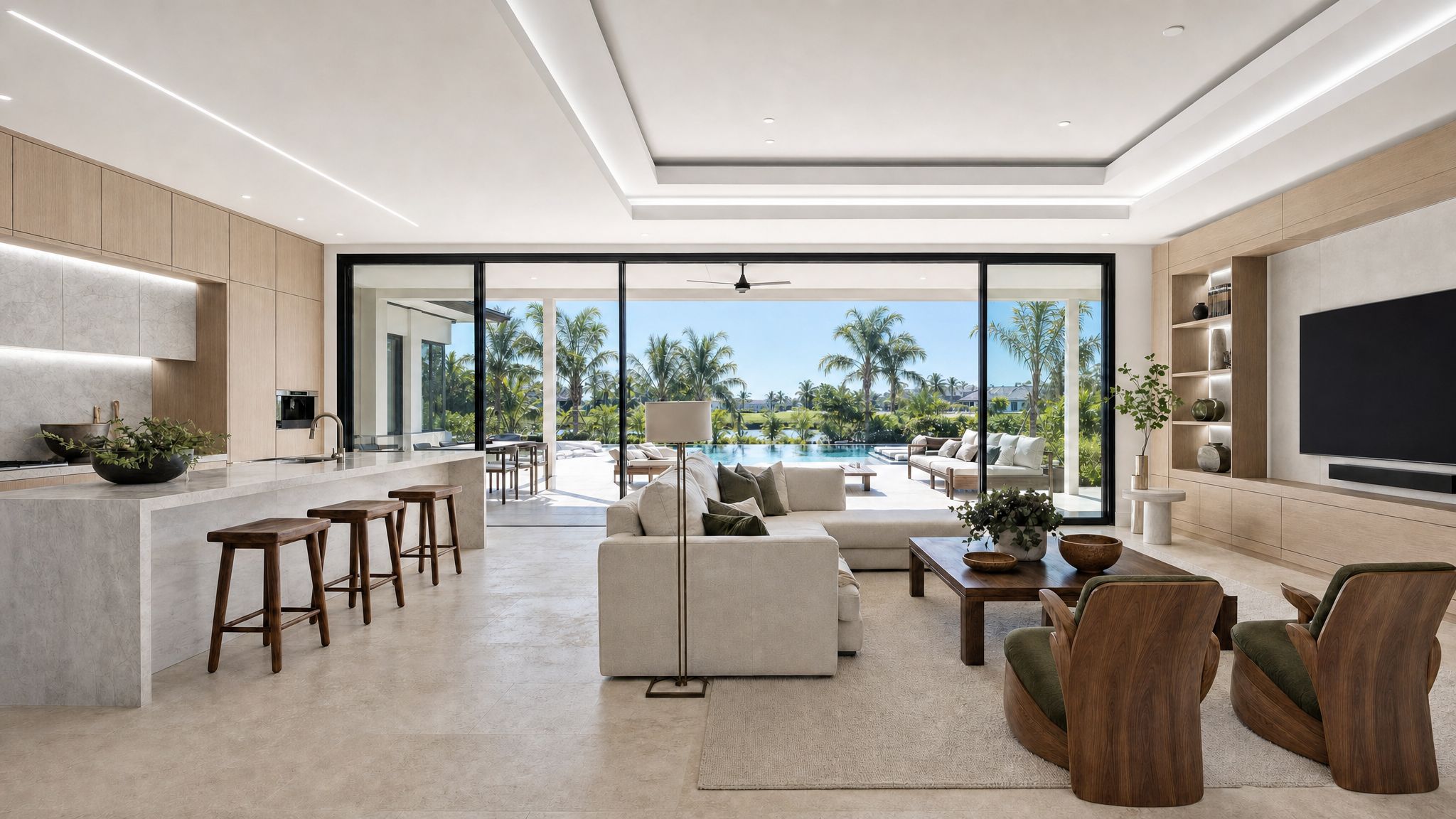
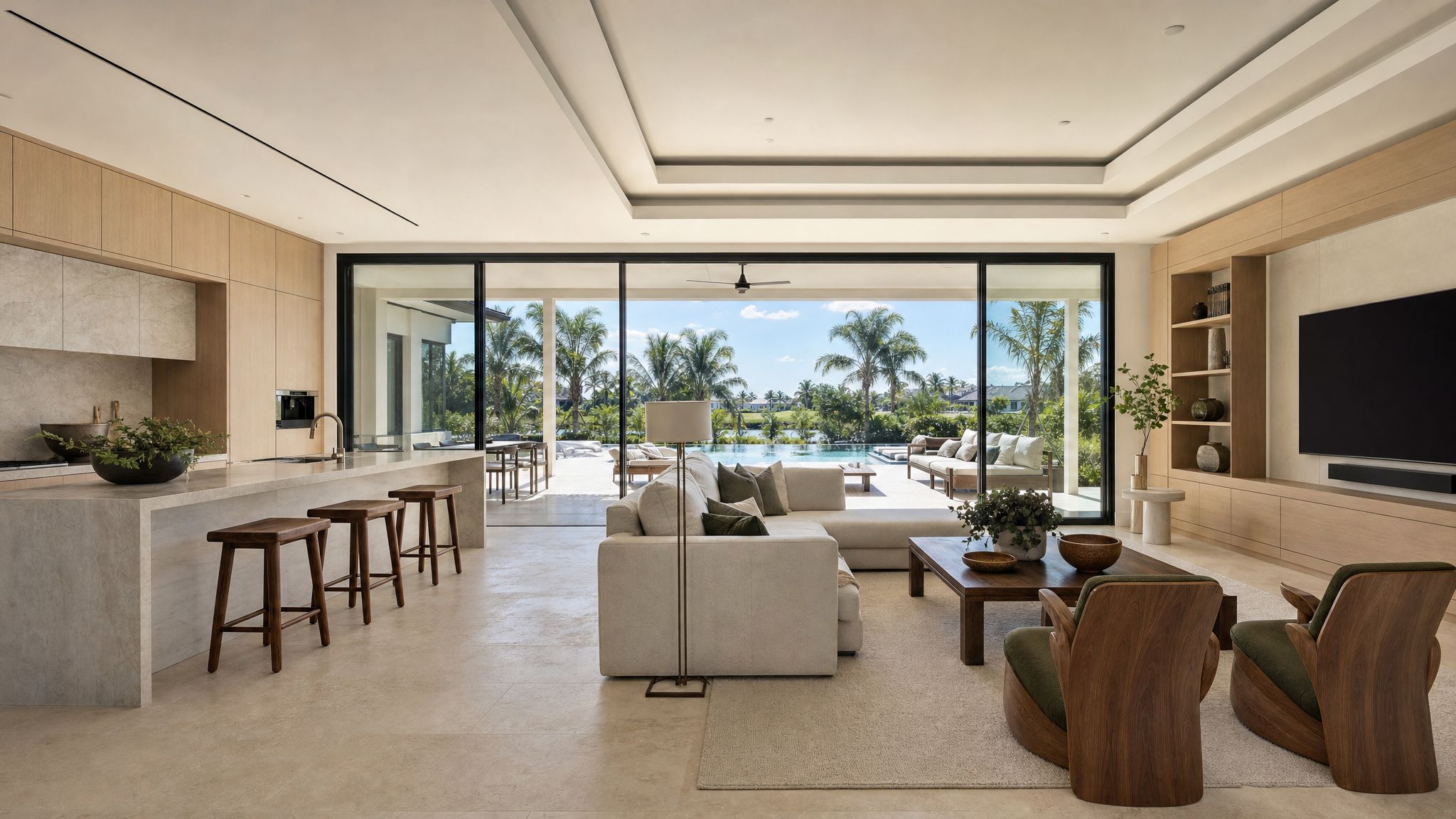
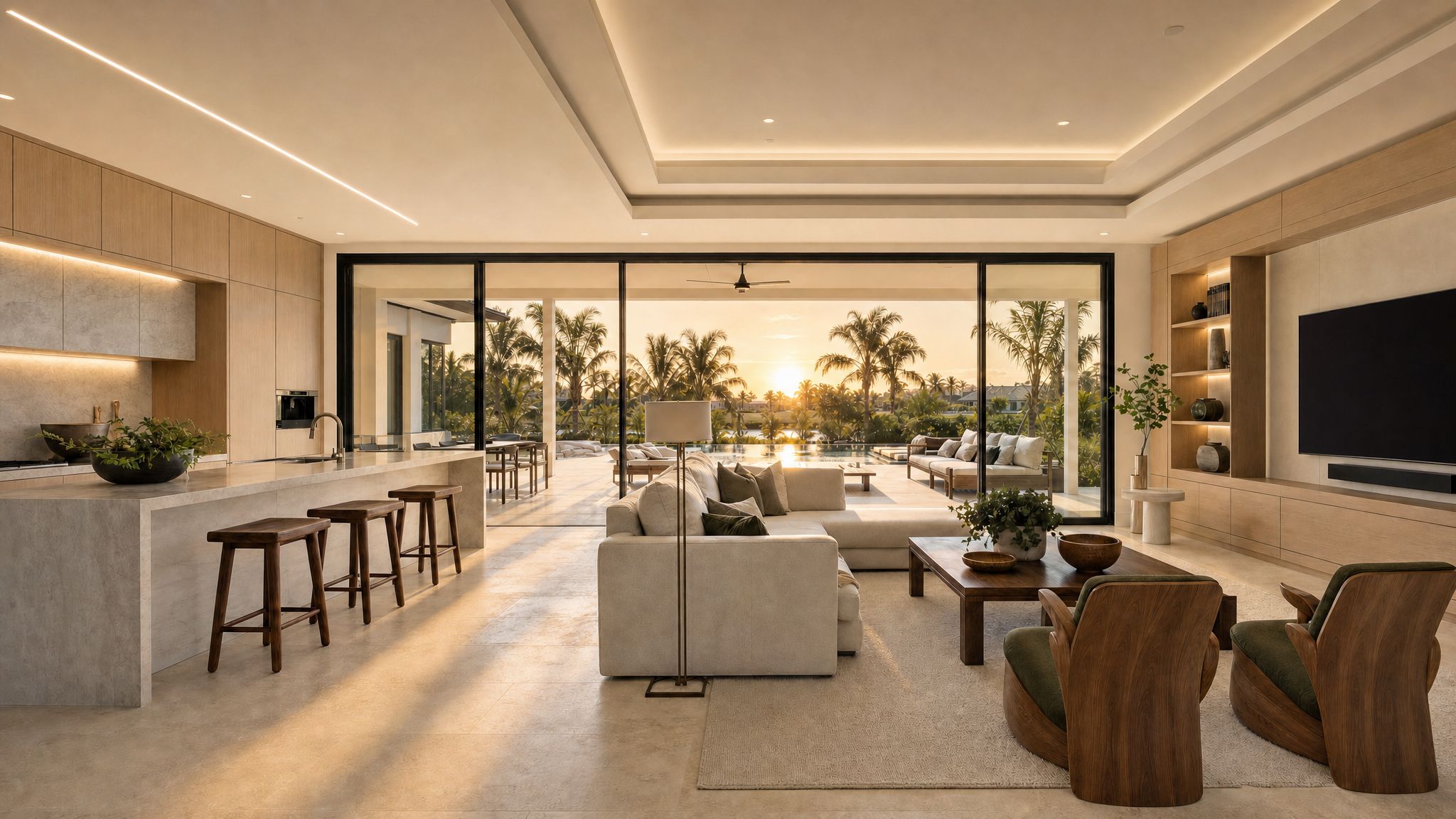
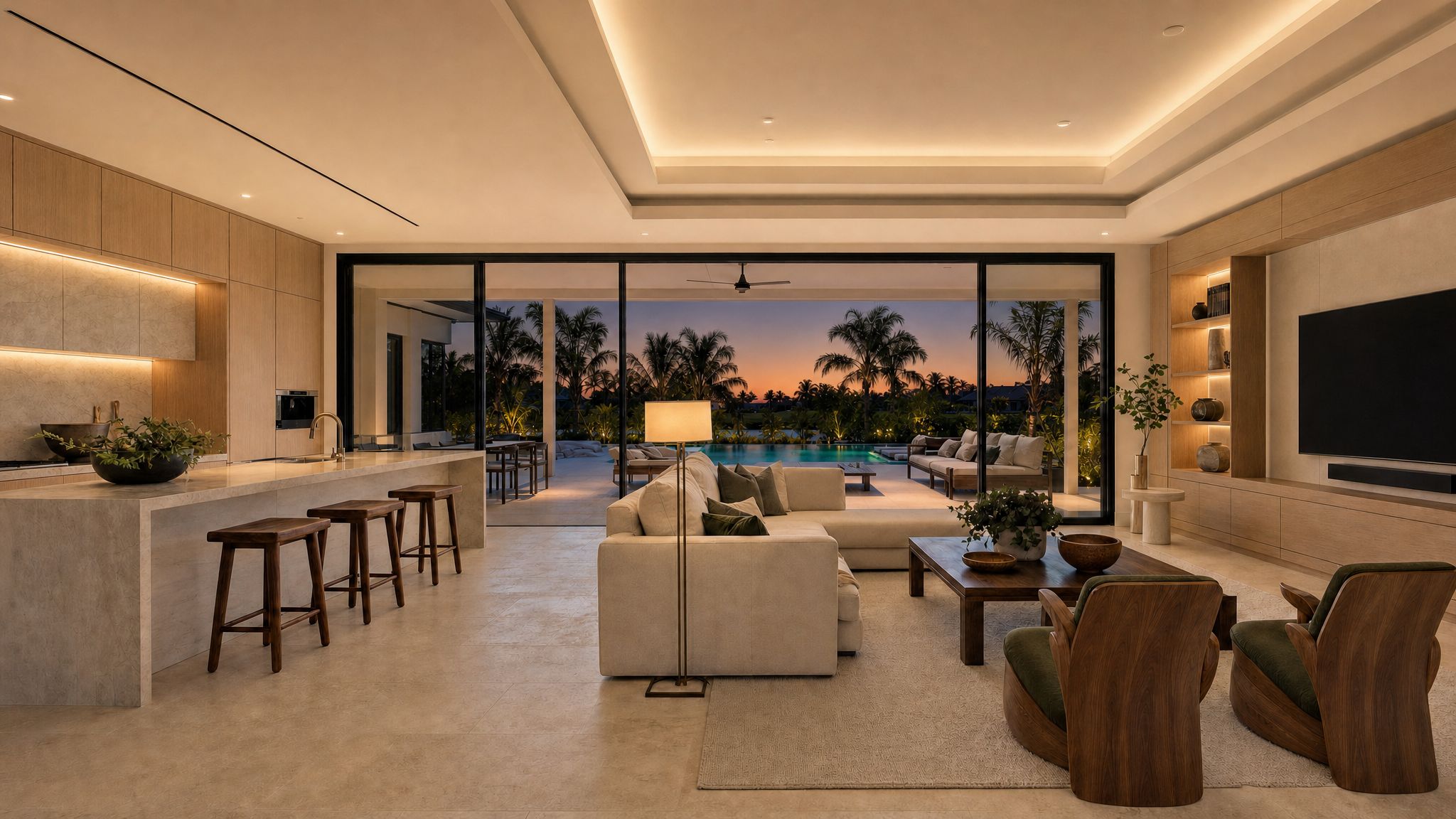
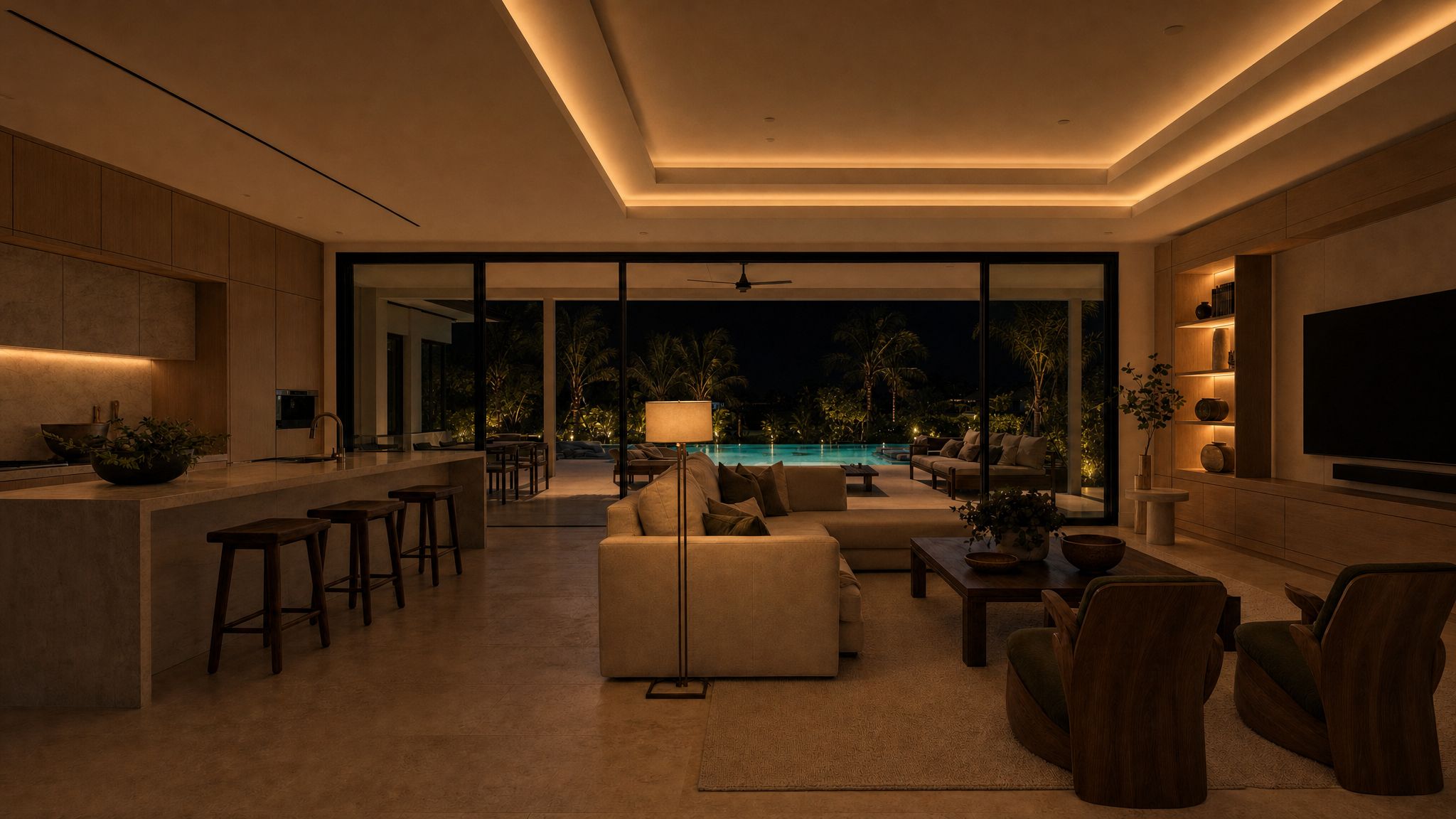
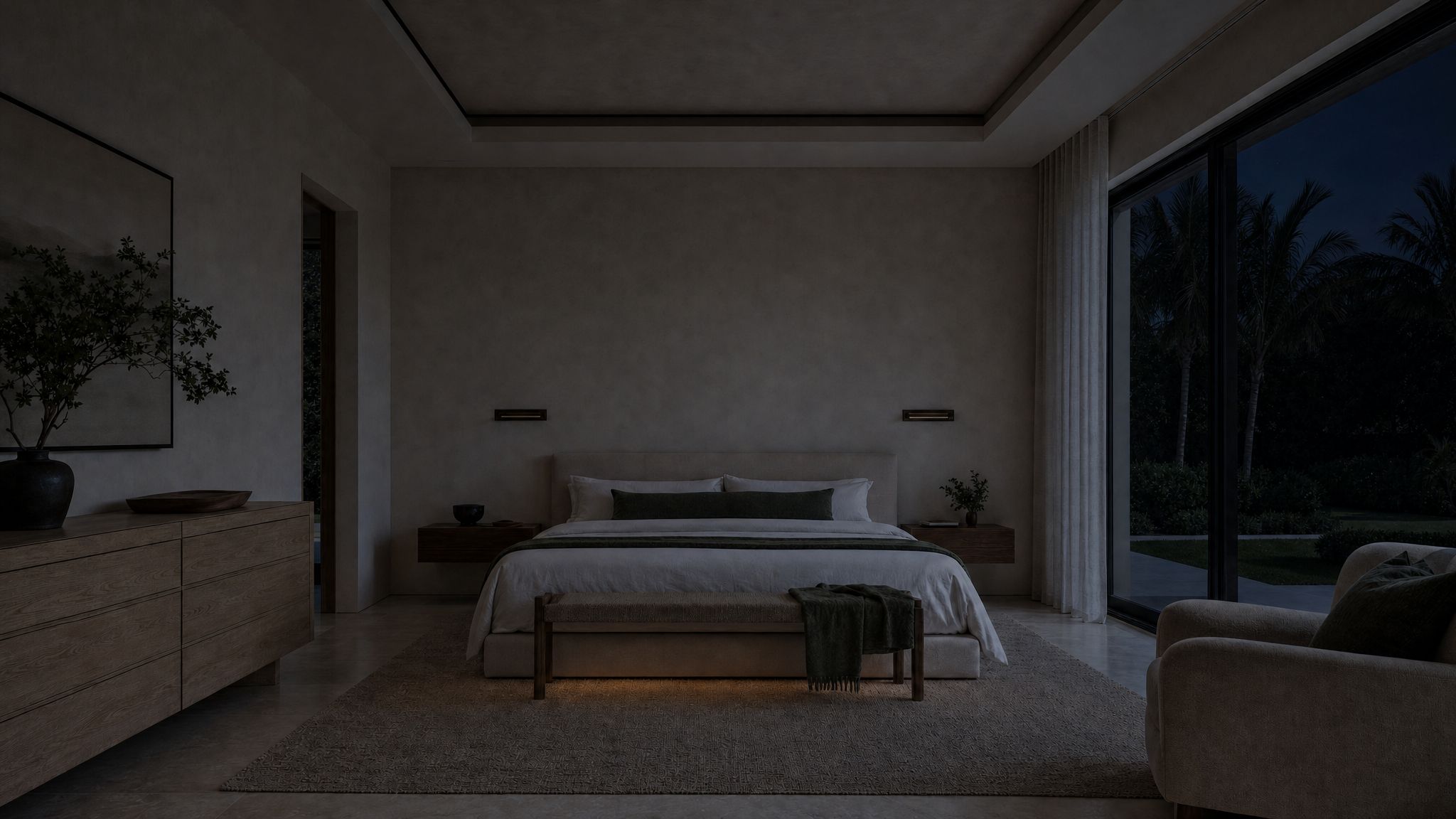
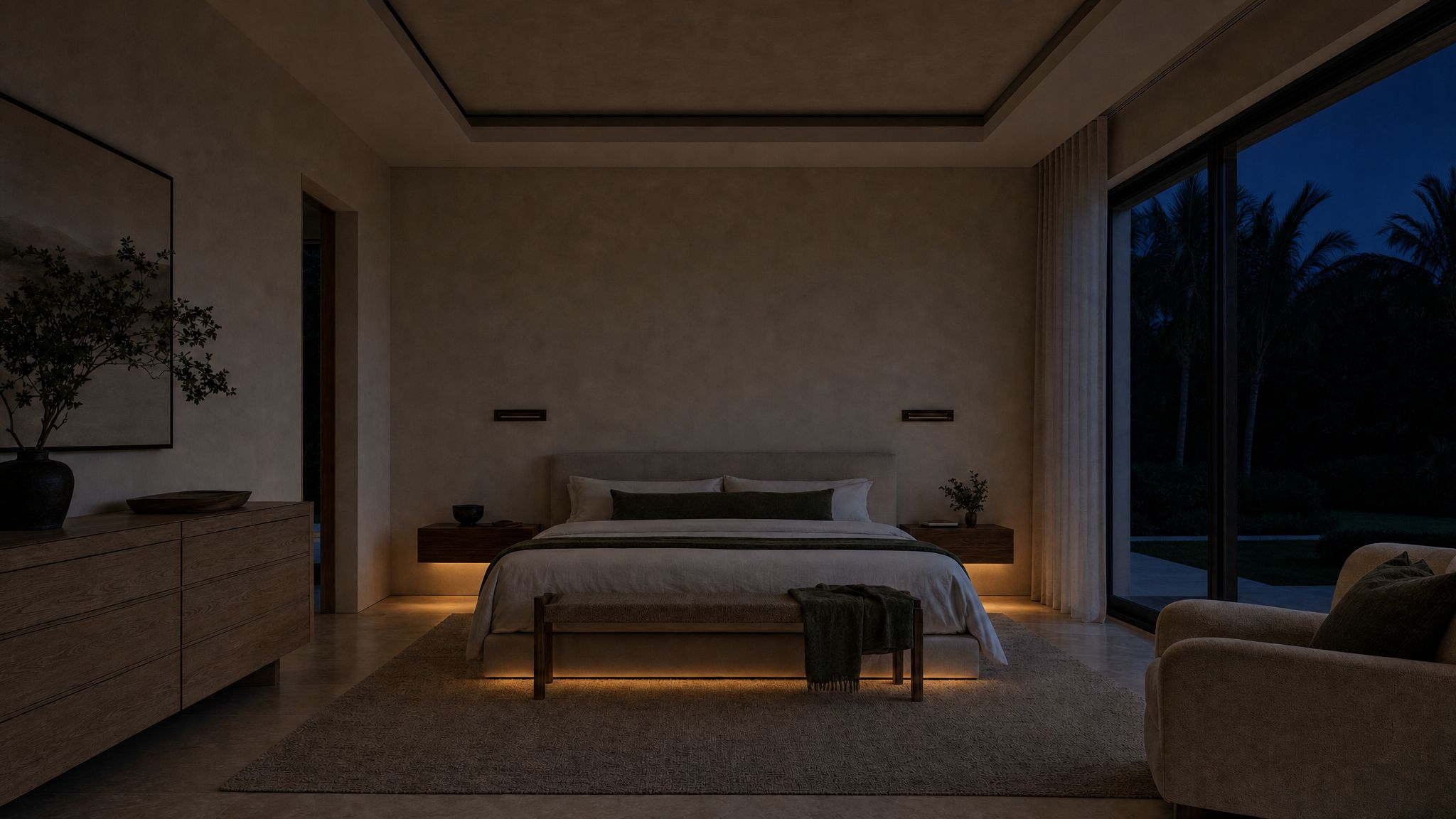
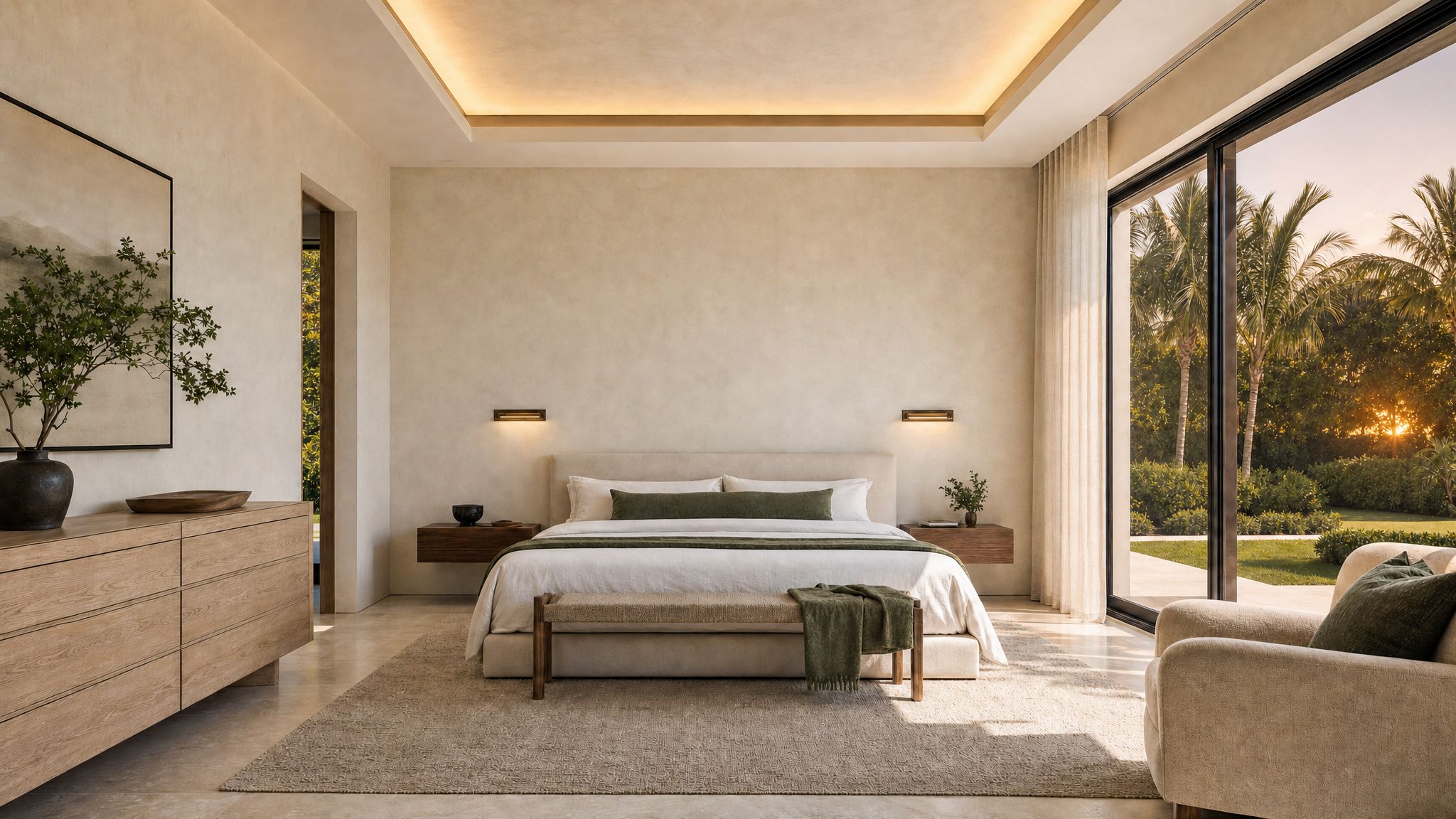
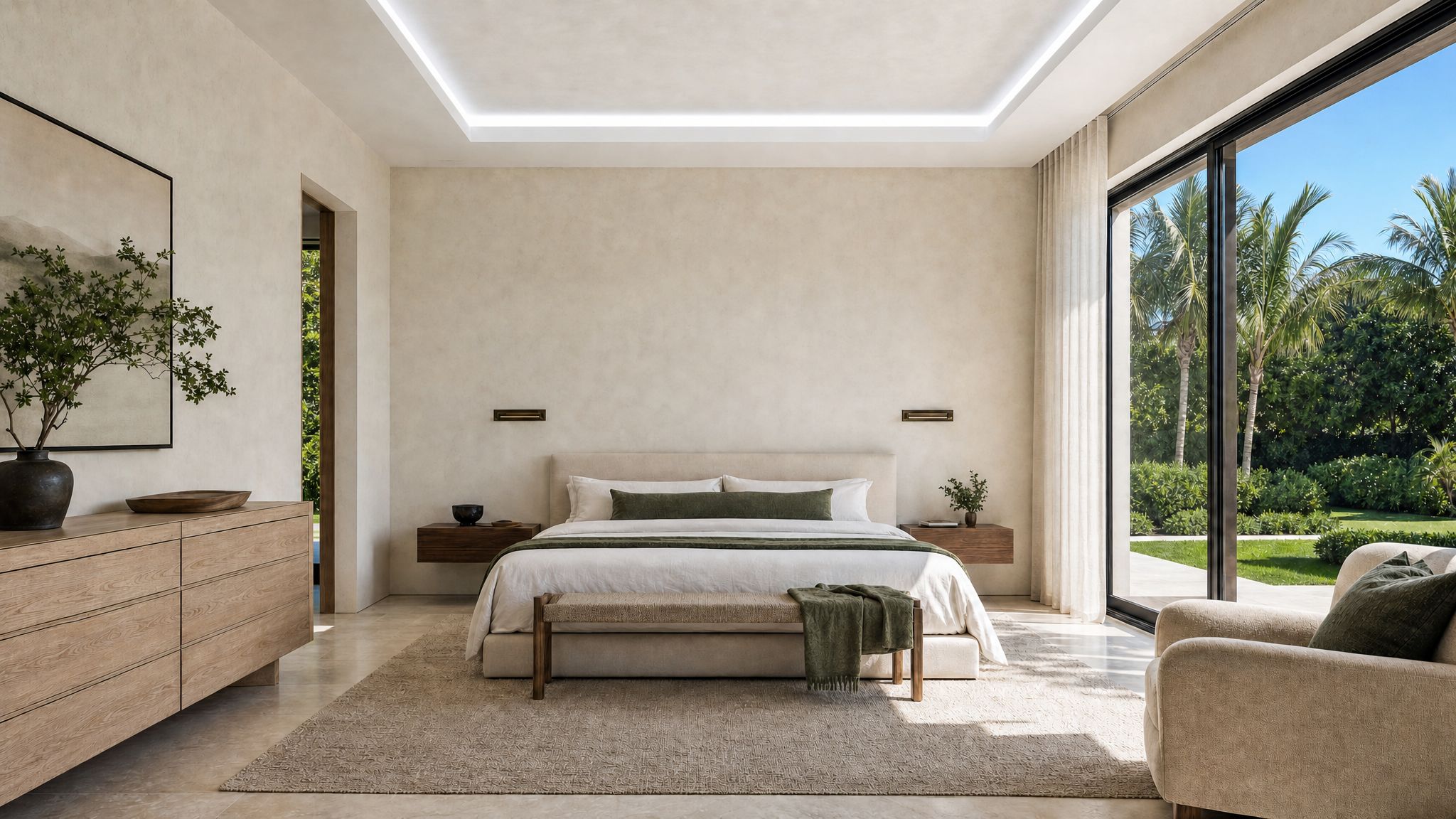
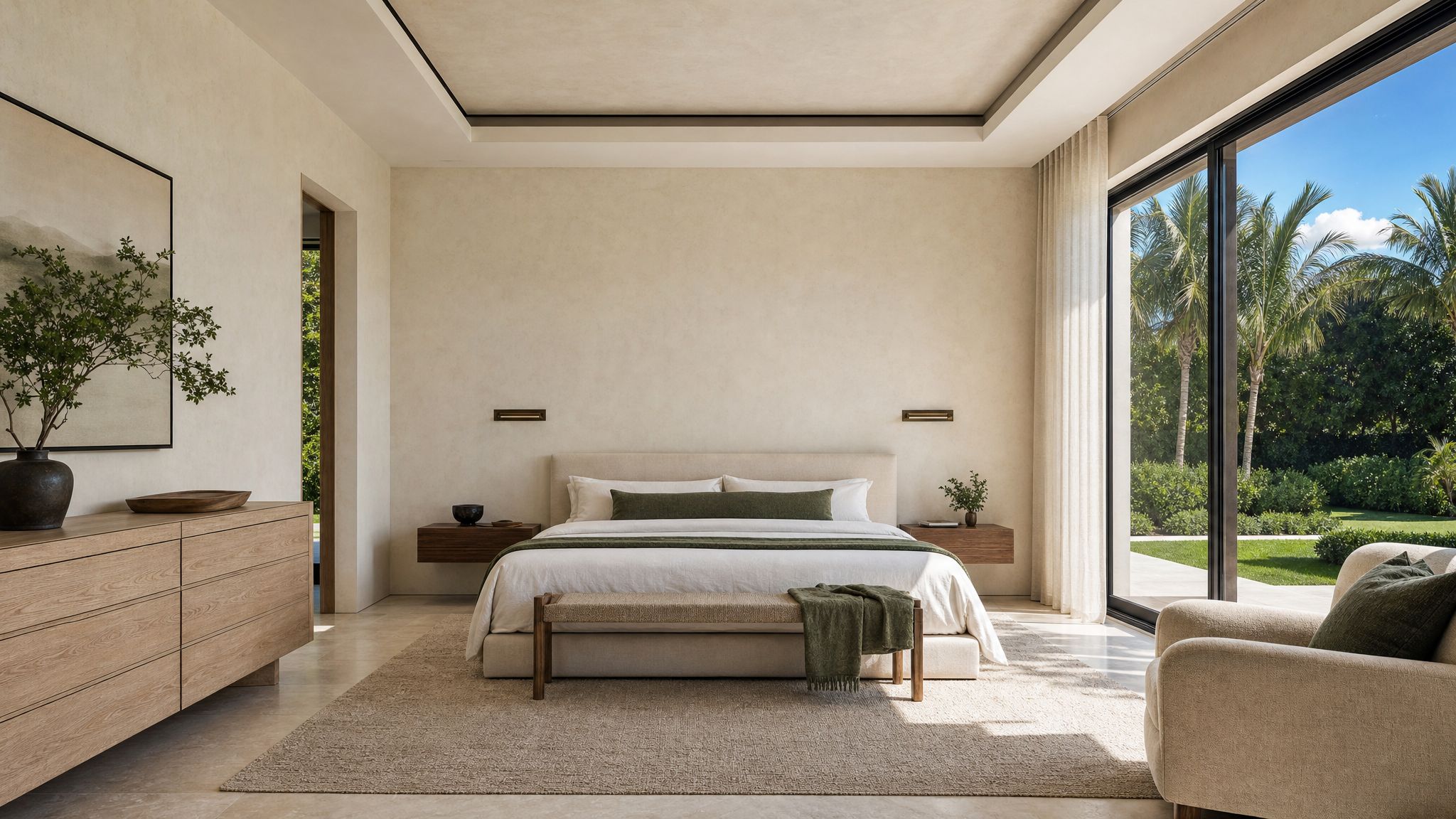
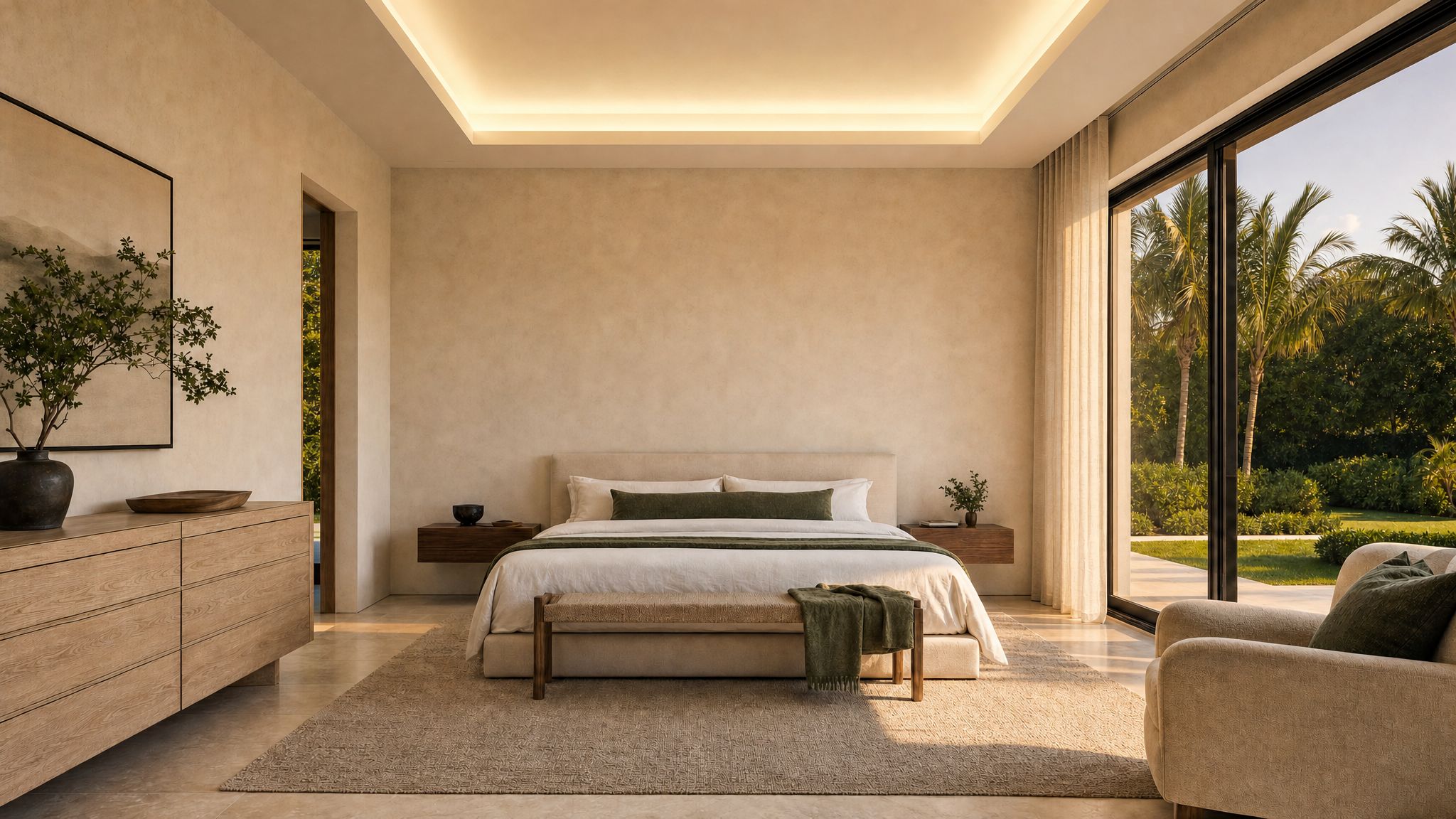
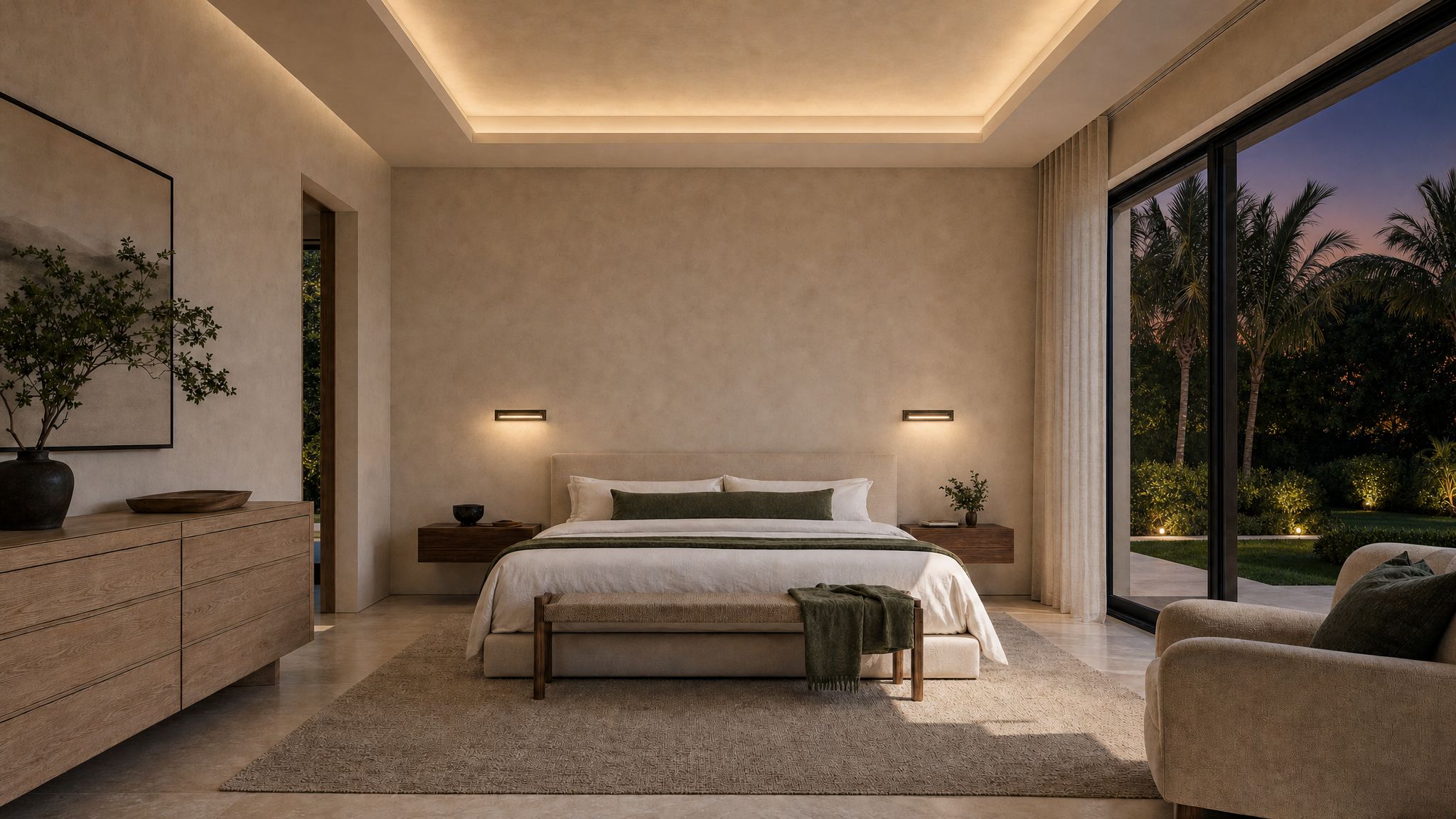
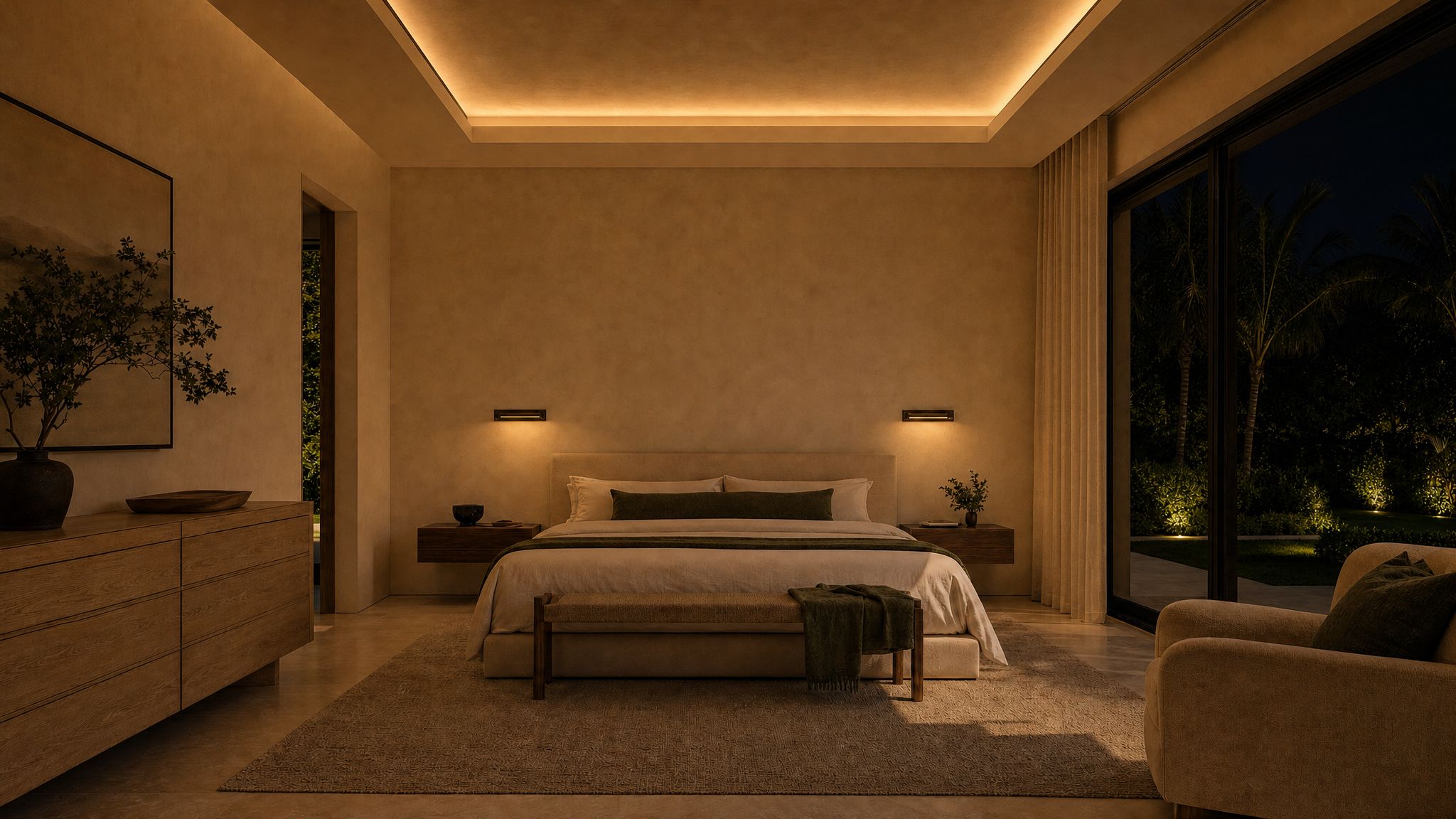
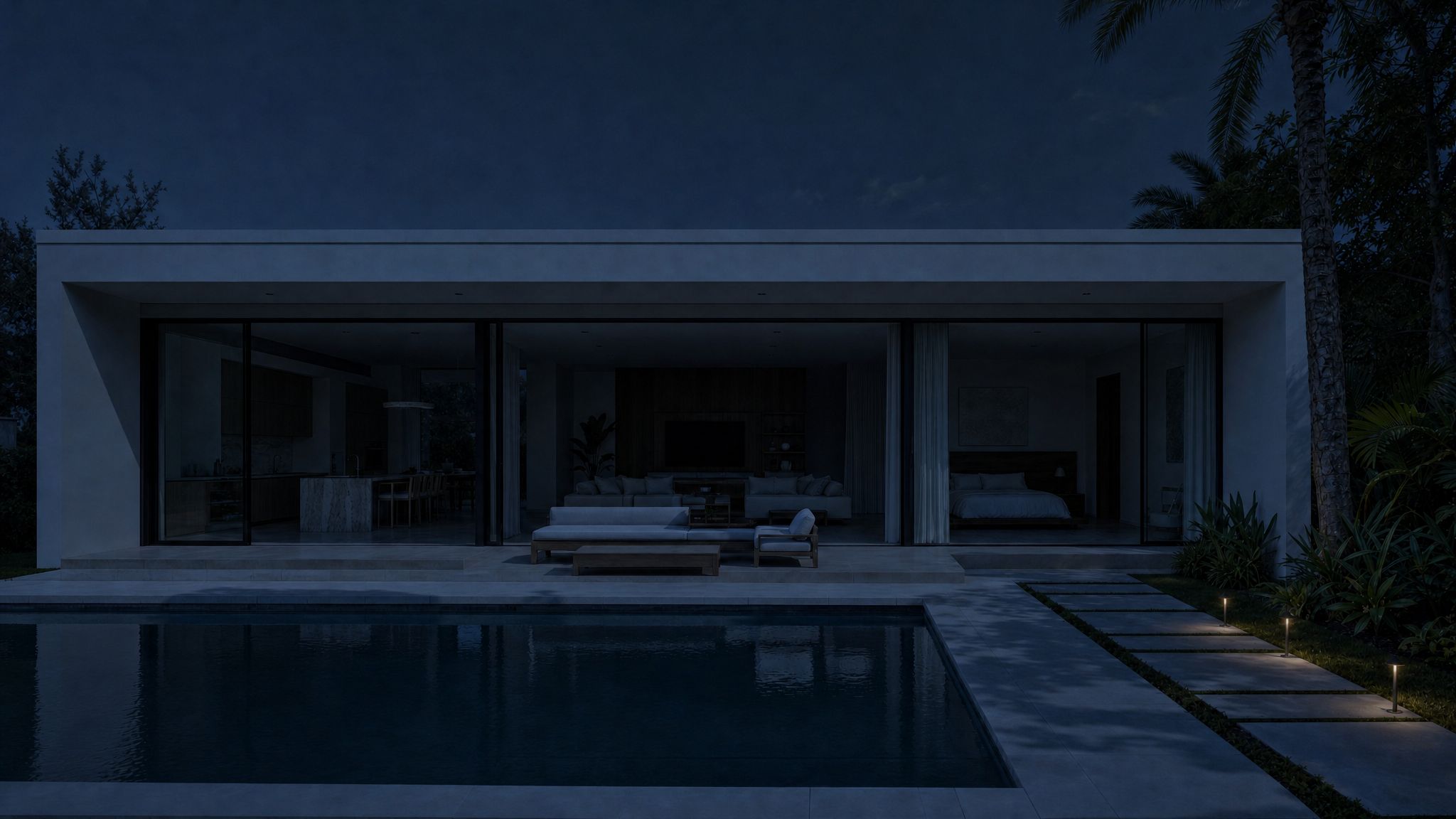
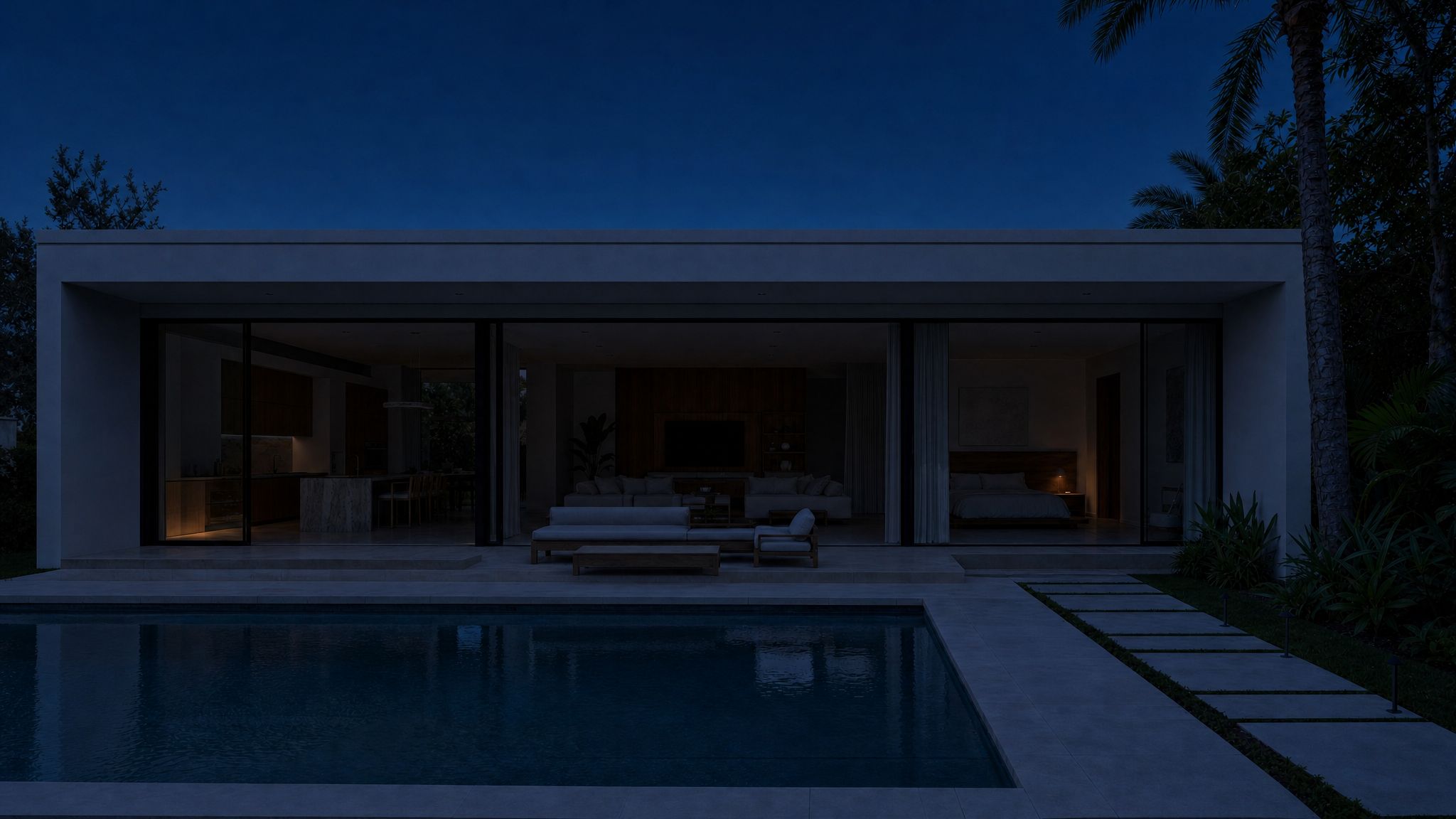
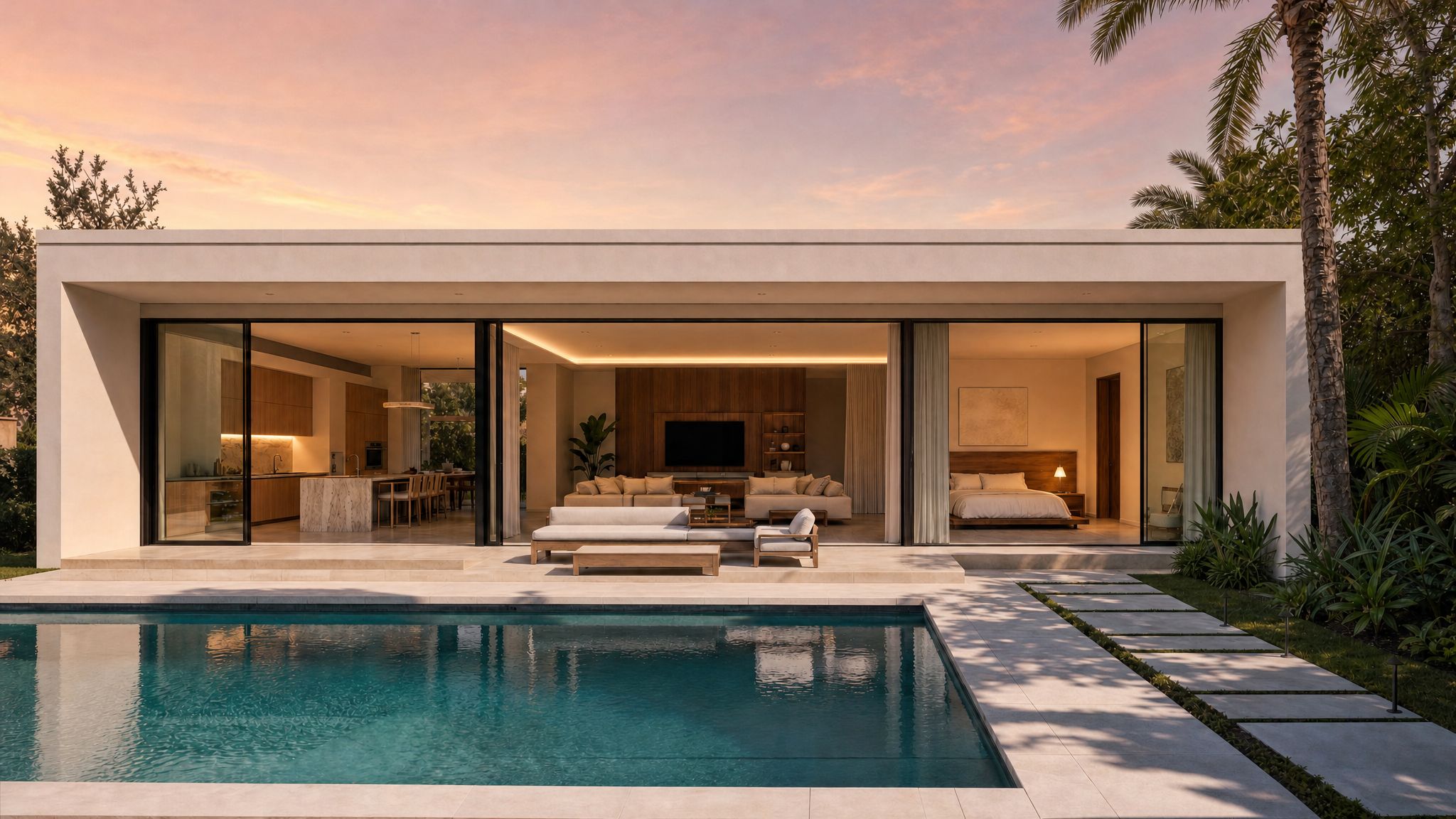
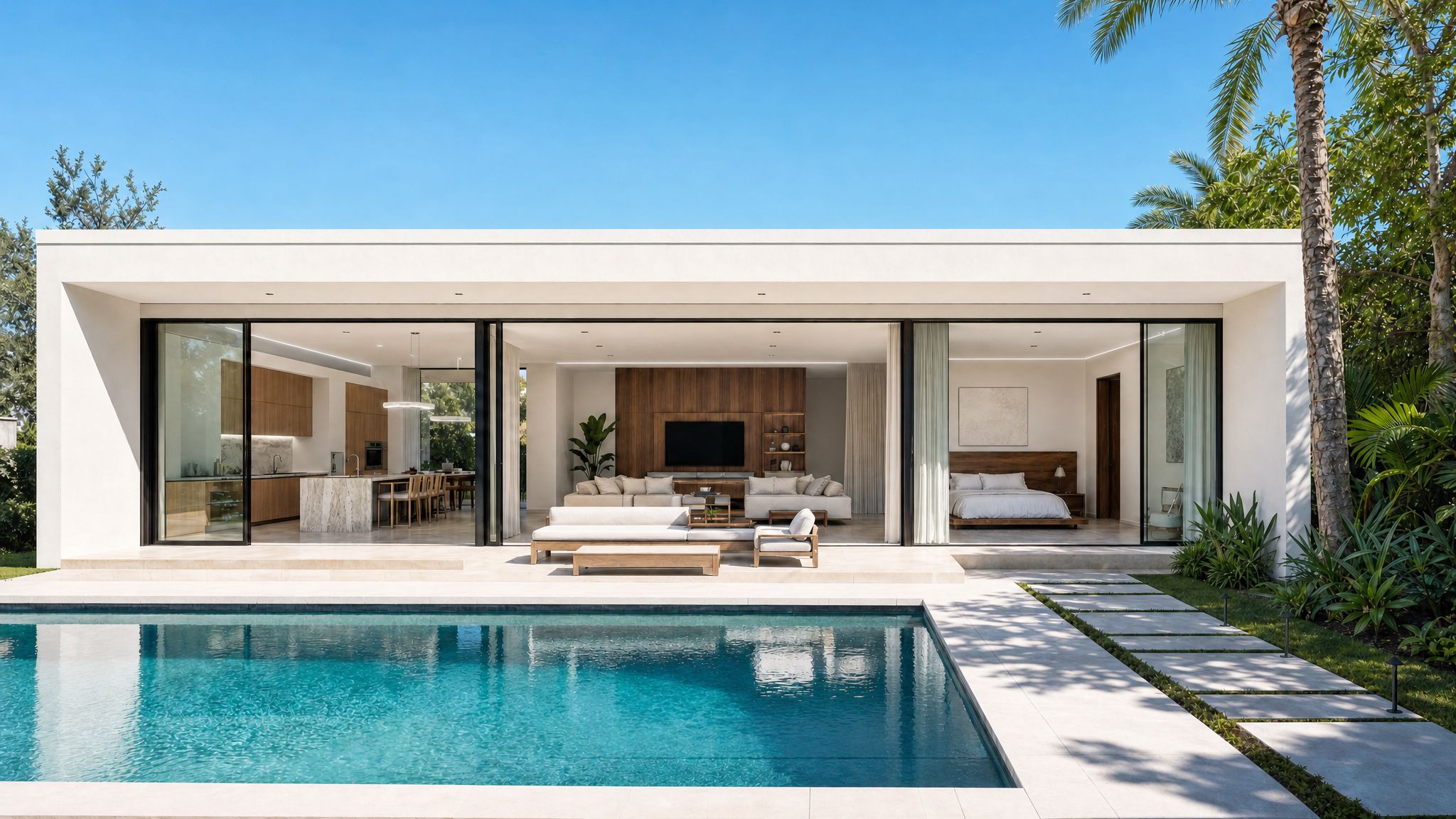
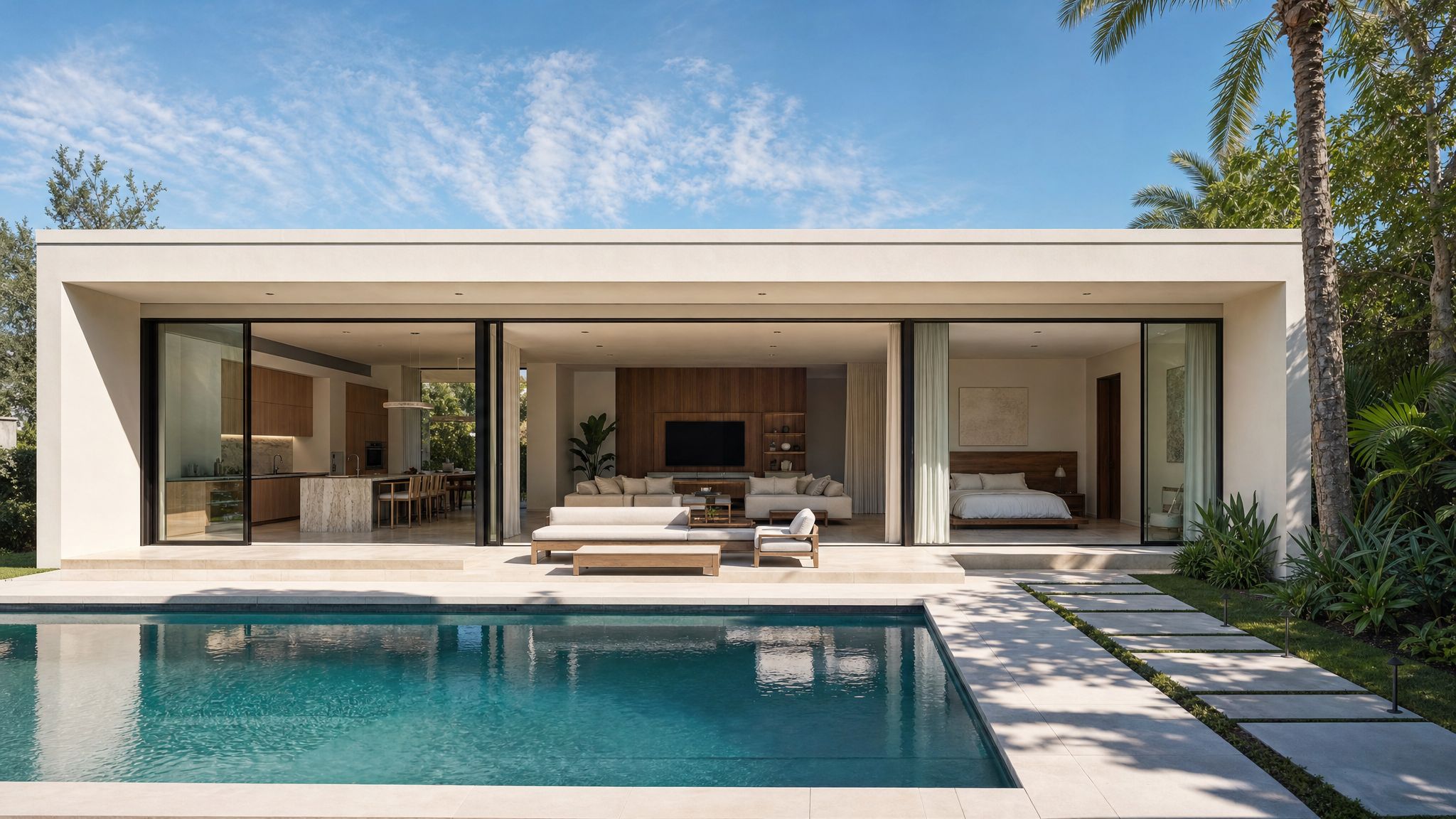
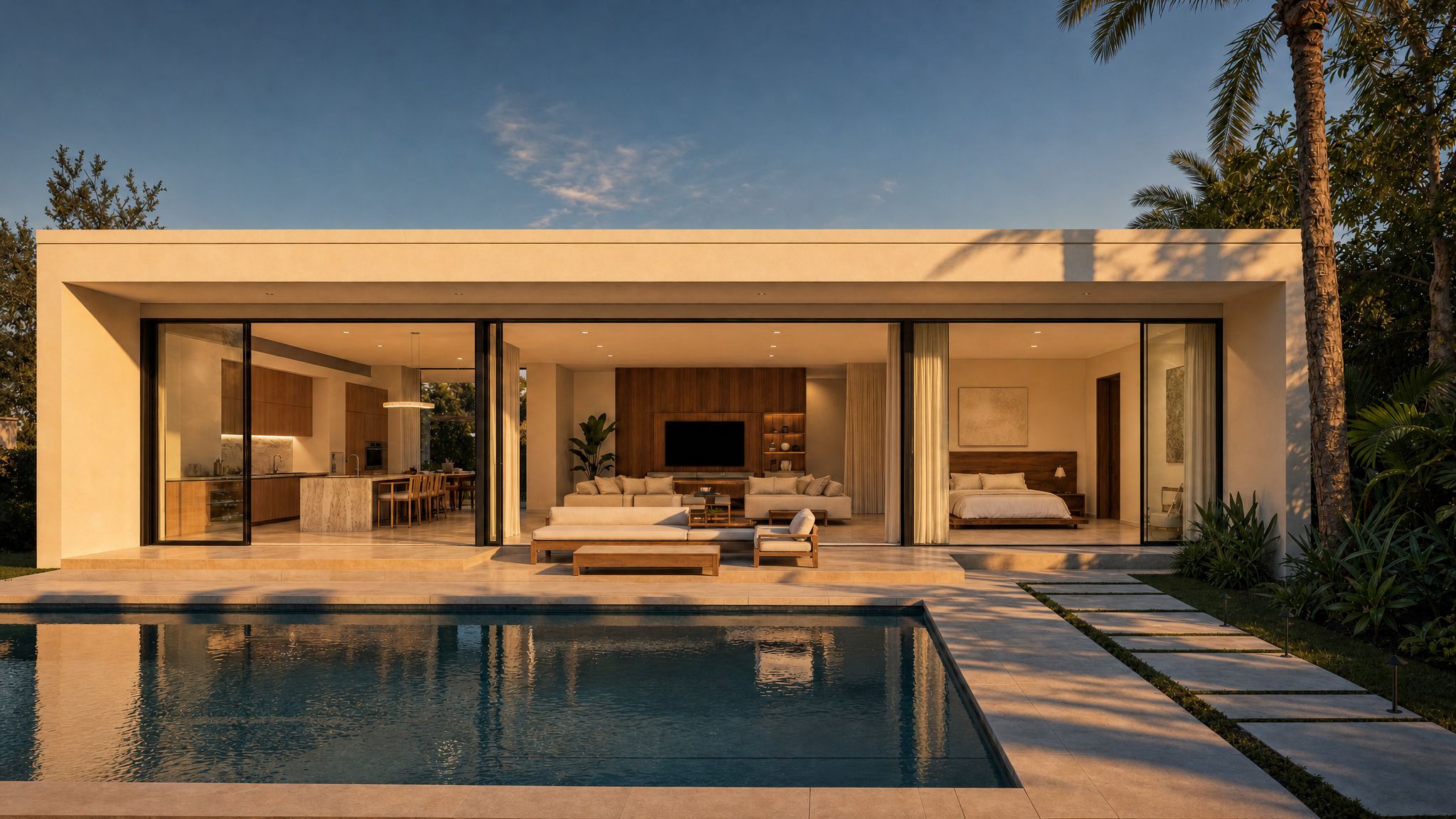
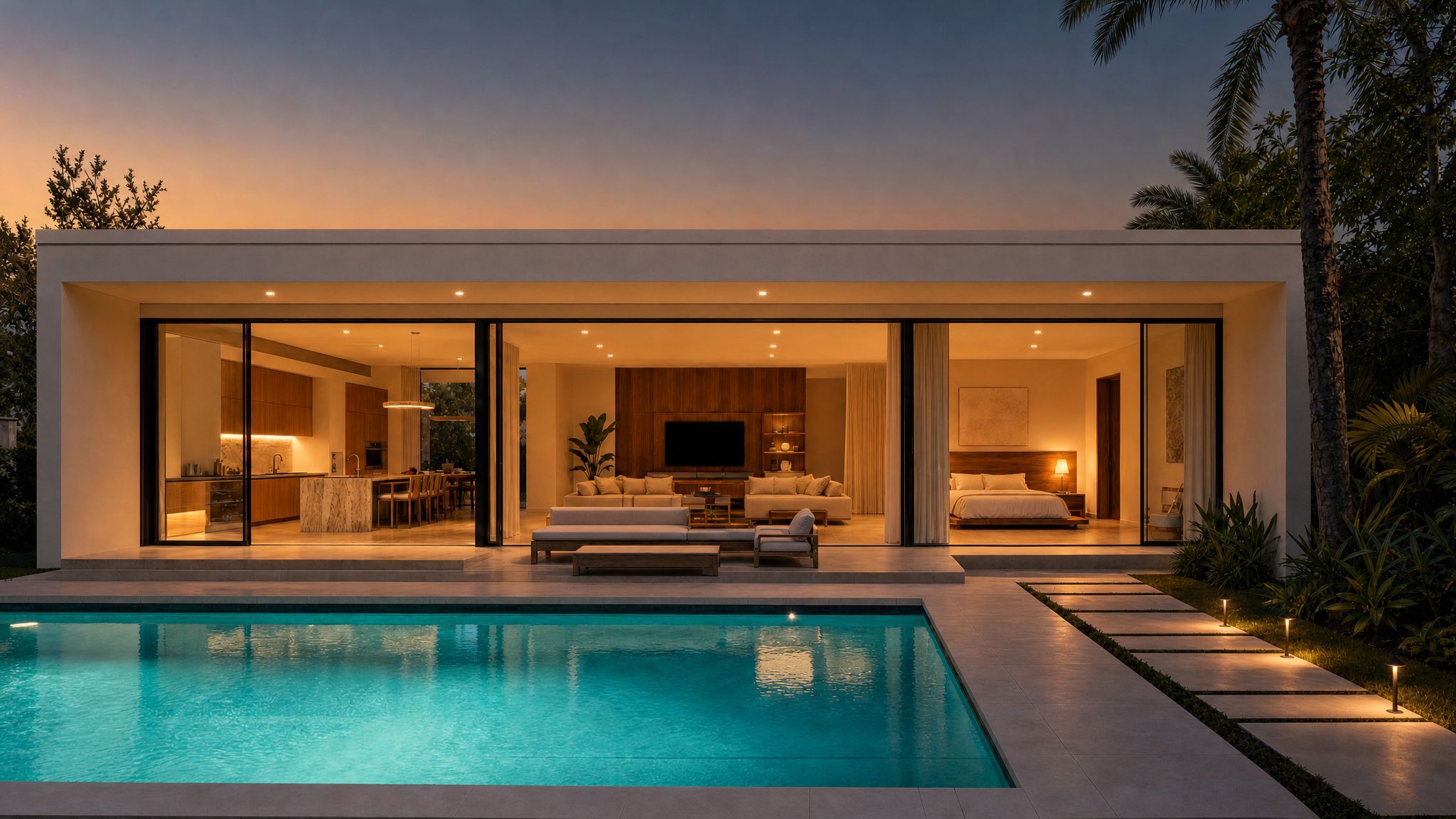
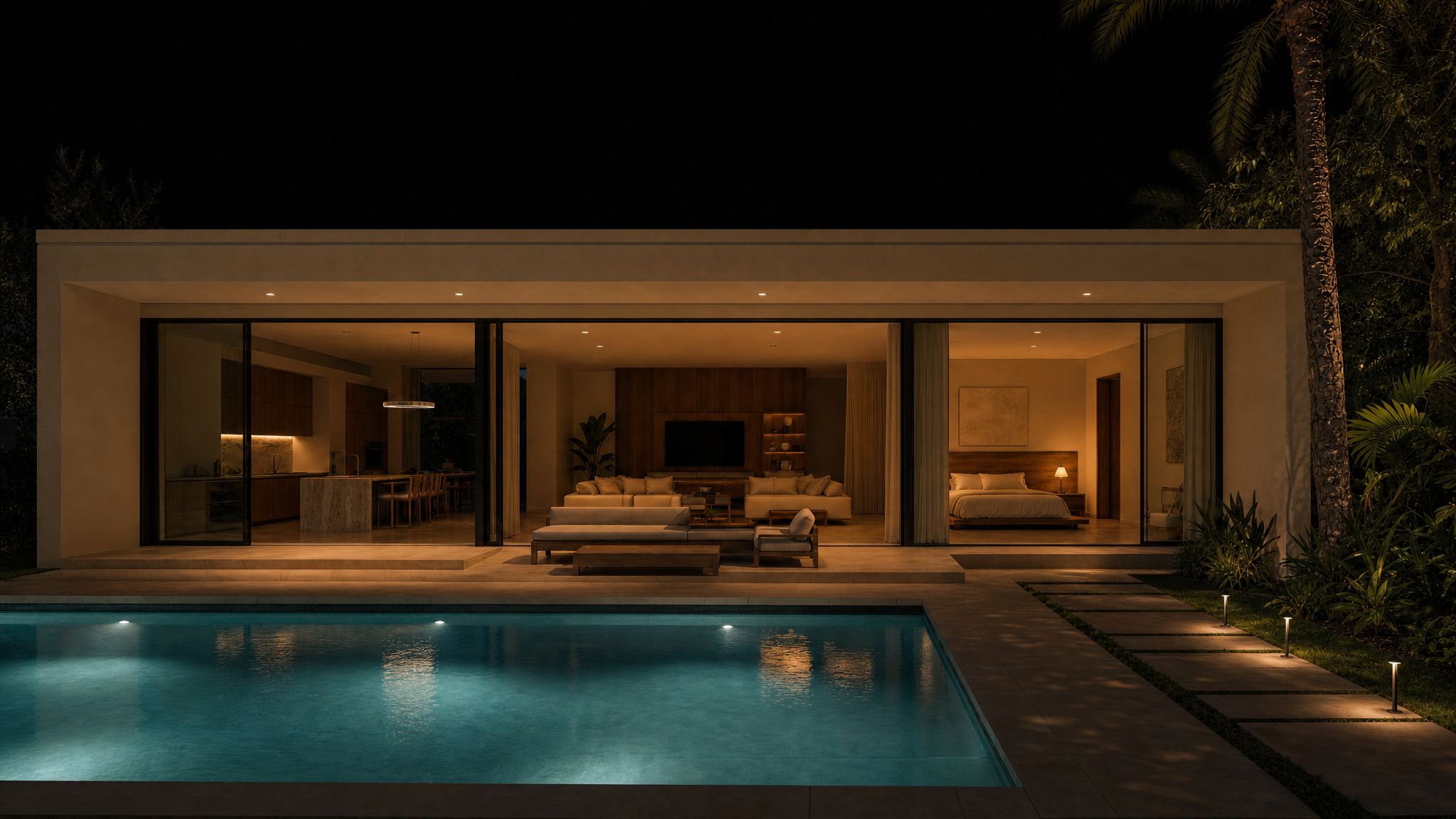
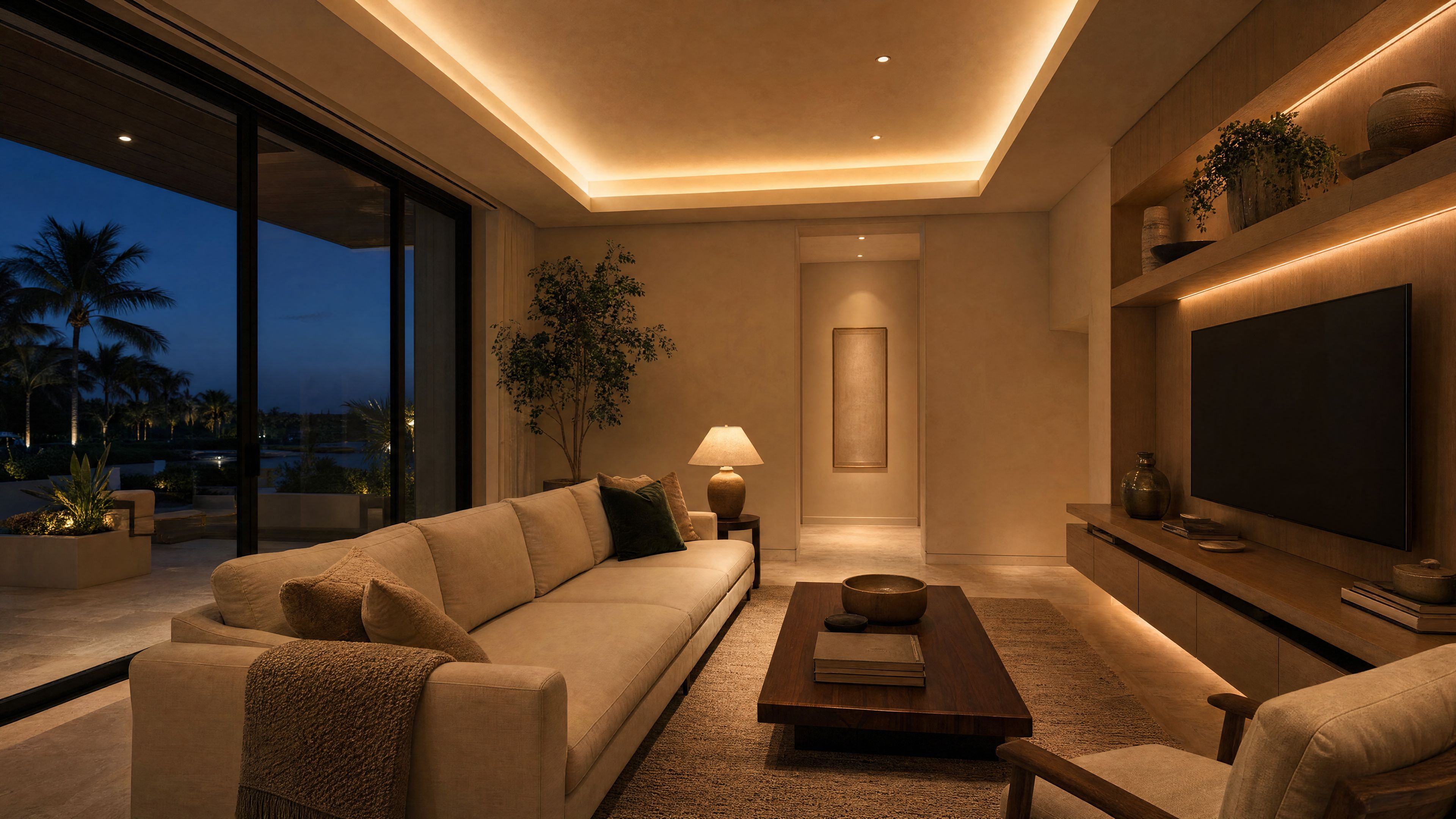
7:30 pm After sunset
The house turns warm. Lamps, the pool and the garden lights come on.
- Color of light
- 2,700 K
- Brightness
- 60%
- Ceiling covesOn
- Linear lightsOn
- Cabinet and shelf lightsOn
- Lamps and wall lightsOn
- Night pathOff
- Pool and gardenOn
Daylight is never one color. It begins warm and low, turns cool and bright through the middle of the day, and softens again toward sunset. Most electric lighting ignores that pattern and gives the kitchen the same white at seven in the morning and eleven at night. Circadian lighting design is the practice of letting the light indoors move with the day.
Scintillax designs and installs linear and architectural LED lighting and the control systems that run it, in Fort Myers, Naples and across Southwest and Southeast Florida. This guide explains what a circadian lighting plan involves, where it earns its place and what to decide before the fixtures are ordered. Use the simulator above to move through an example day, then see the research and the Fort Myers daylight data further down the page.
What circadian lighting means
A circadian lighting system changes two things on a schedule: how bright the light is and how warm or cool the white appears. A typical day starts with a gentle warm light, moves to a brighter and cooler white for the active hours, then returns to a warm, low setting in the evening.
The idea rests on a simple observation. People respond to light as a signal for the time of day, and bright, cool light late in the evening sends a different signal from a low, warm one. Lighting designers use that to make a home feel alert in the morning and calm at night.
It is a matter of comfort and atmosphere. A lighting plan is not a medical treatment, and no fixture can promise better sleep or health. What it can do is stop the house from working against the hour.
What the system needs
Three parts have to be chosen together.
- Tunable-white fixtures. These contain warm and cool LEDs and blend them to produce a range of whites. Check the range each product covers, because it varies, and check how the light renders color at both ends of that range.
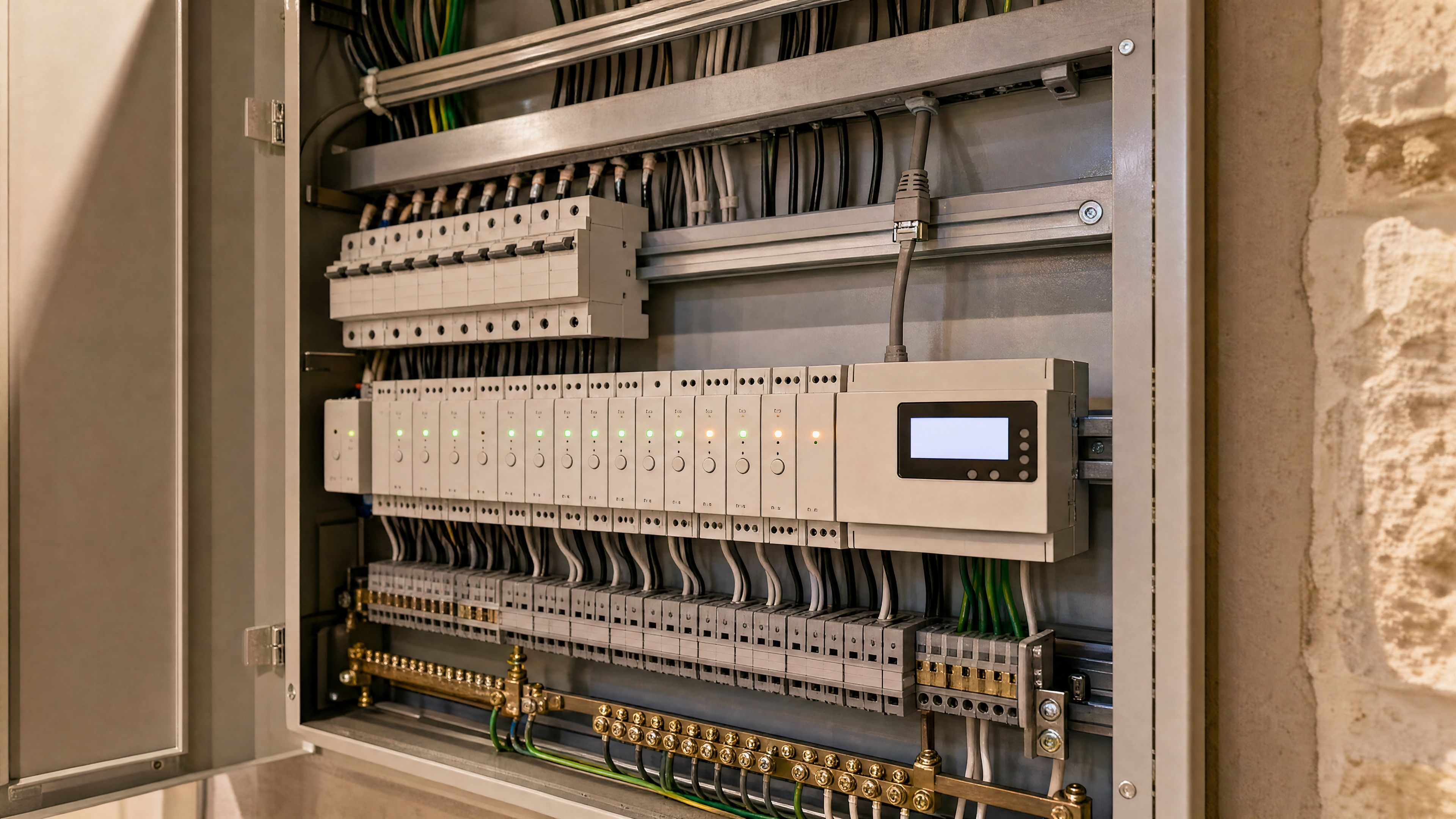
- Drivers and a control signal that carry two instructions. One sets brightness and the other sets color. A standard wall dimmer sends only the first, so tunable white needs a compatible driver and control method specified as a set.
- A controller with a clock. It stores the daily schedule, follows local sunrise and sunset through the year, and still lets you choose a scene by hand from a keypad or an app.
If only the evening matters to you, there is a simpler route. Dim-to-warm lighting warms as it dims and works from a single compatible dimmer, with no schedule to program. Our comparison of dim-to-warm and tunable white sets the two side by side.
Where it earns its place
Not every room needs a moving white. Start with the rooms you use at both ends of the day.
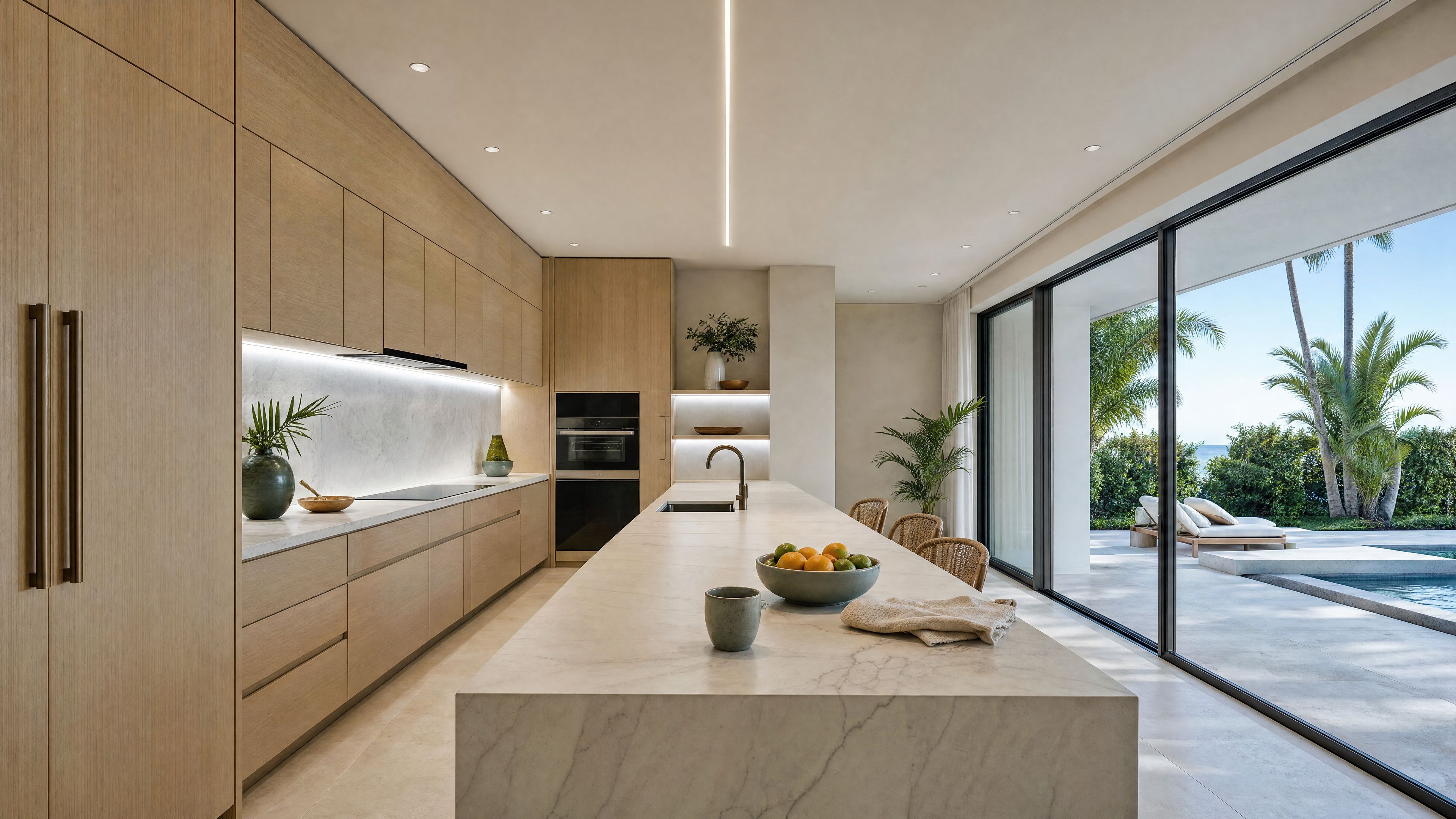
- Kitchen and breakfast area. A cooler, brighter setting suits preparation in the morning; the same fixtures can drop to a warm low level for a late glass of water.
- Primary bedroom and bath. A warm, low path for the night and a brighter, cooler setting for getting ready are the most noticed changes in the house.
- Home office. A steady, cooler white through working hours, with a clear change at the end of the day.
- Living spaces that open to a lanai. Here the electric light should sit comfortably beside strong Florida daylight and then take over as the sun goes down.
Closets, laundry rooms and garages usually do well with a fixed white chosen for the task.
Planning it for a Southwest Florida home
Florida gives a house a great deal of daylight, and a good plan works with it.
- Let daylight do the daytime work. In a bright room with large sliders, the electric light may only need to fill the darker side of the room at midday. Sensors or a simple schedule can hold it back.
- Follow the real sunset. A controller with an astronomical clock shifts the evening change as the days lengthen and shorten, so the schedule stays right in December and in June.
- Plan for the seasonal home. If the house is empty for part of the year, the same system can run a modest away schedule and return to the daily pattern when you arrive.
- Mind the materials. A cool white and a warm white show stone, wood and paint differently. Review a sample of your countertop or cabinet finish at both ends of the range before the fixtures are confirmed. Our guide to color temperature, color quality and dimming covers what to look for.
Keep it simple to live with
A schedule should never trap you. Ask for these three things in the design.
- A manual scene on every keypad. Cooking at midnight or reading at dawn should take one press.
- Gradual changes. The shift from day to evening should take long enough that nobody notices the moment it happens.
- A way to pause. A party, a late guest or a sick day should not need a programmer.
What to bring to a consultation
- A floor plan or photographs of the rooms you have in mind
- The hours you use each room on a normal weekday
- Any fixtures, dimmers or control system you intend to keep
- Samples or photographs of the main finishes
With that, we can show which rooms suit tunable white, which are better with dim-to-warm or a fixed white, and how the controls would work day to day. Plan your lighting with a short description of the space and your city.
Bring your location, room photographs and the details that matter most. We can review the materials, light and practical requirements together.
Plan your lighting controlThe evidence
What the research and the numbers say.
Circadian lighting rests on published research into how people respond to light at different hours. These are the studies and the data behind the schedule above, with their limits stated.
The example schedule, hour by hour.
The simulator follows this plan. Brightness peaks in the morning, drops to nothing at midday when daylight is enough, and falls away after sunset. The color of the light moves from amber to cool white and back.
| Time | Setting | Color of light | Brightness |
|---|---|---|---|
| 6:00 am | Before sunrise | 2,000 K | 5% |
| 7:30 am | Sunrise | 2,700 K | 40% |
| 10:00 am | Morning | 5,000 K | 100% |
| 1:00 pm | Midday | Off | Off |
| 5:00 pm | Late afternoon | 3,500 K | 60% |
| 7:30 pm | After sunset | 2,700 K | 60% |
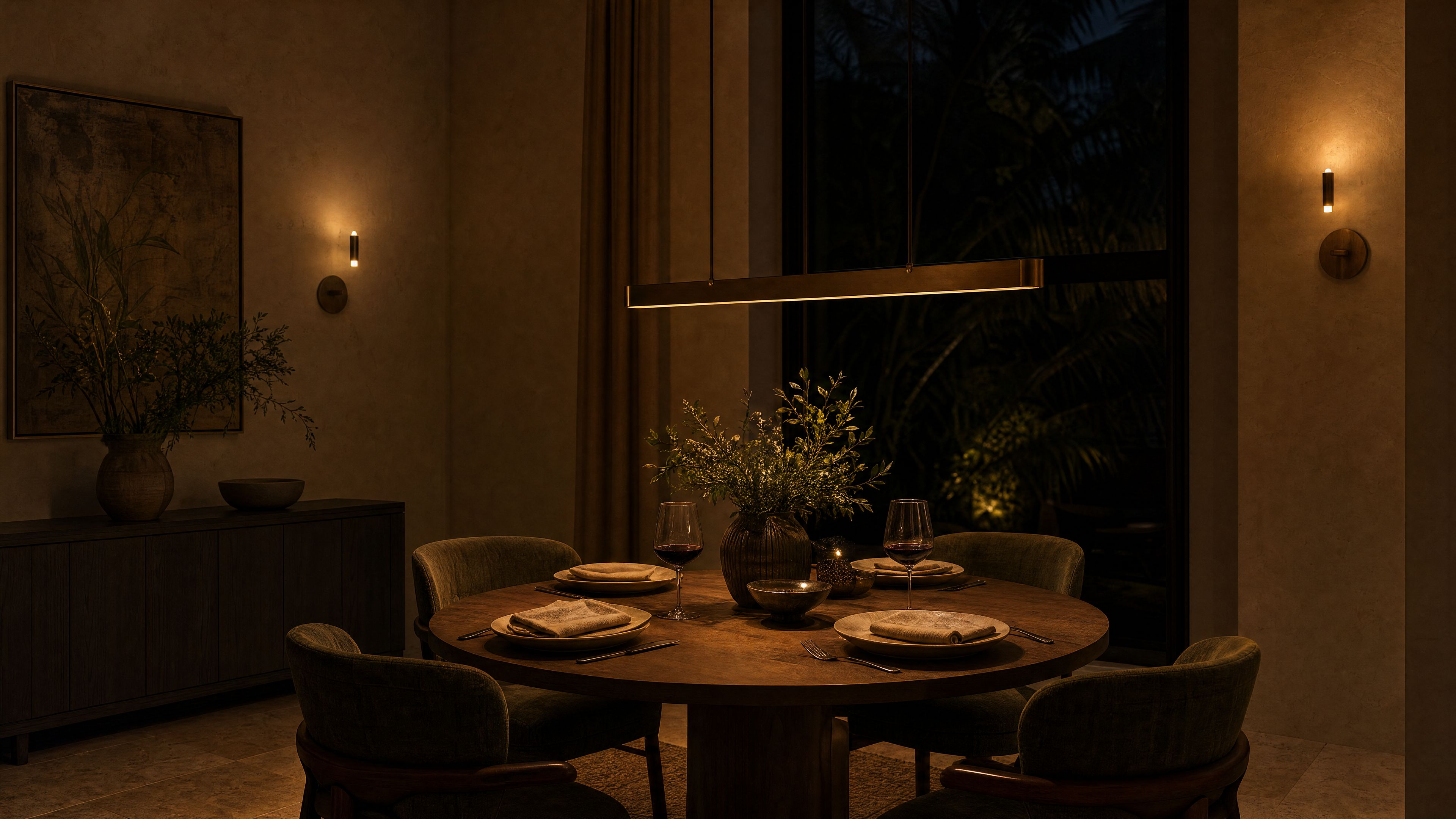
| 10:00 pm | Late evening | 2,200 K | 20% |
| 1:00 am | Overnight | 2,000 K | 2% |
Ordinary room light in the evening delays the body’s night signal.
Researchers at Brigham and Women’s Hospital and Harvard Medical School compared 116 healthy adults living in ordinary room light (under 200 lux) with dim light (under 3 lux) in the hours before bed. Melatonin is the hormone the body releases as night begins.
- 99%of participants (103 of 104) began releasing melatonin later under room light
- 71%lower melatonin level before sleep under room light than under dim light
- 85%of trials in which room light during sleep hours cut melatonin by more than half
- 1 h 32 minshorter nightly melatonin duration under room light than under dim light
Cool, bright light suits the day. Warm, low light suits the night.
In a 2015 study in PNAS, people who read on a light-emitting screen before bed took longer to fall asleep, released less melatonin, had a later body clock and were less alert the next morning than when they read a printed book.
In a 2008 workplace trial, 104 office workers spent four weeks under cool, blue-enriched white light and four weeks under standard white light. Under the cooler light they reported better alertness, performance and sleep quality.
A 2017 study of office workers in five federal buildings found that those who received more circadian-effective light in the morning fell asleep sooner and reported better sleep.
The pattern across these studies is consistent: brighter, cooler light belongs to the first half of the day, and the evening is better served by light that is lower and warmer.
Daylight in Fort Myers changes by more than three hours through the year.
The longest day brings about 13.8 hours of daylight and the shortest about 10.5. A controller with an astronomical clock follows the real sunrise and sunset, so the evening change arrives at 5:37 pm in December and 8:22 pm in June without anyone resetting it.
| Month | Sunrise | Sunset | Daylight |
|---|---|---|---|
| Jan | 7:17 am | 5:56 pm | 10.6 h |
| Feb | 7:04 am | 6:19 pm | 11.3 h |
| Mar | 7:38 am | 7:36 pm | 12.0 h |
| Apr | 7:04 am | 7:51 pm | 12.8 h |
| May | 6:40 am | 8:07 pm | 13.4 h |
| Jun | 6:34 am | 8:22 pm | 13.8 h |
| Jul | 6:43 am | 8:23 pm | 13.7 h |
| Aug | 6:59 am | 8:05 pm | 13.1 h |
| Sep | 7:13 am | 7:33 pm | 12.3 h |
| Oct | 7:26 am | 7:00 pm | 11.6 h |
| Nov | 6:47 am | 5:38 pm | 10.9 h |
| Dec | 7:08 am | 5:37 pm | 10.5 h |
What it feels like to live with.
- Mornings feel like morning. The kitchen is bright and clear when you want to be awake, without anyone touching a switch.
- Evenings wind down without a decision. The house moves to a lower, warmer light after sunset, so the last hours of the day are calmer.
- Nights stay dark. A dim amber path at floor level is enough to cross the house without flooding it with white light.
- The lights are off when daylight is enough. In a bright Florida room, the electric light holds back at midday.
- You stay in charge. Every keypad still offers a manual scene, and the schedule can be paused for a party or a late night.
These studies were carried out in laboratories and workplaces, mostly with healthy adults, and people differ in how they respond to light. They support designing a home’s light around the time of day. They do not make a lighting system a medical treatment, and Scintillax makes no promise about sleep or health.
Material studies
The details that make the room.