Lighting decisions / Scintillax journal
An evening light that warms as it dims.
Dim-to-warm LED lighting explained: how it warms as it dims, the drivers and dimmers it needs, and the rooms where it suits a Florida home best.
Try it yourself
Turn the dimmer down and watch the color.
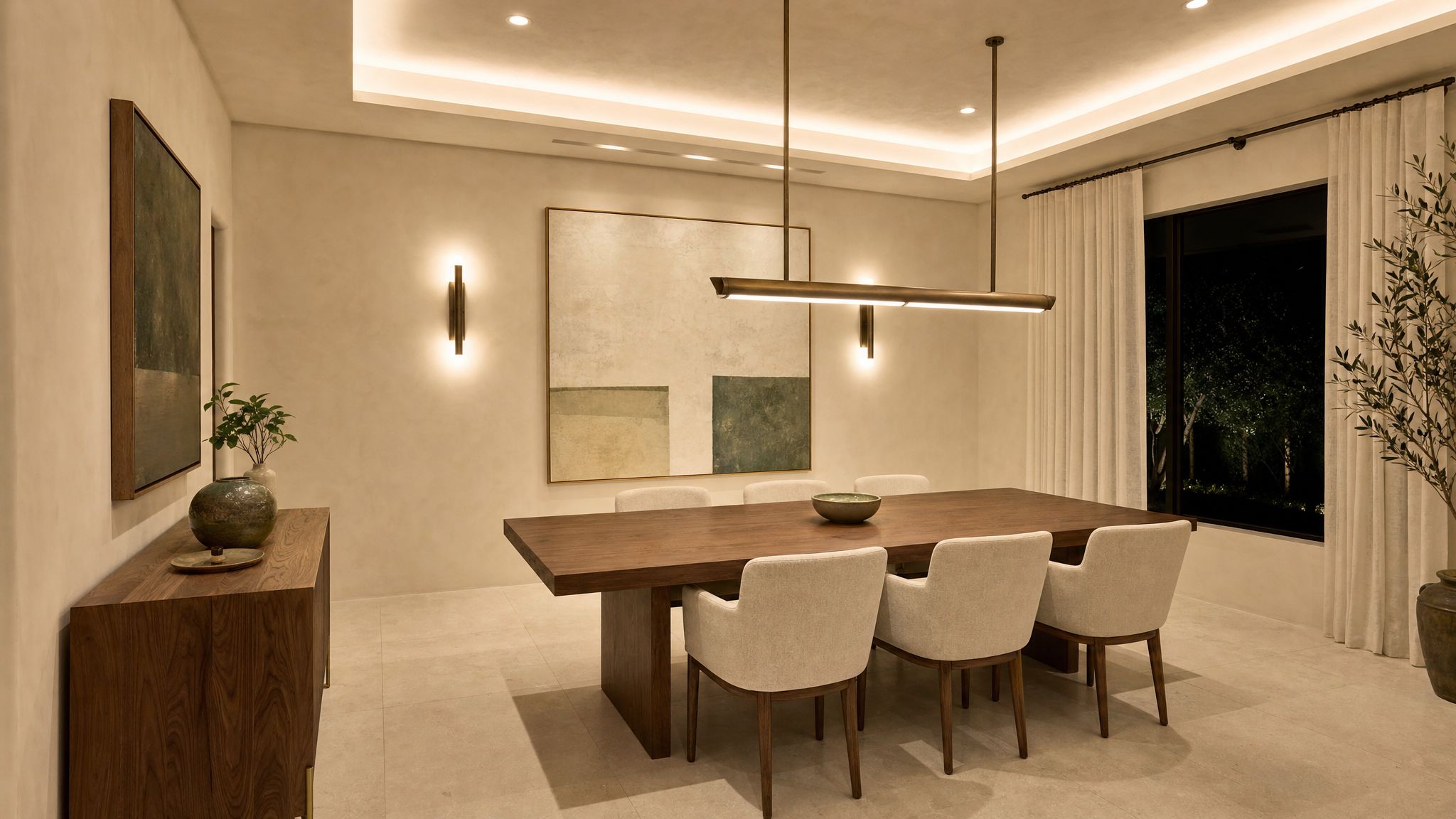
Drag the dimmer, then switch between the two kinds of light. Dim-to-warm moves toward amber as it lowers. A standard LED gets darker and keeps the same white.
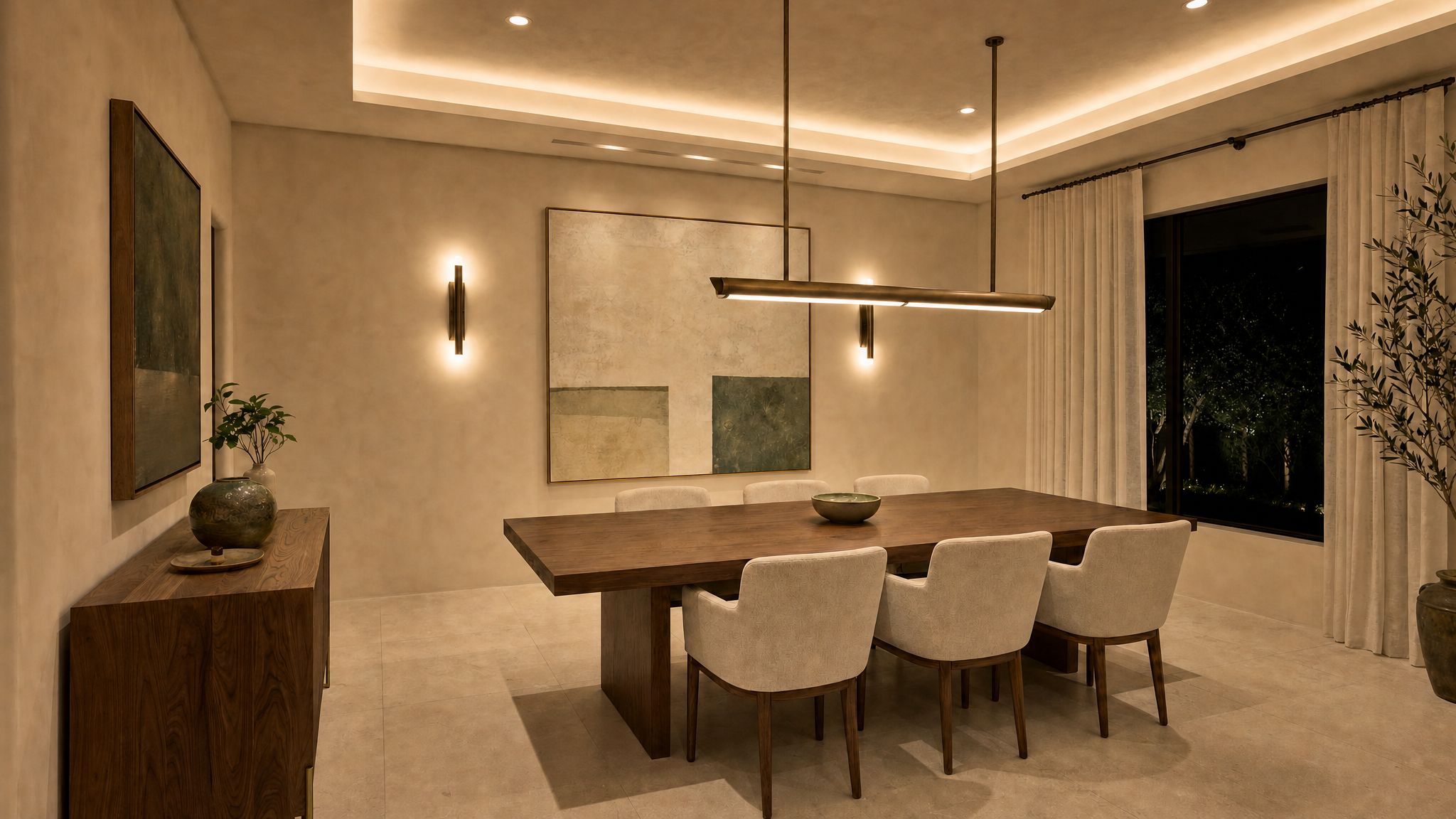
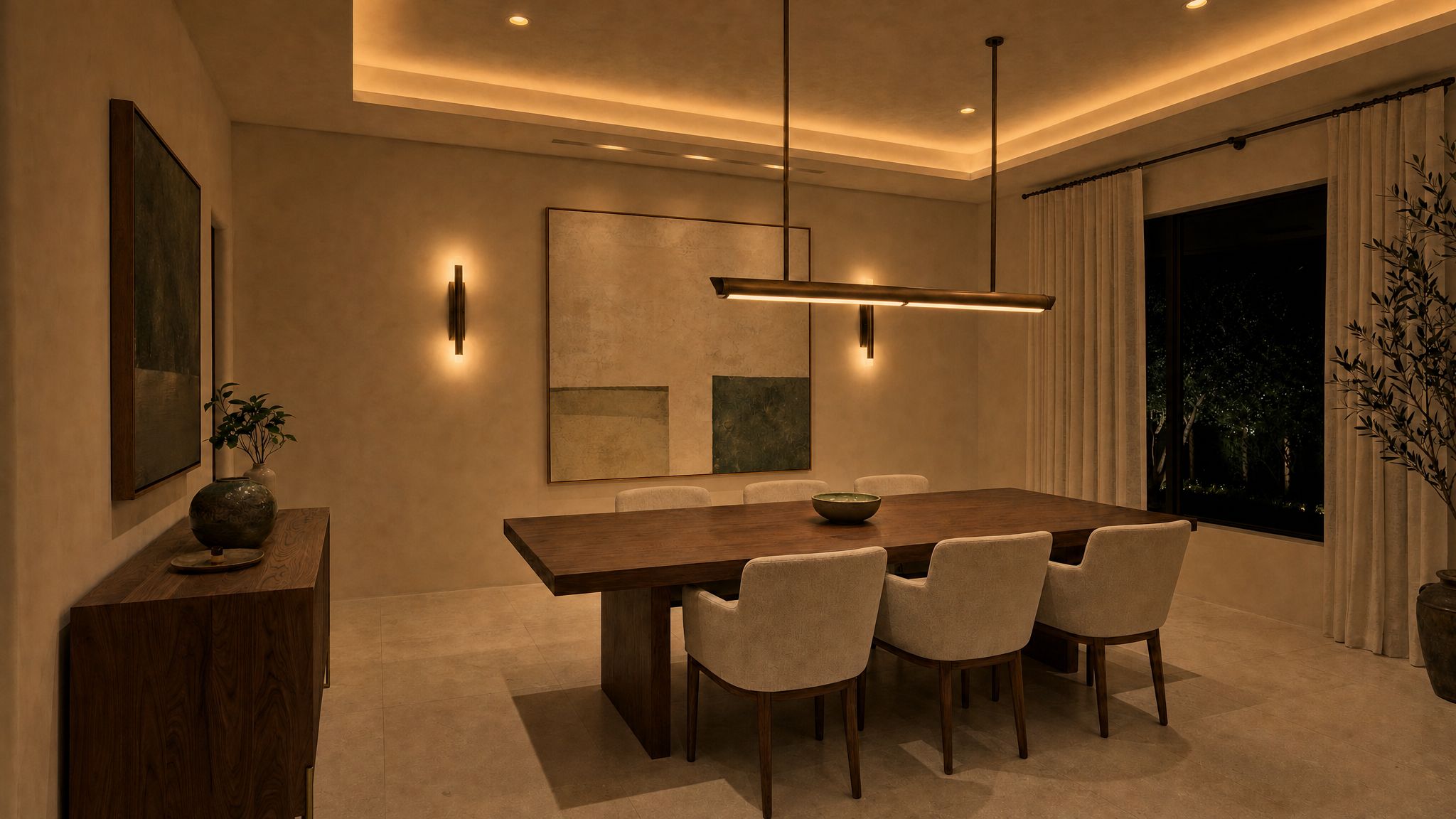
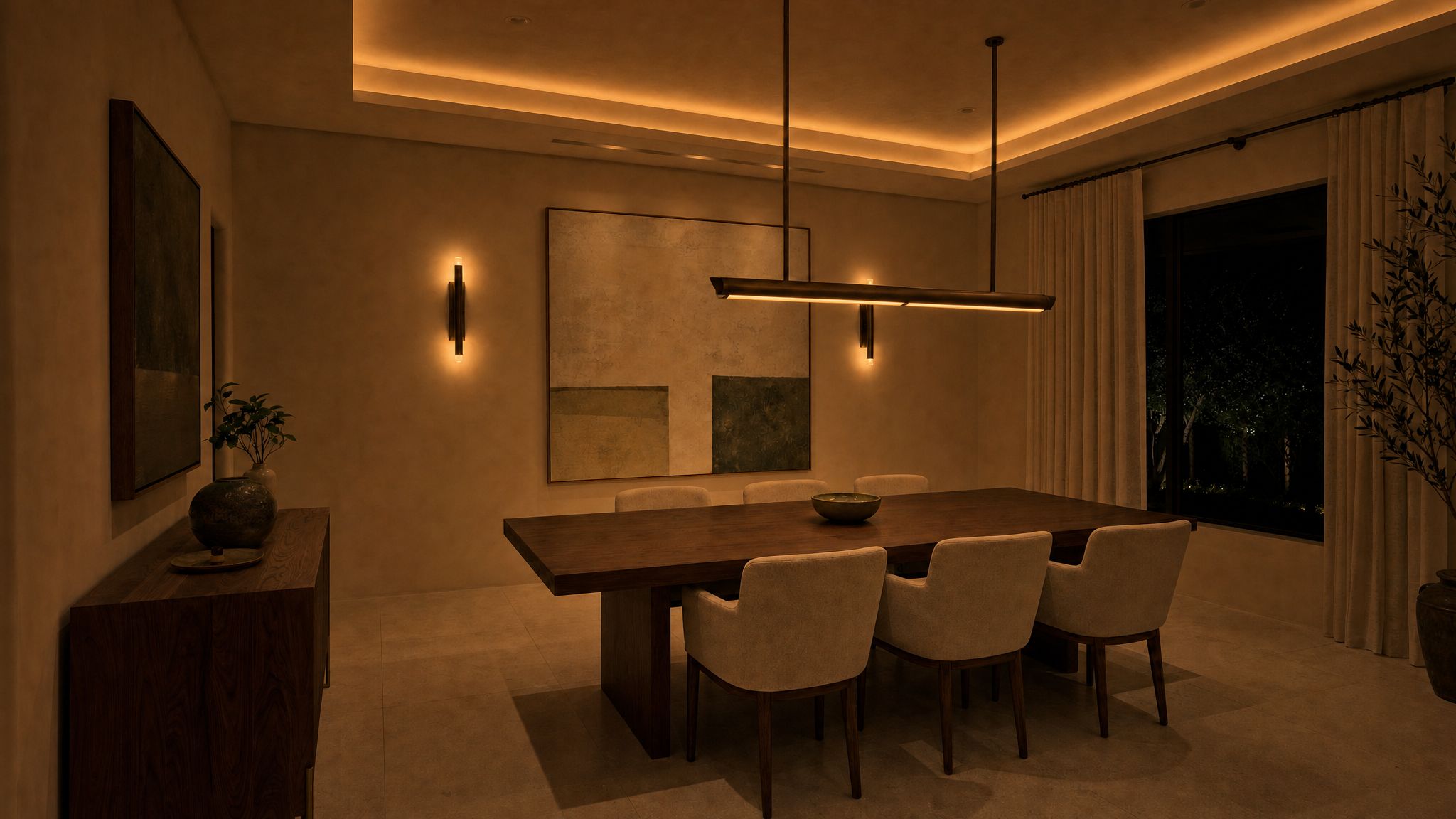
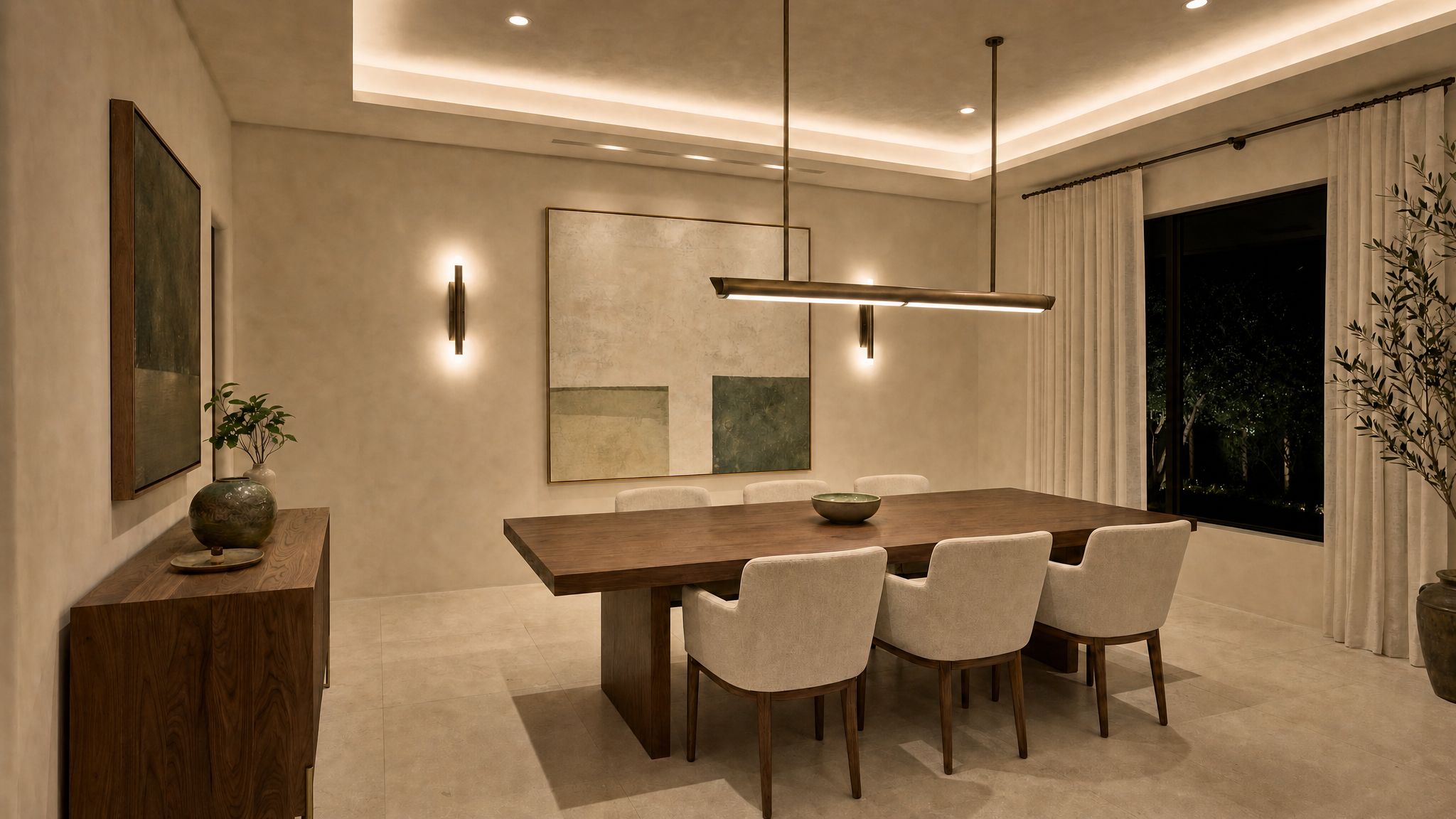
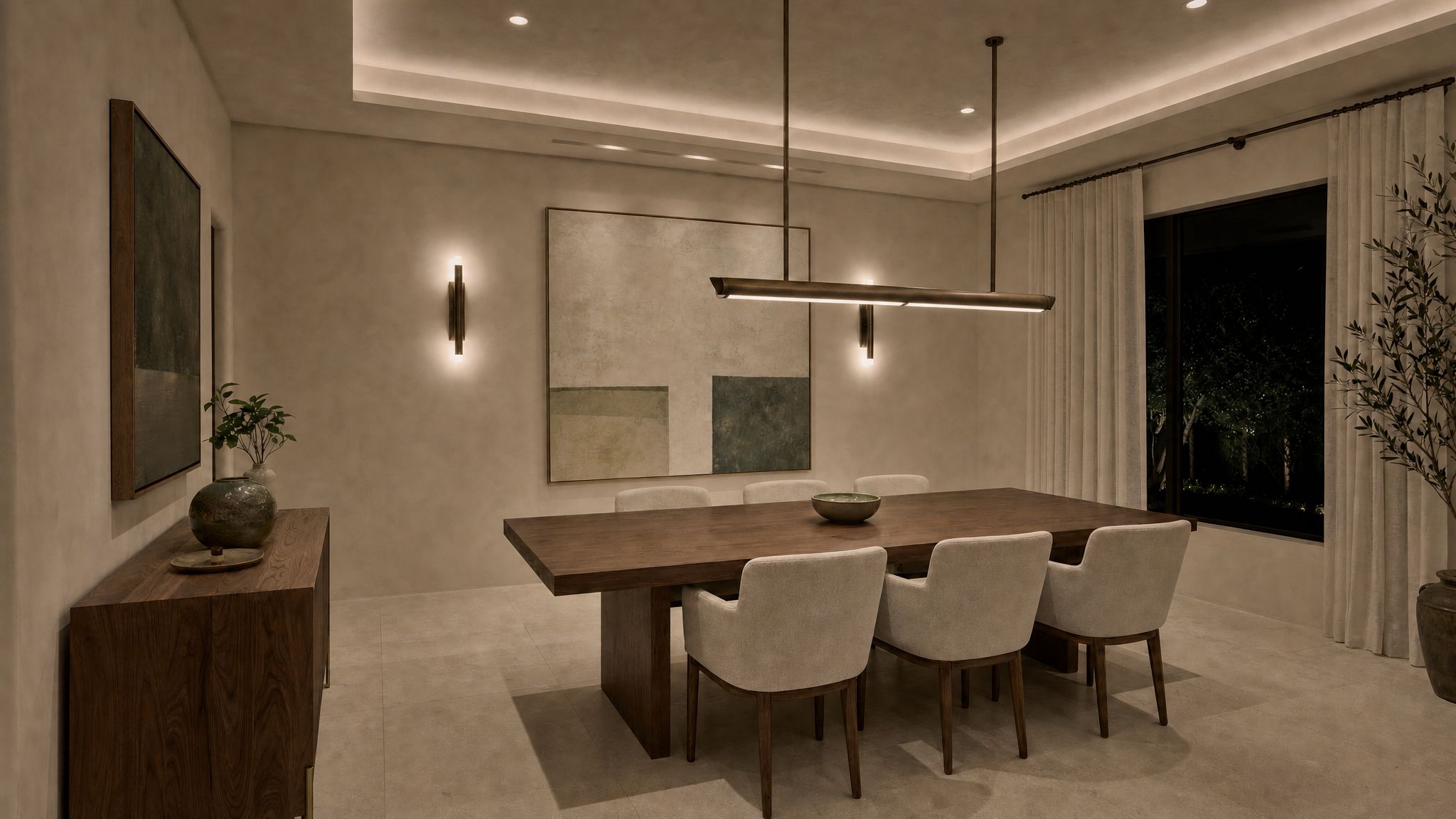
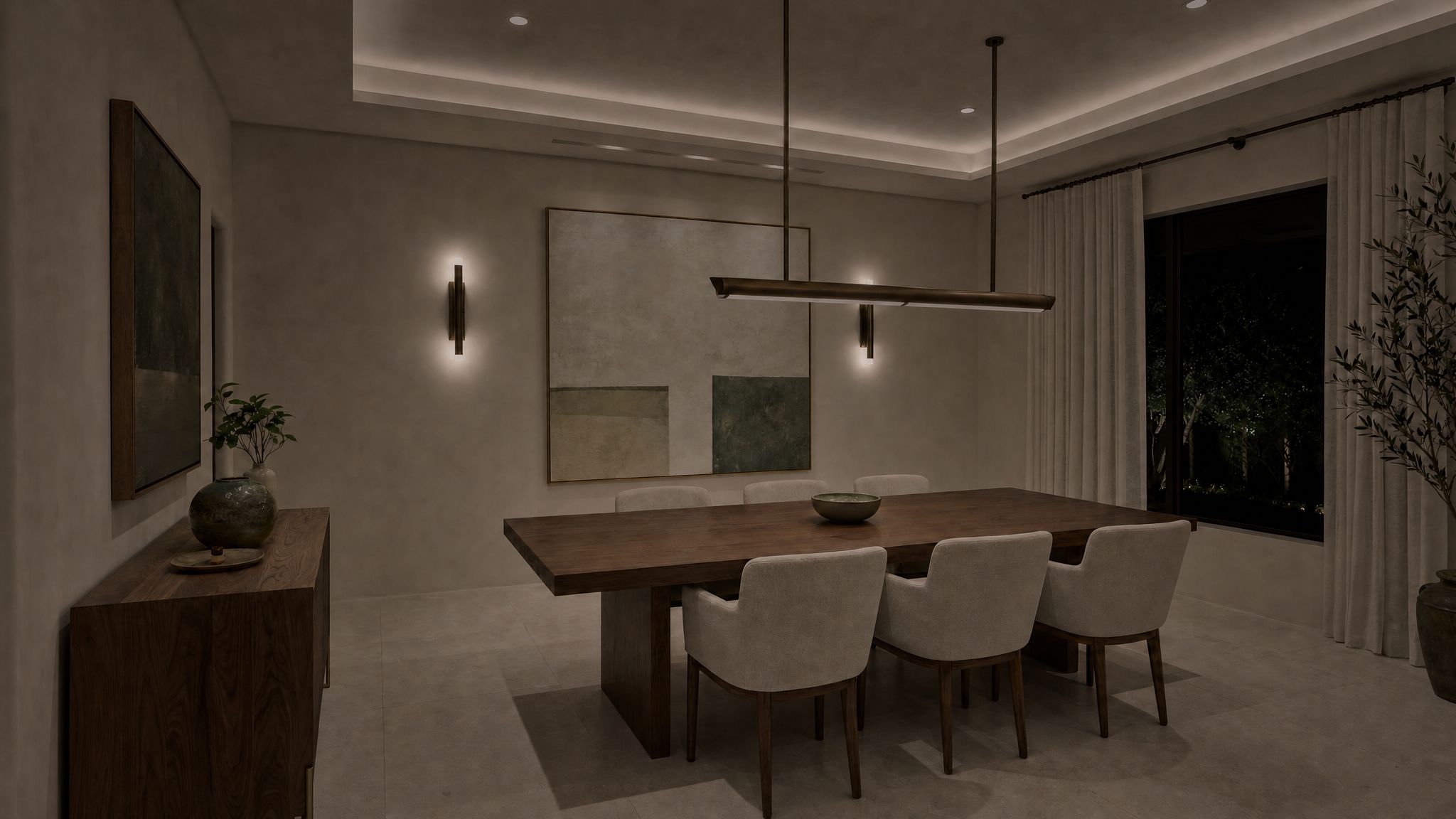
30% Dim-to-warm
The light has warmed toward amber as it dimmed.
- Color of light
- 2,200 K
- Brightness
- 30%
An old incandescent lamp did something LEDs had to relearn. As you turned it down, the light grew warmer, moving from a soft white toward the amber of a candle. A standard LED keeps the same white at every level, which can make a dimmed dining room feel gray. Dim-to-warm lighting restores the older behavior: lower the level and the light warms with it.
Scintillax designs and installs LED lighting for homes in Fort Myers, Naples and across Southwest and Southeast Florida. This guide explains how dim-to-warm works, what it needs behind the wall and where it suits a home best. Try the dimmer above to compare it with a standard LED, and see the measured color figures further down the page.
How dim-to-warm works
A dim-to-warm fixture or LED strip contains warm and warmer LEDs and an internal circuit that changes the blend as the power falls. At full output it gives its normal warm white. As it dims, the warmer LEDs take over.
The important point is that brightness and color are linked. You control one thing, the level, and the color follows a curve set by the manufacturer. That makes it simple to live with: one slider, one keypad button, no programming.
Products differ in the range they cover and in how smoothly they travel along it. Compare the white at full output, the color at the lowest level and how the light looks halfway down, which is where most evenings are spent.
What it needs behind the wall
Dim-to-warm is the least demanding way to change the color of light, but it is not automatic.
- A compatible driver and dimmer. The fixture, its driver and the dimmer or dimming module must be listed as compatible. A mismatch shows up as flicker, a jump at the bottom of the range or a light that never reaches its warmest color.
- A dimmer that reaches low levels. The warm end only appears near the bottom. If the control cannot hold a steady low level, you will not see the effect you paid for.
- Consistent products in one view. Two dim-to-warm products from different makers follow different curves. Use one product family for everything you can see from the same seat.
A test before installation settles all three. We connect the actual fixture, driver and control and run them from full to the lowest setting. The same check matters when the lighting runs from a central control panel, where each dimming module is matched to its fixtures.
Where it suits a home
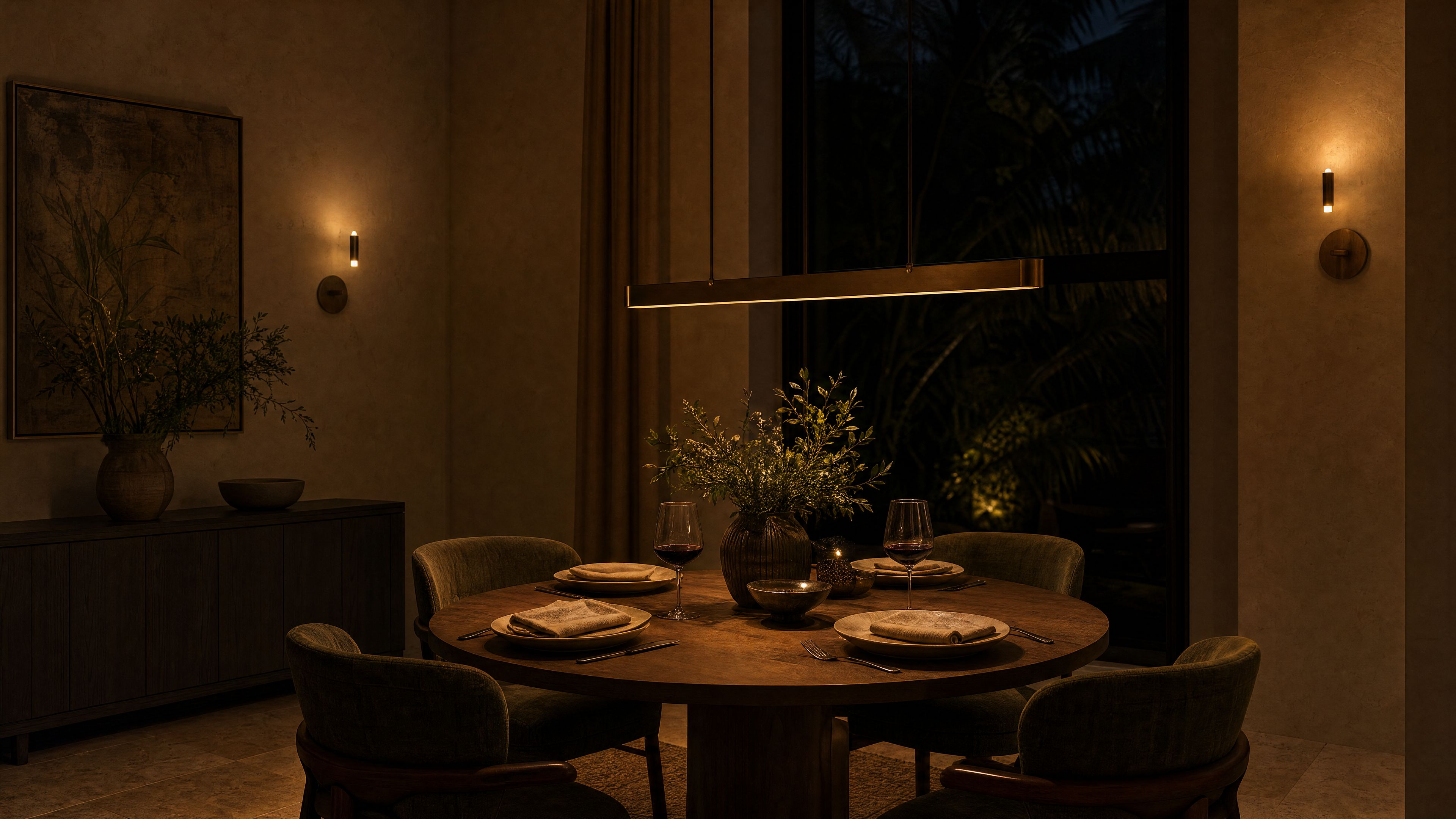
- Dining rooms. Bright for homework and cleaning, low and amber for dinner, from the same fixtures.
- Living rooms and dens. Coves, shelves and wall lights that settle into the evening as they dim.
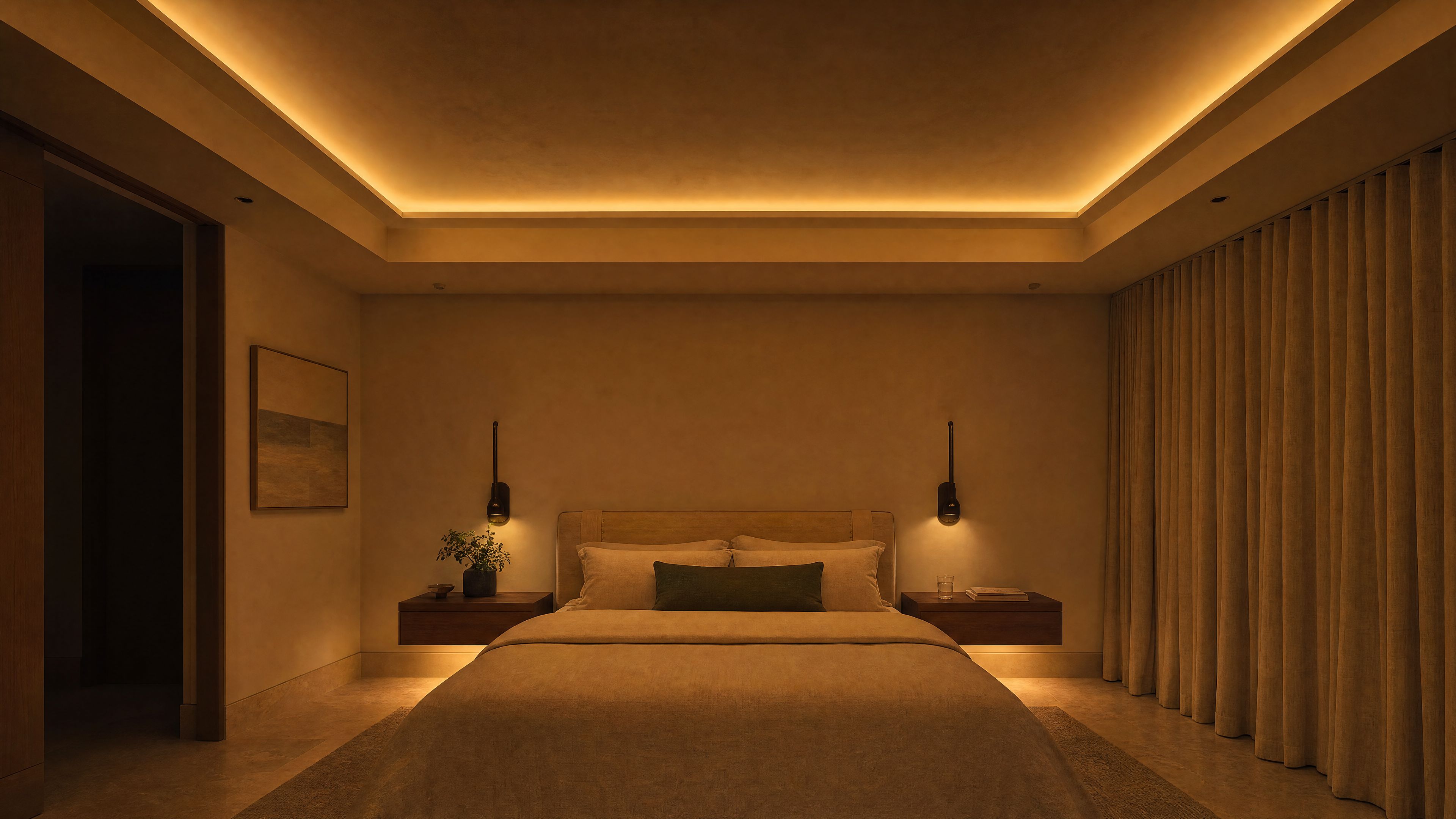
- Bedrooms. A warm, low level for the end of the day without a second set of lamps.
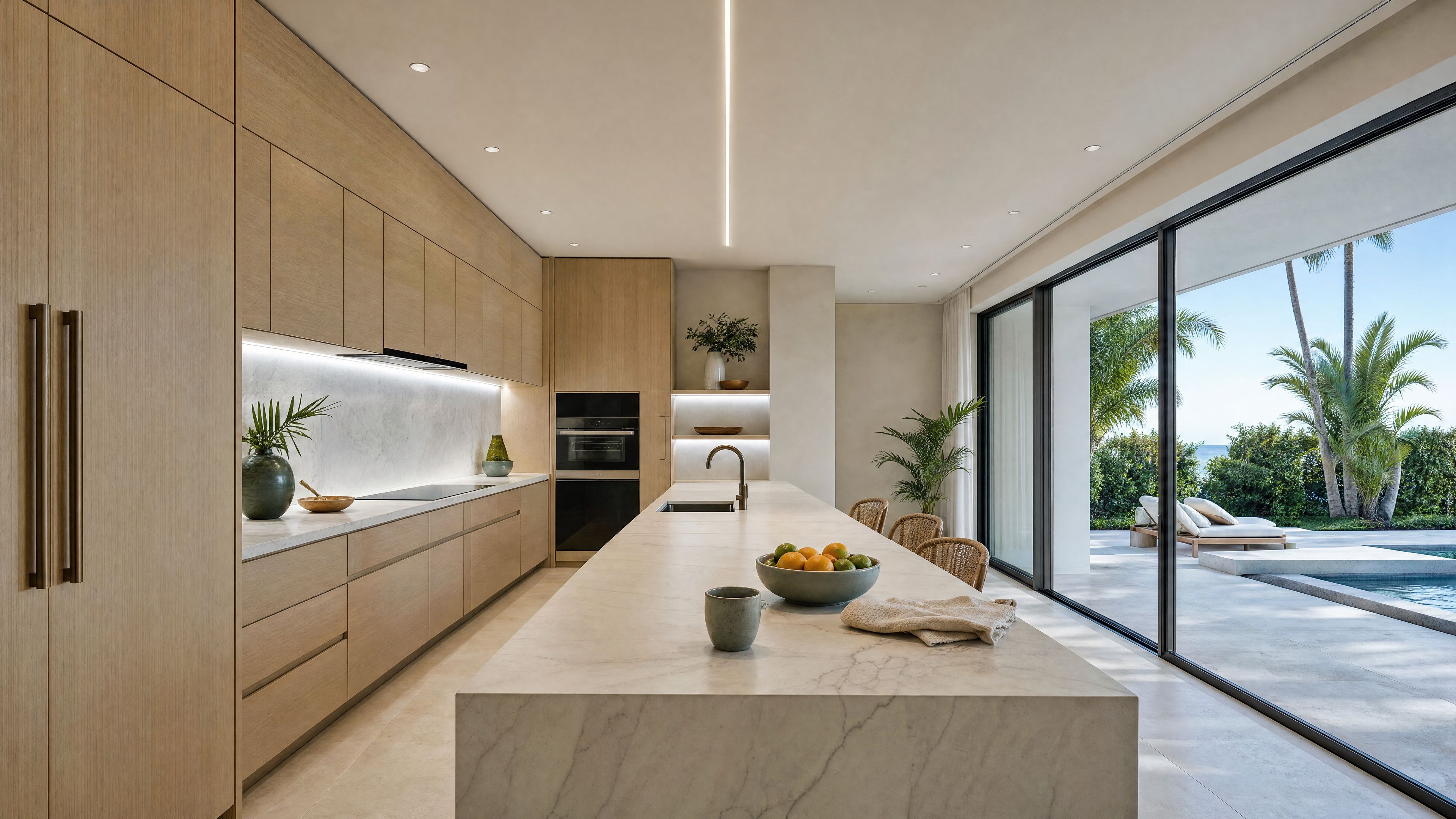
- Kitchen accents. Under-cabinet and toe-kick lighting that serves as task light at full output and a night path when dimmed. See cabinet and shelf lighting.
- Bars and backlit stone surrounds. The lighting around a feature can warm as the room quiets. Backlit stone itself is tested separately with its own light source.
It is less useful where you need accurate color at every level, such as a closet or a vanity used for makeup. A fixed white with good color quality serves those better.
Dim-to-warm and stone
Warm light changes how a surface reads. A cream quartzite can look richer at a low amber setting, while a cool gray marble may shift toward beige. Place a sample of your countertop or backsplash under the proposed light at full output and at its lowest level, by day and after dark. Our guide to color temperature, color quality and dimming explains what to compare.
When to choose something else
Dim-to-warm changes color only as it dims. If you want a cool, bright light in the morning and a warm one at night at any brightness, you need tunable white and a schedule, which is the basis of circadian lighting design. If you are deciding between them, start with our comparison of dim-to-warm and tunable white.
What to bring to a consultation
- Photographs of the rooms and the existing dimmers
- Labels from any fixtures or drivers you plan to keep
- The lowest evening setting you would like to reach
- Samples of nearby stone, wood or paint
Plan your lighting with a short description of the rooms and your city, and we will review which fixtures and controls fit.
Bring your location, room photographs and the details that matter most. We can review the materials, light and practical requirements together.
Plan your lightingThe evidence
The numbers behind the warm glow.
Dim-to-warm is easy to describe and easy to measure. These are the figures behind the dimmer above and the research on evening light.
Color temperature against the dimmer setting.
The U.S. Department of Energy describes dim-to-warm products as usually designed for 2,700 to 3,000 K at full output, falling as low as 1,800 K, the color of candlelight, as they dim. A standard LED holds one color at every level.
| Dimmer | Dim-to-warm | Standard LED | How it reads |
|---|---|---|---|
| 100% | 3,000 K | 3,000 K | Clean warm white for tasks |
| 60% | 2,700 K | 3,000 K | Soft warm white |
| 30% | 2,200 K | 3,000 K | Golden, like a lamp turned down |
| 10% | 1,800 K | 3,000 K | Amber, like candlelight |
Lower light in the evening matters to the body.
Researchers at Brigham and Women’s Hospital and Harvard Medical School compared 116 healthy adults living in ordinary room light (under 200 lux) with dim light (under 3 lux) in the hours before bed.
- 99%of participants (103 of 104) began releasing melatonin later under room light
- 71%lower melatonin level before sleep under room light than under dim light
- 1 h 32 minshorter nightly melatonin duration under room light than under dim light
What it feels like to live with.
- One room, two characters. Bright and clear for homework and cleaning, low and amber for dinner, from the same fixtures.
- No gray evenings. A dimmed room keeps the warmth people expect from candles and old lamps.
- Nothing to learn. One dimmer or one keypad button does it. There is no schedule and no app to manage.
- Kinder to faces and food. Warm, low light flatters skin, wood and a set table.
- One control signal. The Department of Energy notes that dim-to-warm needs only one control signal per group of fixtures, which keeps wiring and controls simple.
The study above was carried out in a laboratory with healthy adults, and people differ in how they respond to light. It supports keeping evening light low. It does not make a lighting product a medical treatment, and Scintillax makes no promise about sleep or health.
Material studies
The details that make the room.