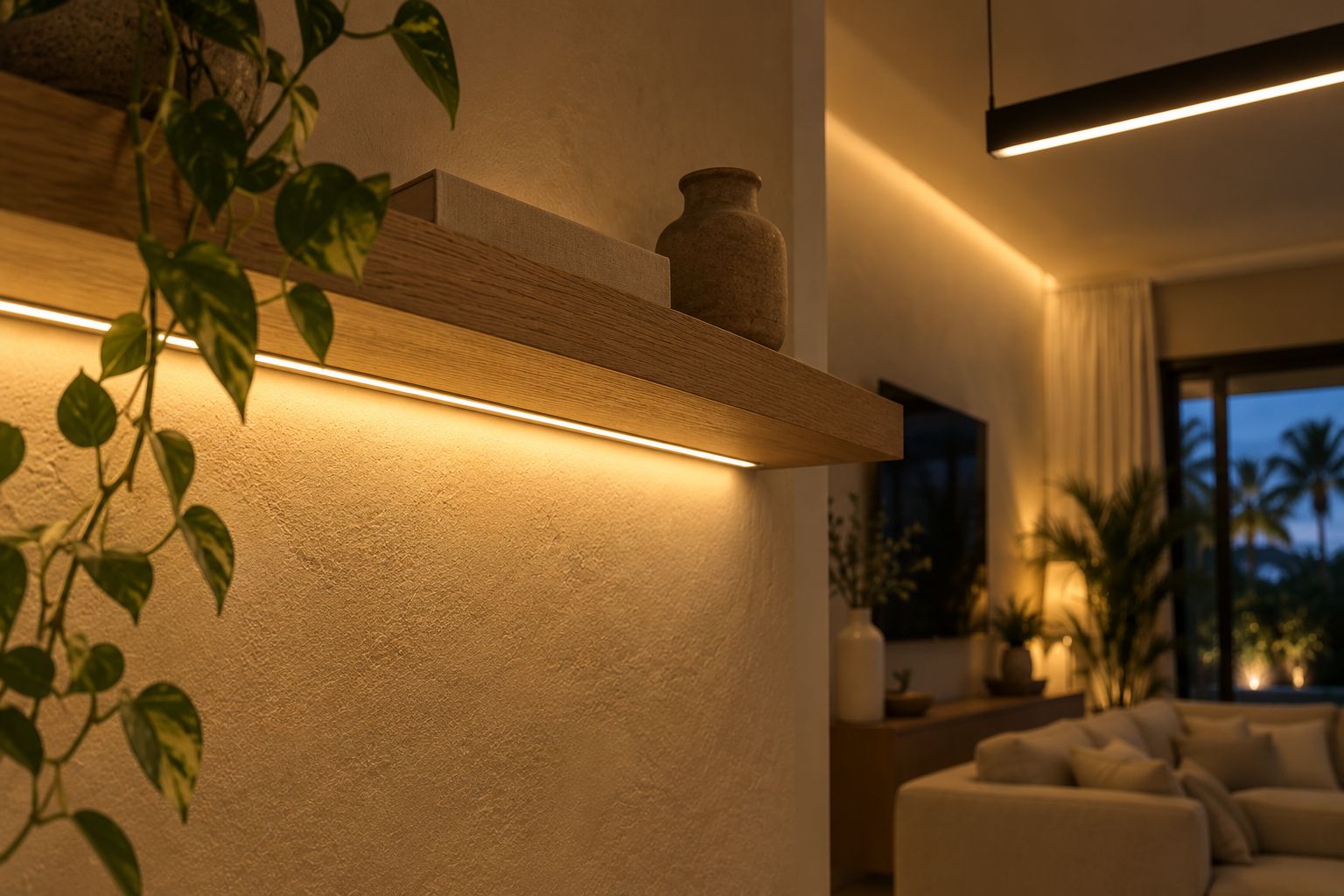
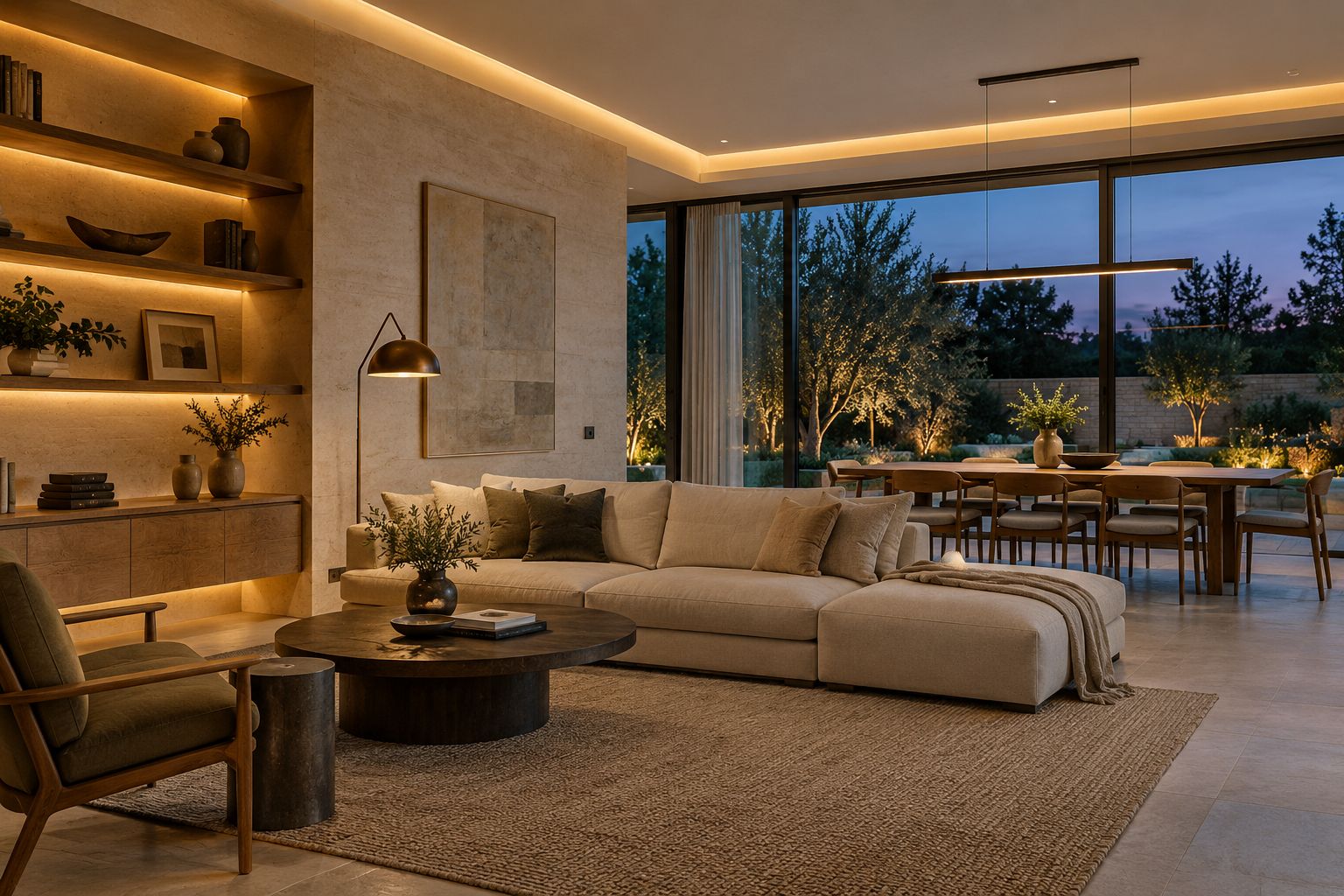
Lighting decisions / Scintillax journal
The light you choose changes the materials you see.
Compare warm white, dim-to-warm and tunable lighting, then review glare, color rendering and dimming with your actual stone and cabinet finishes.
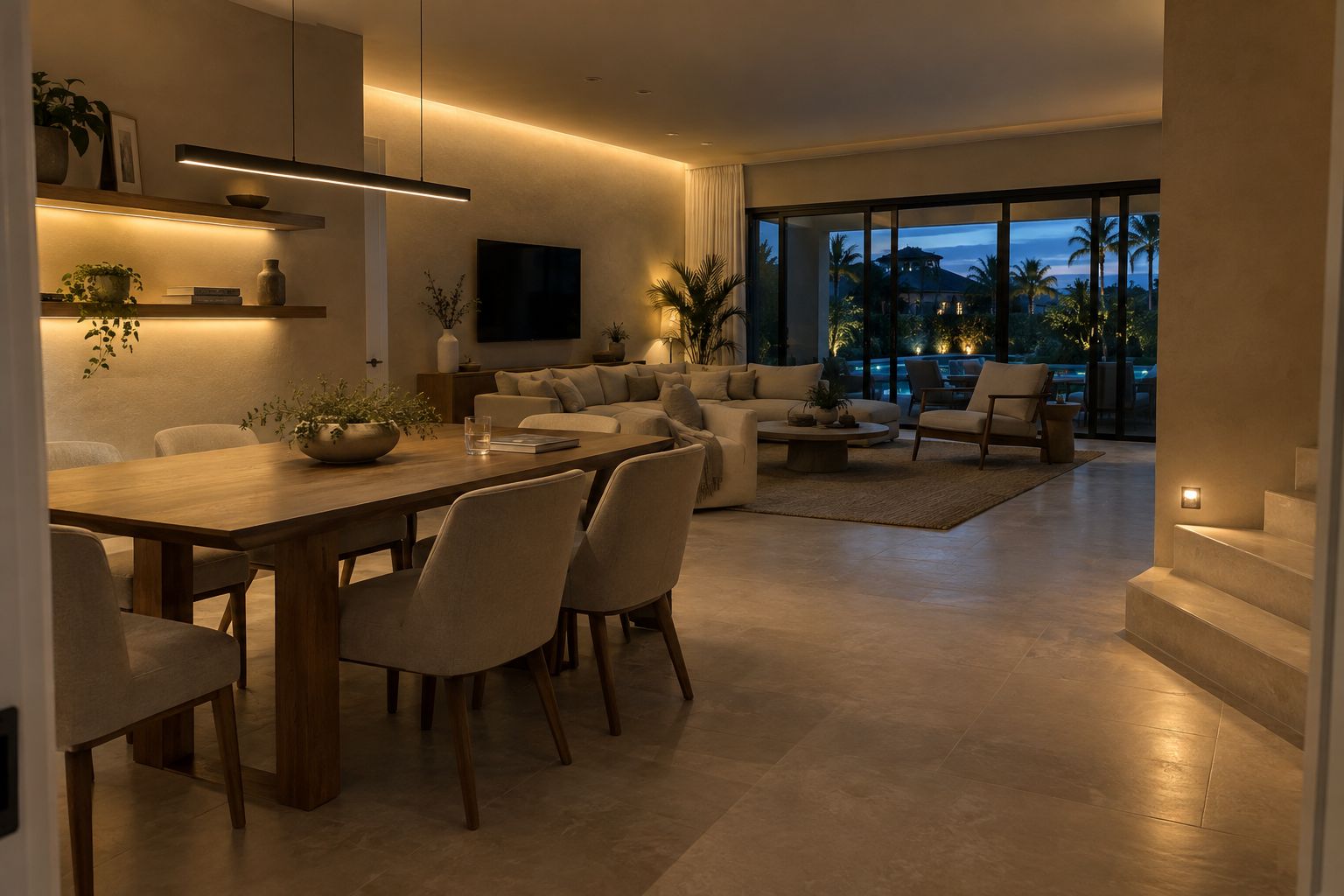
Two fixtures can look similar in a catalog and give a room a different character. One may make oak feel warmer; another may flatten the movement in a pale stone. A fixture that looks comfortable at full brightness may also feel too bright at its lowest setting.
Choosing modern LED lighting means reviewing the source, the material and the controls together. The useful test is a room-scale question: does this combination support what you want to do and how you want the space to feel?
Separate brightness from the color of light
Lumens describe light output, while color temperature describes the warm or cool appearance of white light. Color temperature is expressed in kelvin. A higher kelvin number does not mean a better-quality light or a brighter room. The Department of Energy’s color characteristics guidance explains the distinction between the appearance of a source and how it renders objects.
As a design starting point, compare warm-white samples around 2700 K and 3000 K with the proposed stone, wood and painted finishes. These are options to review, not a rule for every room. A home office, dressing area or display may have different priorities from an intimate dining setting.
View adjacent sources together. Matching the number on two packages does not replace a visual comparison, particularly where a ceiling light and cabinet light meet the same wall.
Ask how the light shows color
Color rendering describes how the light presents the colors of objects. It matters when choosing between cream and gray undertones in stone, showing wood grain or seeing clothing clearly in a closet. A color-rendering metric is useful product information, but it does not describe every aspect of the finished room.
Ask for the selected product’s color-quality information and compare a working sample with your actual finishes. Include materials you will retain: flooring, appliances and neighboring rooms. Judge the light from an ordinary viewing position, with daylight present and again after dark where practical.
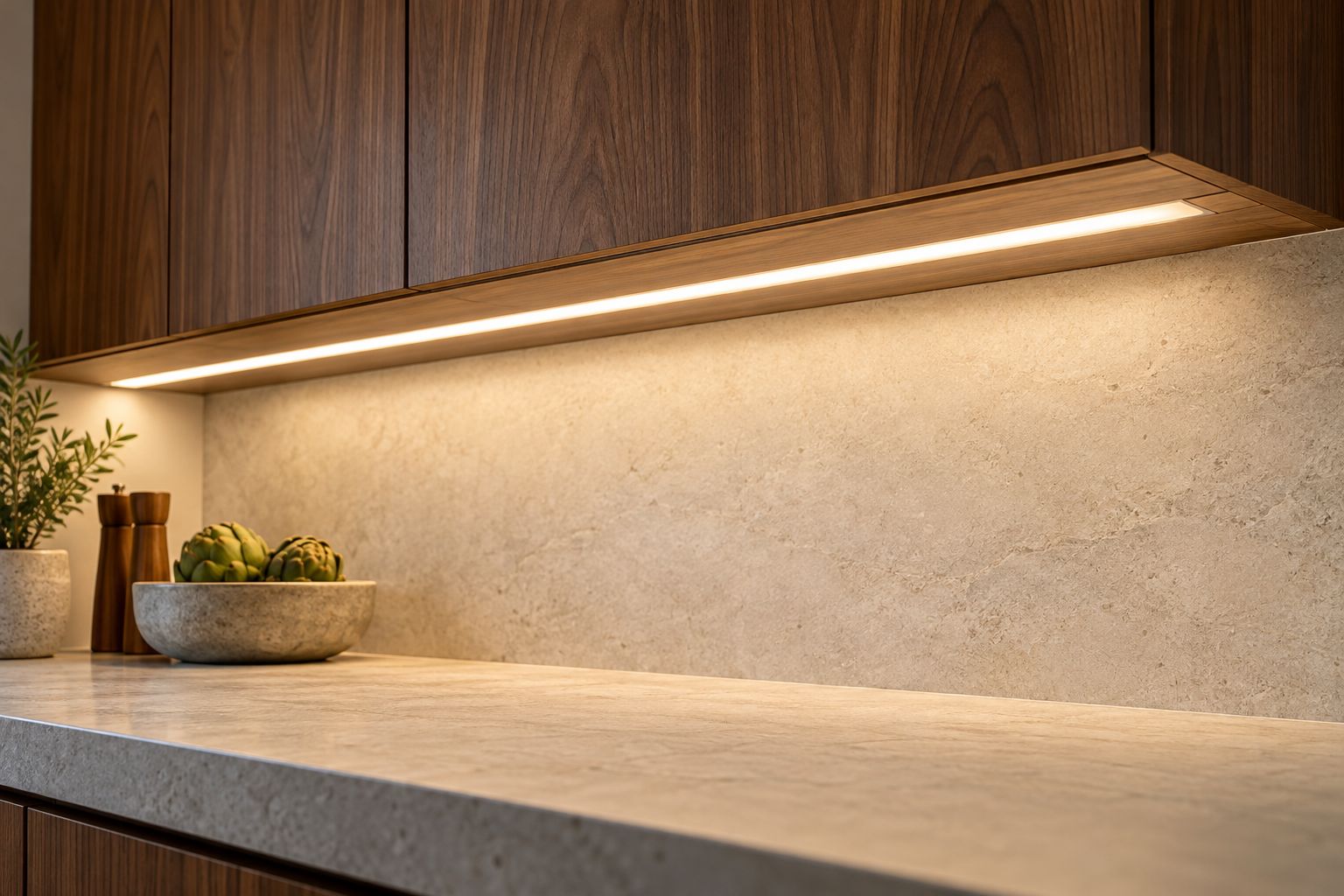
For a stone kitchen, place a slab sample both flat and vertically. The same material may be seen as a countertop, backsplash and waterfall return, each receiving light differently.
Choose between three kinds of white-light control
Fixed white keeps the intended white-light color while compatible controls adjust brightness. It is a useful starting point when you want a simple, consistent palette.
Dim-to-warm becomes warmer in appearance as output decreases. It can suit a dining or living space where the evening setting should feel softer, but the color and brightness changes are linked.
Tunable white allows the appearance of white light to change separately from brightness, with the right equipment and controls. It offers more adjustment and also adds decisions about operation and integration. The Department of Energy’s guide to color-tunable products explains these product types and their control differences.
Choose the behavior you want before choosing the control interface. Color adjustment is useful when it serves an everyday purpose; it does not by itself establish a health benefit or a better lighting scheme.
Test the lowest setting you intend to use
For a film night or late conversation, a low setting may matter more than maximum output. Request a demonstration of the proposed source, driver and dimmer together. Look at starting behavior, the transition as you dim and whether the lowest comfortable level remains stable.
Some compatibility problems appear as flicker, noise or lights dropping out before a dimmer reaches its minimum. Lutron’s LED troubleshooting guidance shows why the exact pairing and usable range matter. It is an equipment example, not a promise that every control suits every LED.
For existing problems, record the equipment references and when the symptom occurs. A qualified professional should assess the actual installation before parts are changed.
Review glare, reflections and the visible line
Walk through the space and sit where you normally sit. Check whether the light source is directly visible, repeated in a mirror or reflected in a polished counter. Cabinet depth, mounting position and diffusion affect the result.
A sample assembly is especially useful for cabinet channels, textured-wall accents and backlit stone. Review one representative detail before extending it across the room.
Bring a short specification into the conversation
Record the room, proposed fixture or profile, preferred color appearance, dimming behavior, control location and service access. Include photographs and actual material references. Mark which fixtures should move together and which should remain independent.
Request a lighting consultation to turn those preferences into a coordinated scope. The decisions are easier to resolve before cabinetry is fabricated or ceilings are finished.
Bring your location, room photographs and the details that matter most. We can review the materials, light and practical requirements together.
Plan your lightingMaterial studies
The details that make the room.