Lighting decisions / Scintillax journal
Two ways to change the color of white light.
Dim-to-warm or tunable white? Compare how each changes the color of light, the controls and wiring they need, and which rooms suit each in a Florida home.
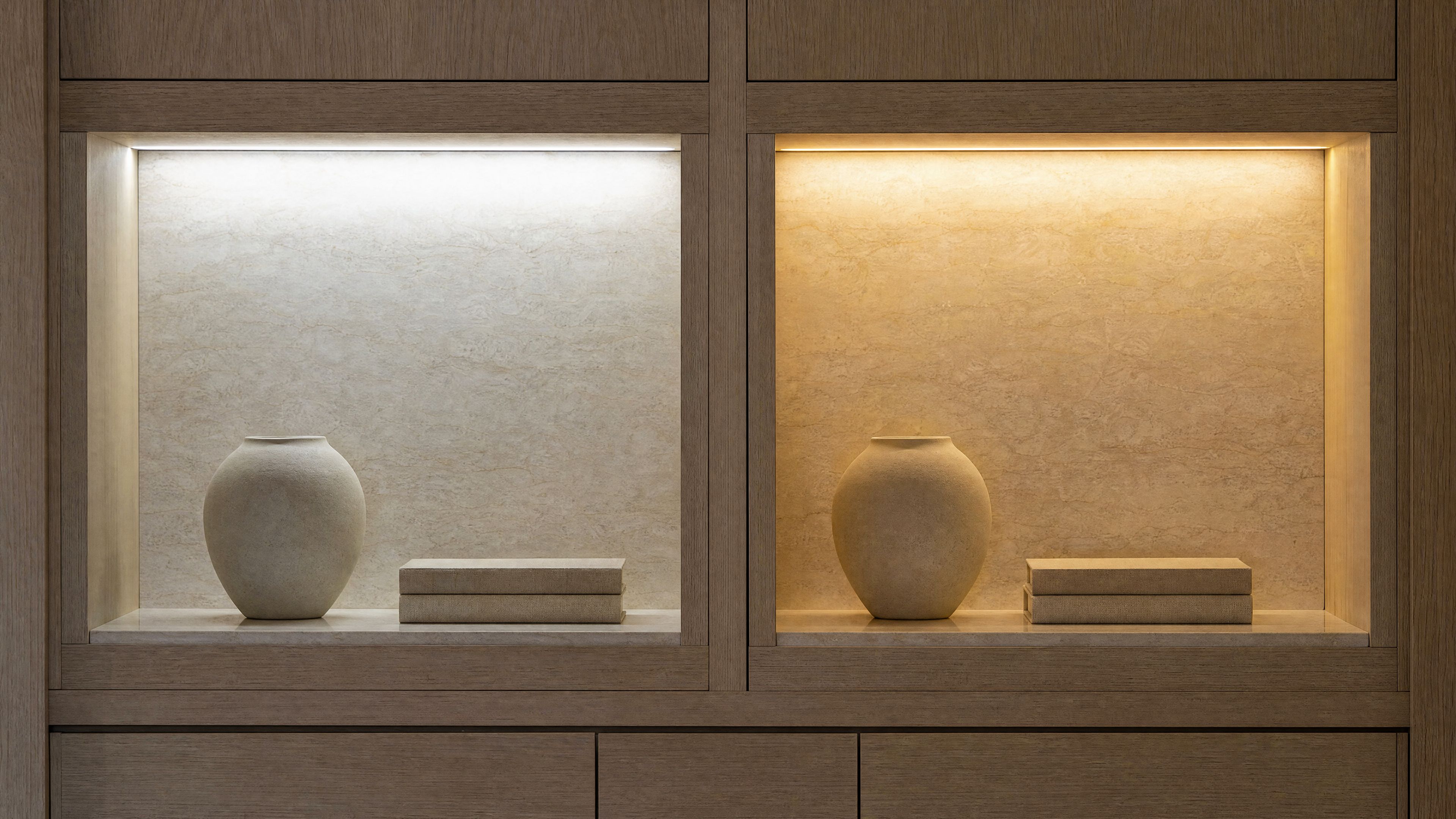
Two kinds of LED lighting can change the color of white light, and they are often confused. Dim-to-warm becomes warmer as you lower it. Tunable white lets you set warmth and brightness separately, by hand or on a daily schedule. Both are useful. They answer different questions, cost different amounts of planning and suit different rooms.
Scintillax designs and installs linear and architectural LED lighting with its controls across Southwest and Southeast Florida. This comparison is the short version of the conversation we have at most lighting consultations.
The difference at a glance
Dim-to-warm
- The color warms as the light dims; the two are linked.
- You control one thing, the level.
- It gives a warm, low evening light, but not a cool, bright morning one.
- It needs a compatible dimmer or dimming module, and no schedule.
- It takes less planning.
Tunable white
- Color and brightness change independently.
- You control a level and a color, or simply choose a scene.
- It can be cool and bright in the morning and warm and low at night.
- It needs a driver and control method that carry both instructions, and usually a daily schedule.
- It takes more planning.
Choose dim-to-warm when the evening is the point
If what you want is a dining room, living room or bedroom that settles into a warmer light as you turn it down, dim-to-warm does that with one control and no programming. It suits a renovation where the wiring stays largely as it is, provided the fixtures, drivers and dimmers are confirmed as compatible. Our guide to dim-to-warm LED lighting covers how it works and where to use it.
Choose tunable white when the whole day matters
If you want the kitchen cool and bright at breakfast and warm at night, or a home office that holds a steady working light until evening, the color has to move independently of the level. That is tunable white. Paired with a controller that follows the clock, it becomes circadian lighting design. It asks for more decisions early: the fixtures, the drivers, the control method and the schedule are specified as one system, ideally before walls and ceilings are closed.
Most homes use both, and a fixed white as well
A sensible plan rarely puts one technology everywhere.
- Tunable white in the kitchen, primary suite and office, where you are present morning and night.
- Dim-to-warm in the dining room, living room and guest rooms, where the evening mood matters most.
- Fixed white in closets, laundry, garage and most outdoor lighting, chosen once for the task and the setting.
Keep the colors compatible where rooms meet. A tunable kitchen set to a warm evening white should sit comfortably beside a dimmed dining room, which is something to check with the actual products.
Four questions that settle it
- Which rooms do you use both early and late? Those are the candidates for tunable white.
- Is the ceiling open? New construction and full renovations make either choice straightforward. A finished room may point toward dim-to-warm.
- Do you want a schedule or a slider? Some people enjoy a house that changes without being asked. Others prefer to set the light themselves.
- What will the light fall on? Stone, wood and paint look different at each end of the range. Review samples under the proposed light, as our guide to color temperature, color quality and dimming describes.
How the controls fit
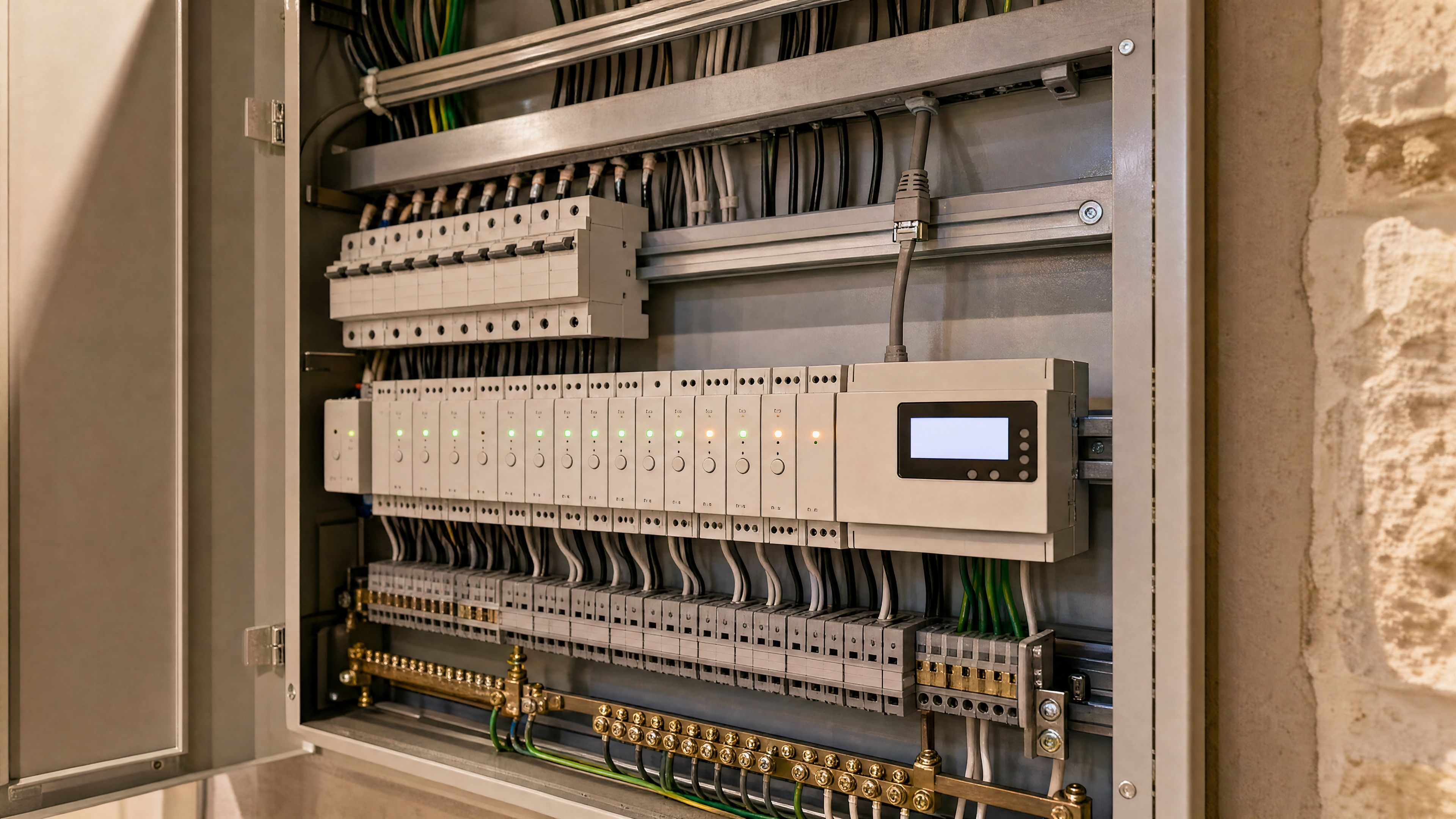
Either type can run from wall dimmers and keypads in a few rooms. When the plan covers many zones, a smart lighting control panel keeps the dimming modules and the controller in one place, and gives each room simple scenes. The fixtures and the control equipment must be matched and tested together whichever route you take.
Bring a floor plan or photographs, the hours you use each room and any fixtures you intend to keep. Plan your lighting and we will suggest where each kind of light belongs.
Bring your location, room photographs and the details that matter most. We can review the materials, light and practical requirements together.
Plan your lighting control