Light & atmosphere / Scintillax journal
Modern LED lighting, designed around living.
See how well-planned LED lighting improves task visibility, atmosphere, material detail and everyday control in a modern Florida home.
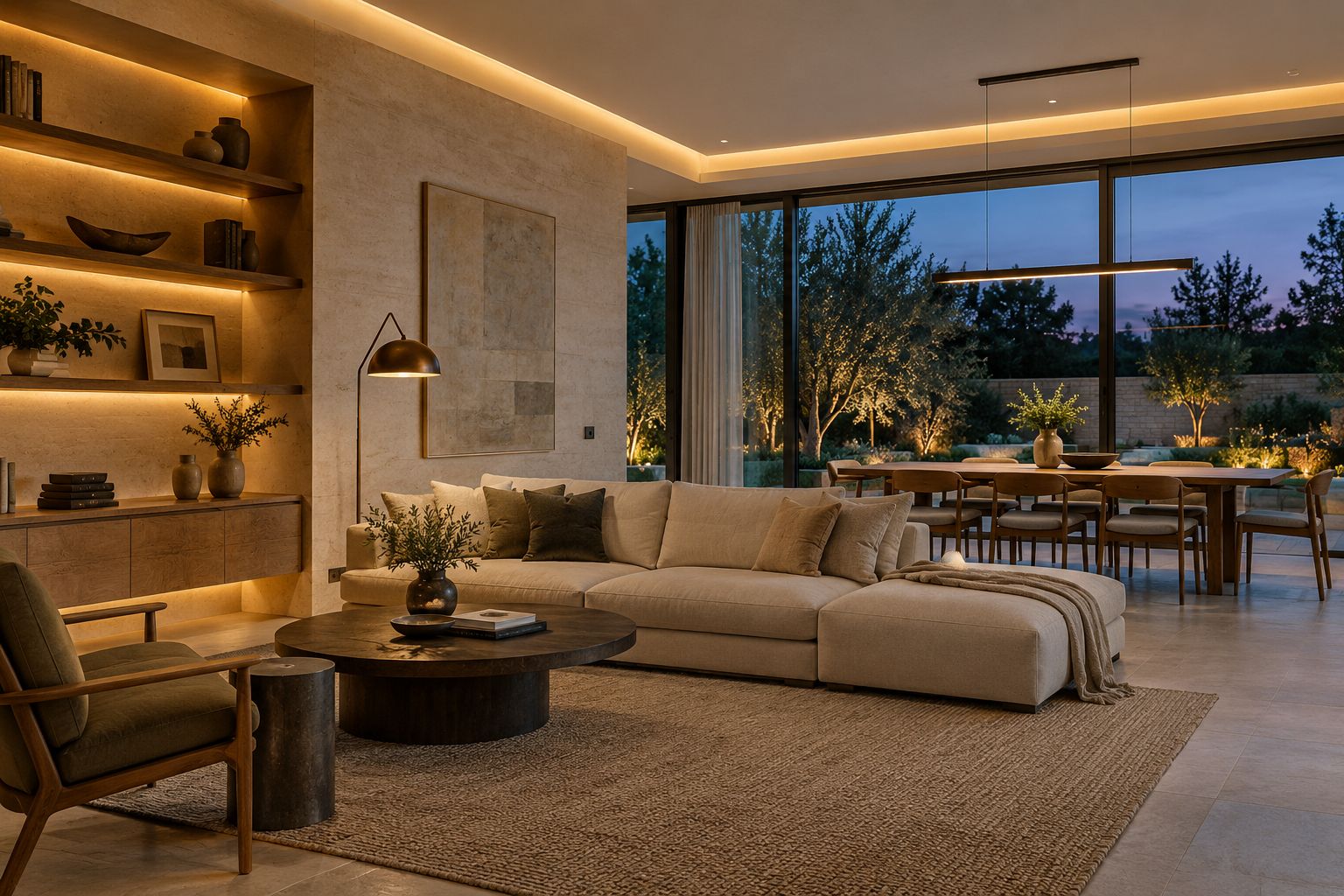
A well-lit home has more than one way to feel comfortable. There is clear light where you prepare dinner, a softer setting when guests stay at the table, and a quiet route from a bedroom to the bathroom. Modern LED lighting makes these different uses part of one considered plan.
For Scintillax, LED and architectural lighting belongs in the same conversation as cabinets, stone, glass and the room itself. Its value comes from where the light goes, how it meets the materials and how easily you can change it. A luxury interior should be comfortable to use as well as beautiful to enter.
Put light where it earns its place
Task lighting brings useful illumination to the activity: a kitchen preparation counter, a dressing mirror, a laundry folding surface or a reading chair. Plan the source from the position of the person using it. An overhead fixture behind you can leave your work in shadow, while a carefully positioned cabinet profile can bring light closer to the counter.
The cabinet-lighting service covers both new cabinetry and possible additions to an existing kitchen. New custom cabinets allow channels, wiring routes and access to be considered in the drawings. Existing cabinetry needs a review of available space, power and the desired concealment.
Give the room a useful evening setting
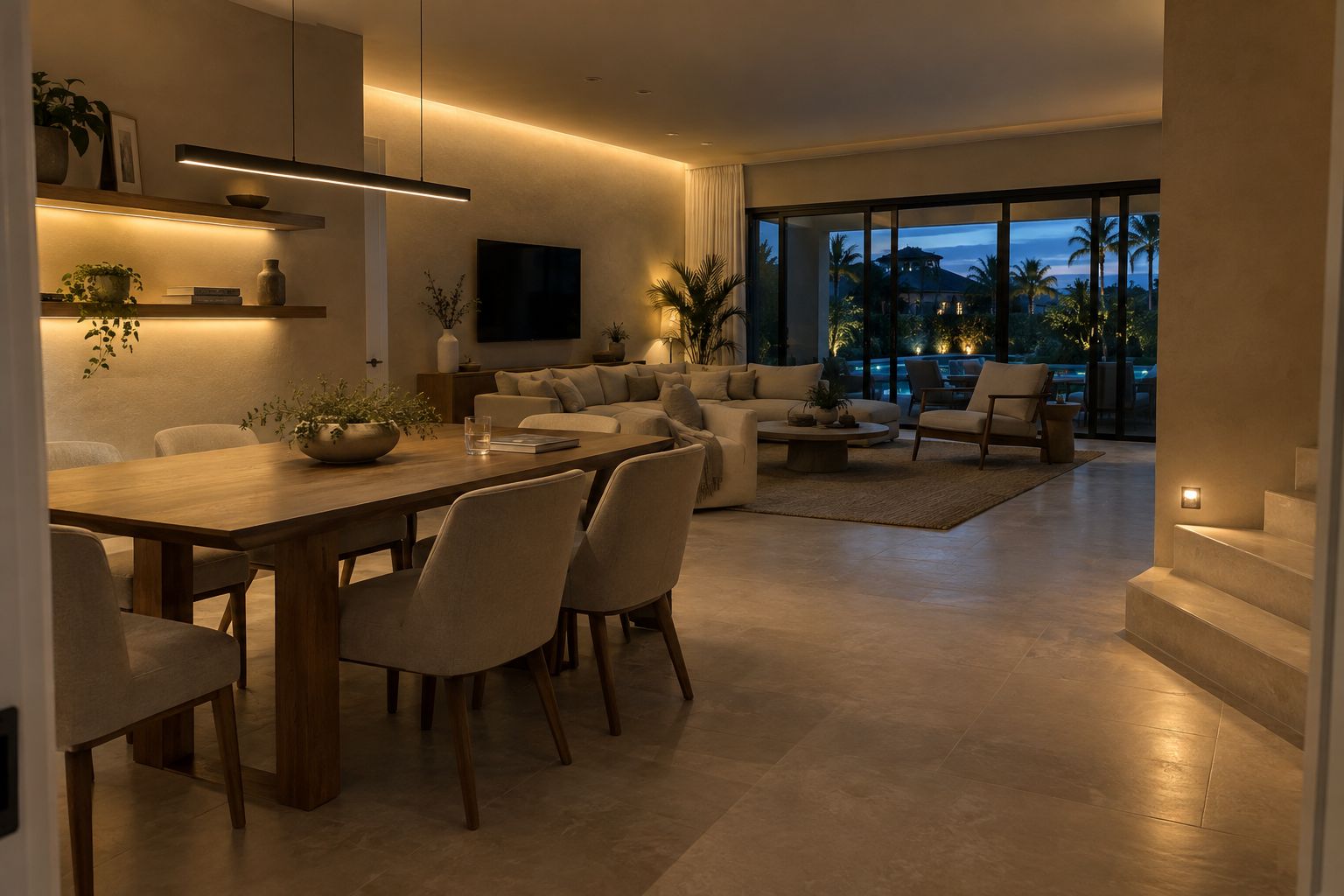
Separate ambient, task and accent groups let the room change with its use. Keep preparation light available while reducing the ceiling layer; then bring shelves, a wall texture or a bar into the evening composition. The aim is a few understandable settings you will actually use.
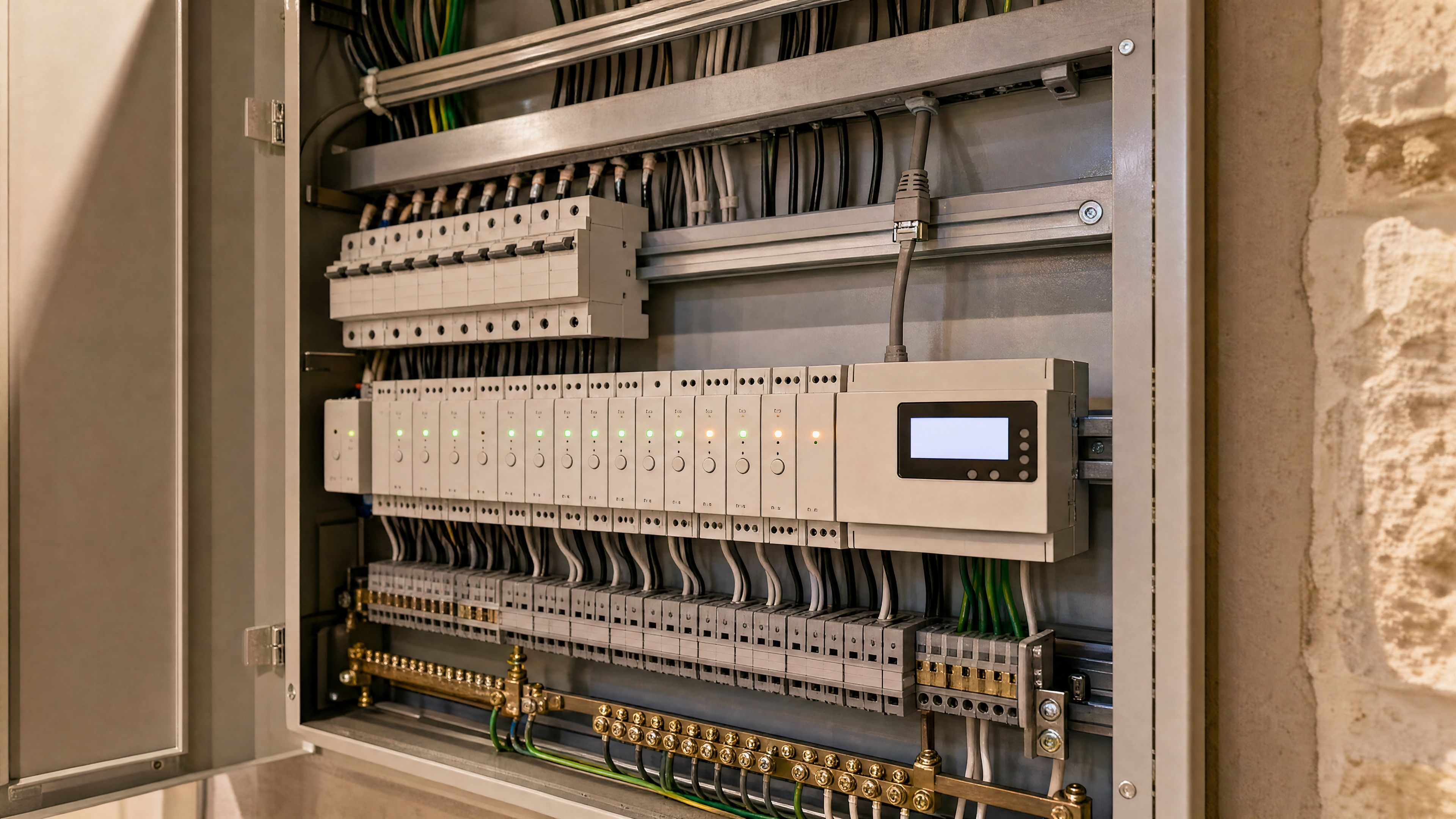
Consider four starting scenes: preparing food, dining, relaxing and moving through the home at night. A scene is simply a chosen combination of lighting levels. It can be achieved with separate dimmers or a compatible control system; the appropriate approach depends on the home and the selected equipment.
Our room-by-room lighting guide helps turn those moments into a practical brief.
Reveal materials without competing with them
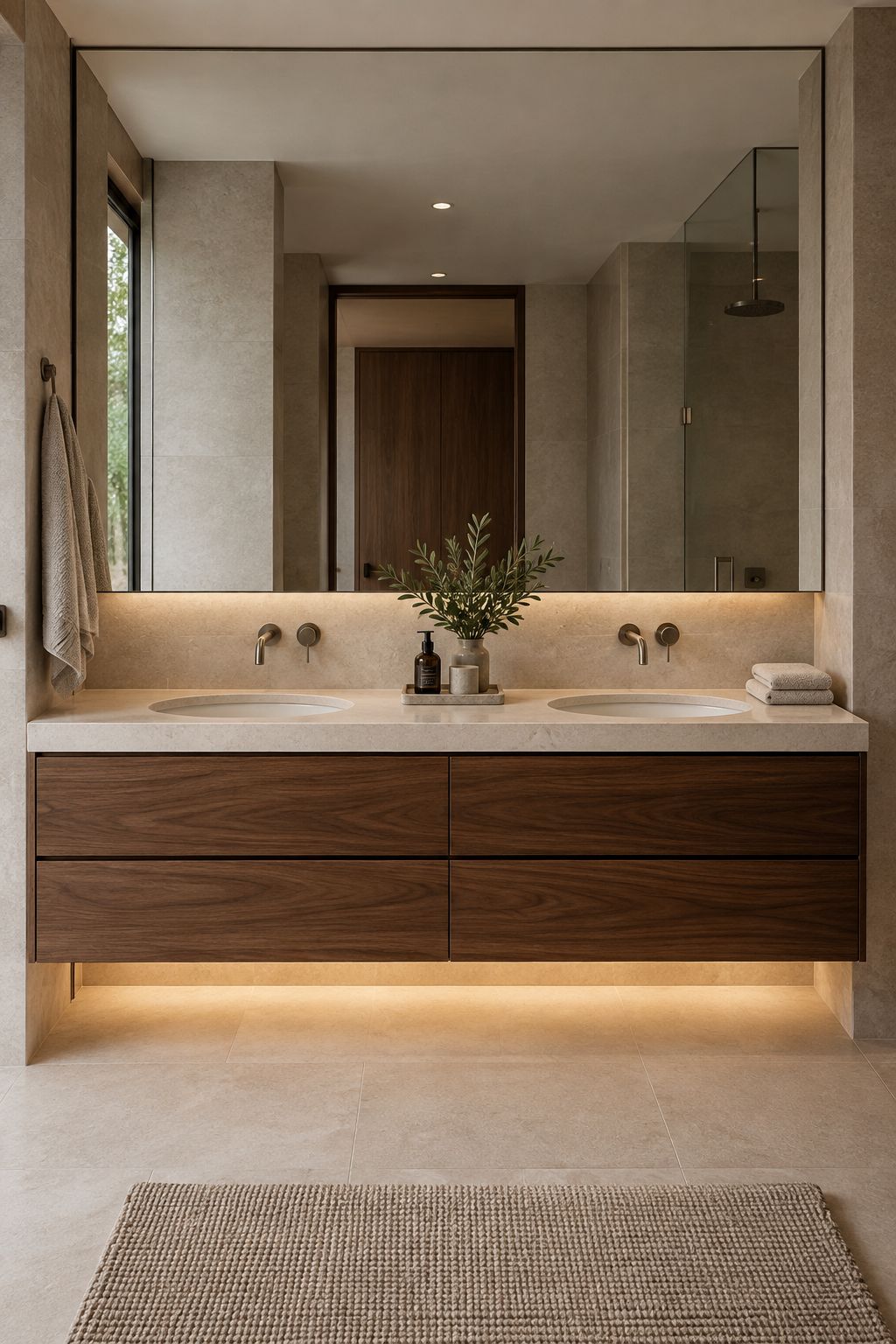
Light can bring depth to a limestone wall, make an oak shelf feel lighter or reveal movement in a slab. It can also reflect strongly in polished stone and glass. Check proposed positions from the sofa, a dining chair and the entrance, as well as standing beneath the fixture.
For a continuous architectural line, discuss the profile, diffuser, mounting and corners together. The finished effect depends on the whole assembly. A strip hidden behind a lip is not automatically hidden from every viewpoint.
Backlit stone is a distinct application. Selected translucent slabs may glow when illuminated from behind, but the actual material must be tested with the proposed light, support and diffusion. Ordinary opaque countertops can still benefit from light directed onto or below them.
Use energy deliberately
Compare products by the light they deliver as well as the electricity they use. Lumens describe light output; watts describe power demand. Efficient LEDs can provide useful illumination with less power than an older incandescent installation, and longer lamp life can reduce replacement visits. The U.S. Department of Energy’s purchasing guidance explains these distinctions.
The actual result depends on fixture quantities, selected equipment and operating hours. Adding more lighting or leaving it on longer changes total consumption. Timers, occupancy controls where appropriate and a sensible evening scene can help avoid lighting rooms or outdoor areas unnecessarily. A project proposal should compare the intended result and equipment rather than promise a universal saving.
Make comfort and maintenance part of the specification
Ask to see the light with your finishes, including its dimmed setting. Review color consistency between neighboring fixtures and confirm that sources, drivers and controls are compatible. A bright demonstration at full output does not tell you how the room will feel late at night.
Keep service access in the design. Drivers, connections and replaceable components should have an agreed access route that works after cabinetry and finishes are complete. Product references and operating instructions make future care easier; an integrated fixture and a replaceable lamp have different service arrangements.
Plan the complete home, then choose the first step
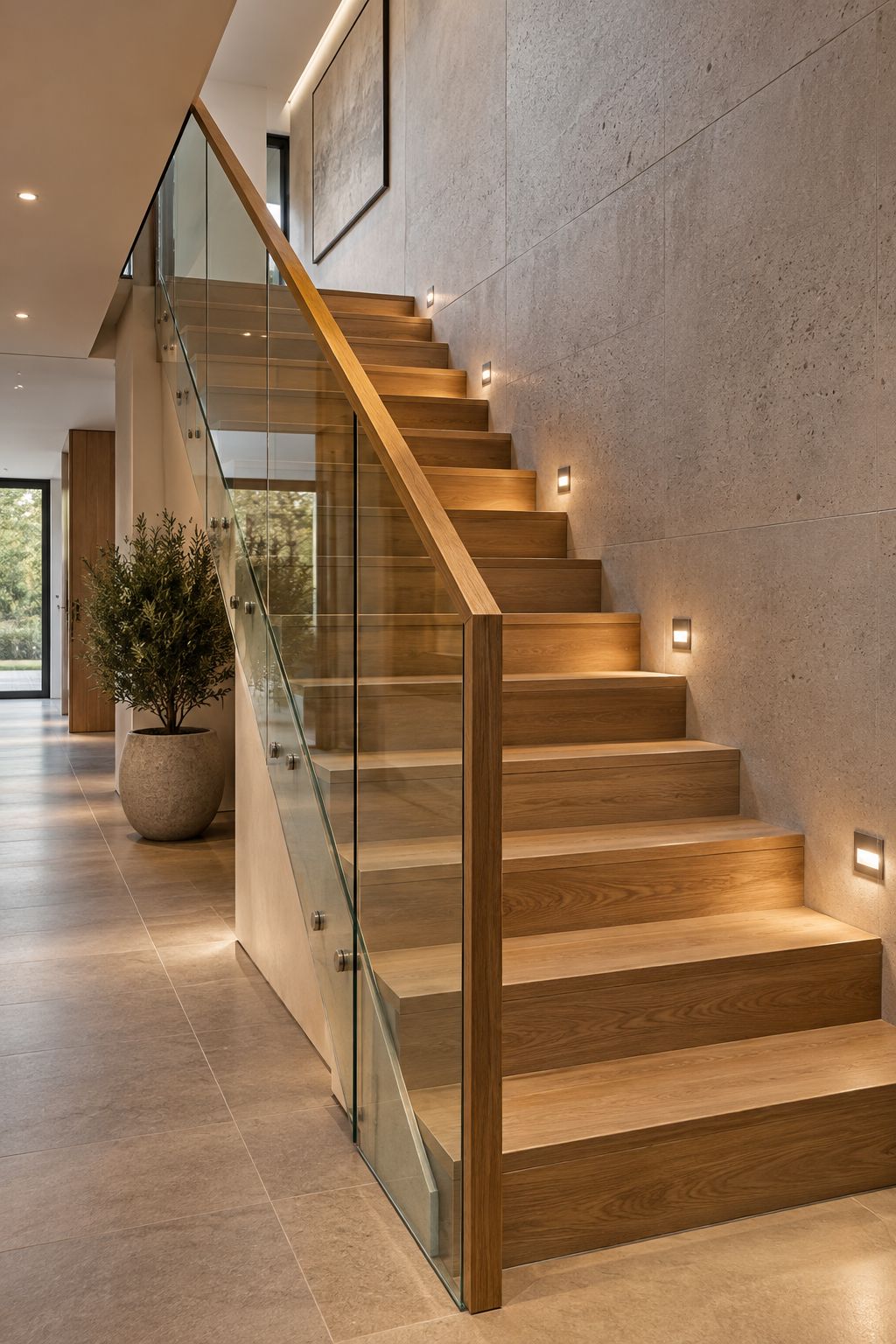
A lighting update can begin with one kitchen or extend across living areas, bathrooms, storage, stairs and the lanai. In Fort Myers, Naples or Miami, the useful starting point is the same: photographs, a simple plan and the routines you want to improve.
Bring existing fixture and control details if you have them. Mark the finishes you are keeping and the parts of the home already scheduled for work. Discuss your lighting project so the visible effect, installation scope and daily operation can be considered together.
Bring your location, room photographs and the details that matter most. We can review the materials, light and practical requirements together.
Plan your lightingMaterial studies
The details that make the room.