Everyday organization / Scintillax journal
Storage starts with what you put away
Use a household inventory to decide what should hang, fold, slide out or stay behind a door. Closet, laundry and garage cabinetry need different arrangements.
Before counting cupboards, list the things that need a reliable place. Include their size, how often you use them and what happens just before you put them away. That simple inventory gives a cabinet plan more direction than a request for maximum storage.
The same exercise works across three rooms, but it produces three different layouts.
In the closet, measure what hangs
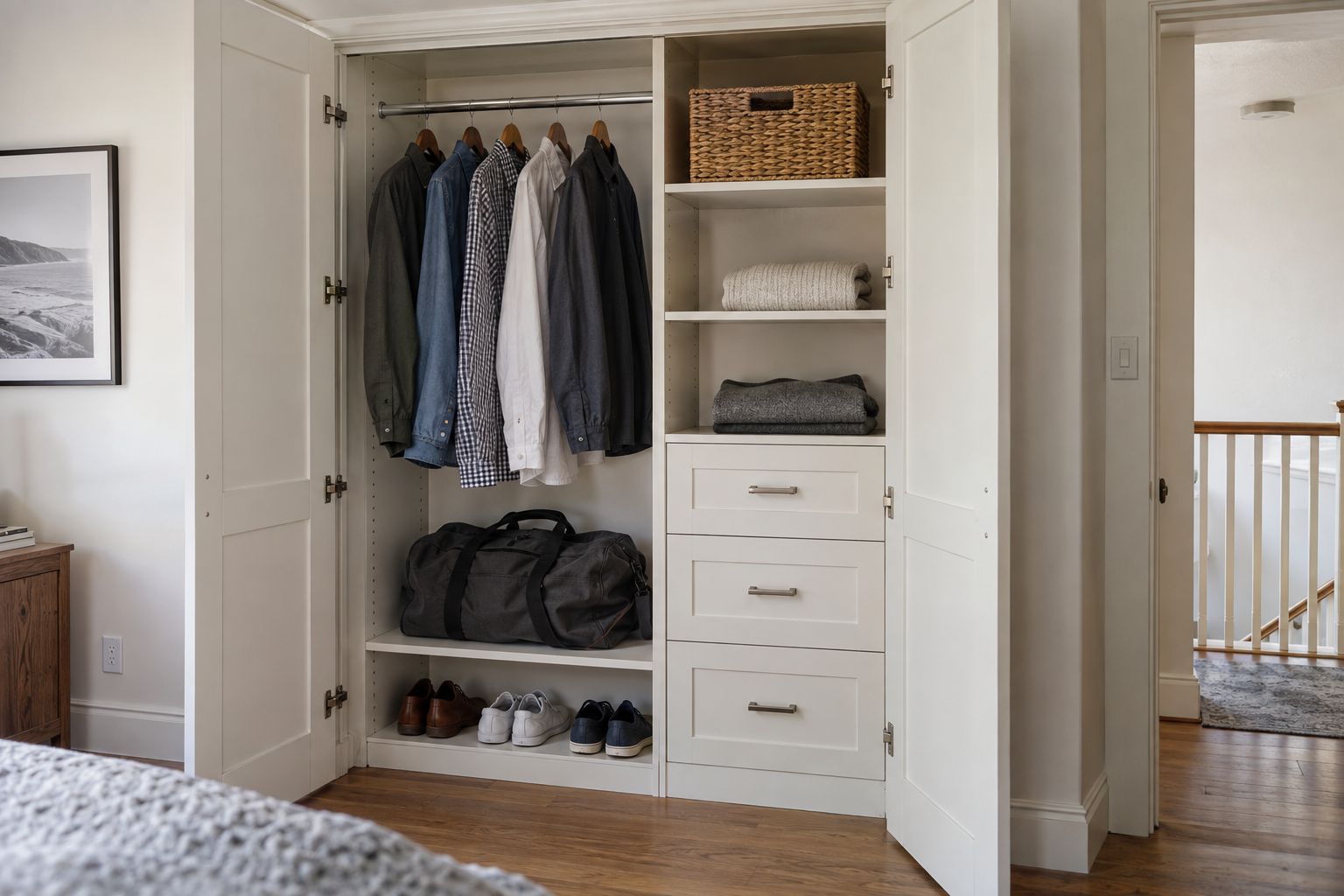
Long clothing needs a clear hanging bay. Shorter pieces may suit two rails, while folded knitwear is easier to browse on appropriately spaced shelves. Count shoes and accessories separately instead of assigning them whatever space remains.
Keep the daily wardrobe within a comfortable reach. Seasonal items can occupy less convenient shelves. The closet service develops the balance between hanging, drawers and adjustable storage.
In the laundry, follow the basket
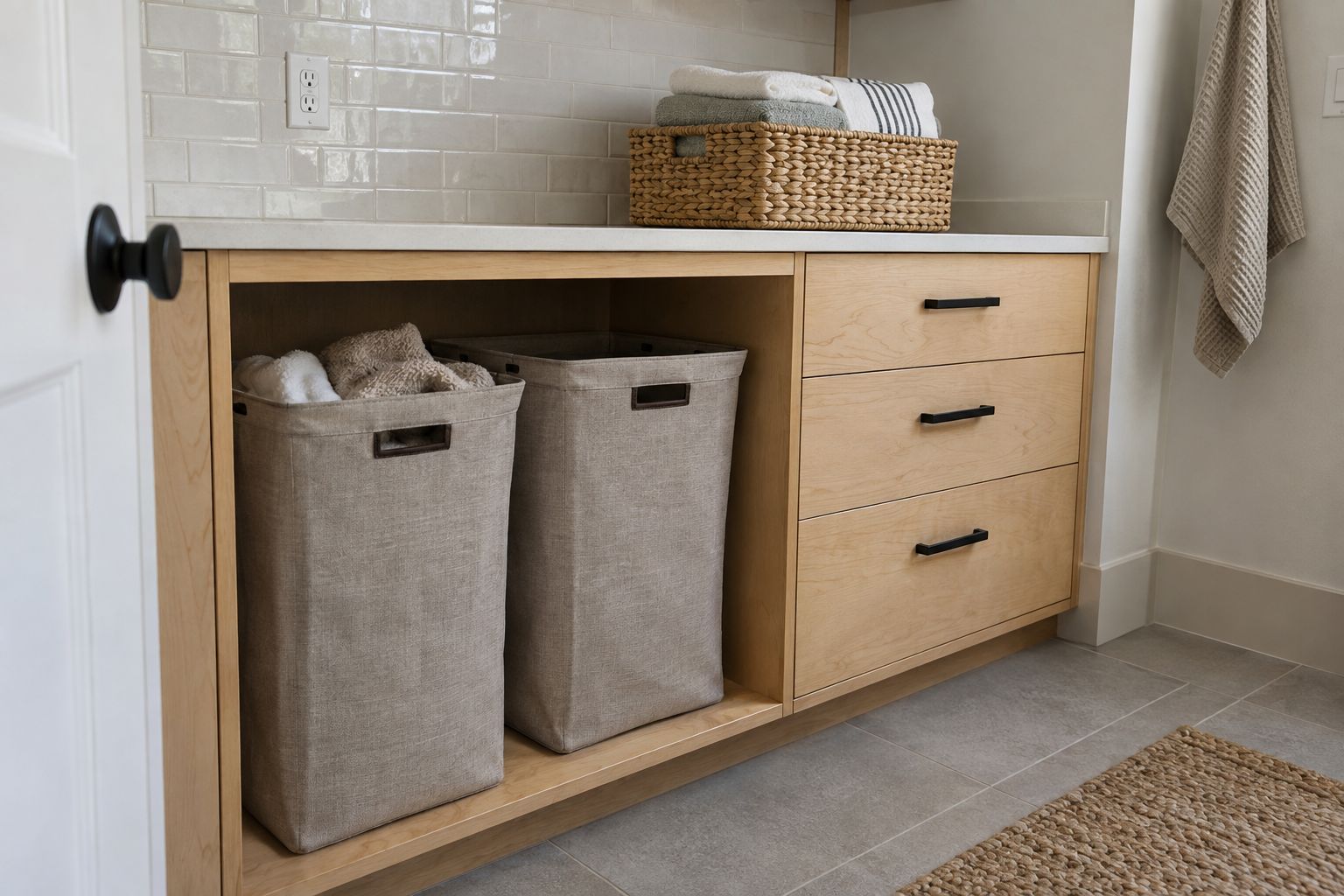
Notice where dirty laundry arrives and where clean pieces wait. A hamper without a parking place soon occupies the walkway. A folding surface loses its usefulness if every supply lives on top of it.
Choose open niches for items that move in and out, closed cupboards for supplies and a separate tall bay where long cleaning tools are needed. The sorting nook below illustrates that distinction without adding more equipment to the room. Machine access is addressed in laundry cabinet planning.
In the garage, start with the awkward equipment
Large cases, long tools and bulky containers set different requirements from small fixings. Record the biggest pieces before deciding shelf depth. Reserve the vehicle and doorway clearances first, then organize storage in the available wall space.
Drawers can expose small items at a glance. Tall cupboards can keep less regular equipment together. A workbench introduces another use, with its own surface, load and lighting decisions. Explore those relationships in the garage cabinetry service.
Give the plan room to change
Adjustable shelves and removable organizers let storage respond to a changing household. Review the usable opening behind a door, not only the outside dimensions. A beautiful front does not compensate for a basket that cannot pass through it.
Mark your inventory with frequent, occasional and seasonal use. Those categories can guide the placement without requiring identical cabinet arrangements in every room.
Bring the inventory into consultation
Add photographs of the storage that works and the areas that overflow. A few item measurements and a rough room sketch help explain what is missing. Materials and hardware can then be personalized around an arrangement with a clear purpose.
Ask us to plan storage around your routine, using one room or the whole set as the starting point.
Tell us which items currently overflow and which storage already works well in your home.
Plan storage for my routineMaterial studies
Make space for the basket